
Benin’s food systems project: transforming agriculture through rice and maize revival
When soil exhaustion threatens Bénin’s future
Bénin’s economy pulses with the rhythm of agriculture, which sustains nearly 70% of livelihoods and fuels 26% of the nation’s GDP. Yet this vital sector now faces an existential challenge: chronically degraded soils that are silently eroding the country’s food security and economic stability.
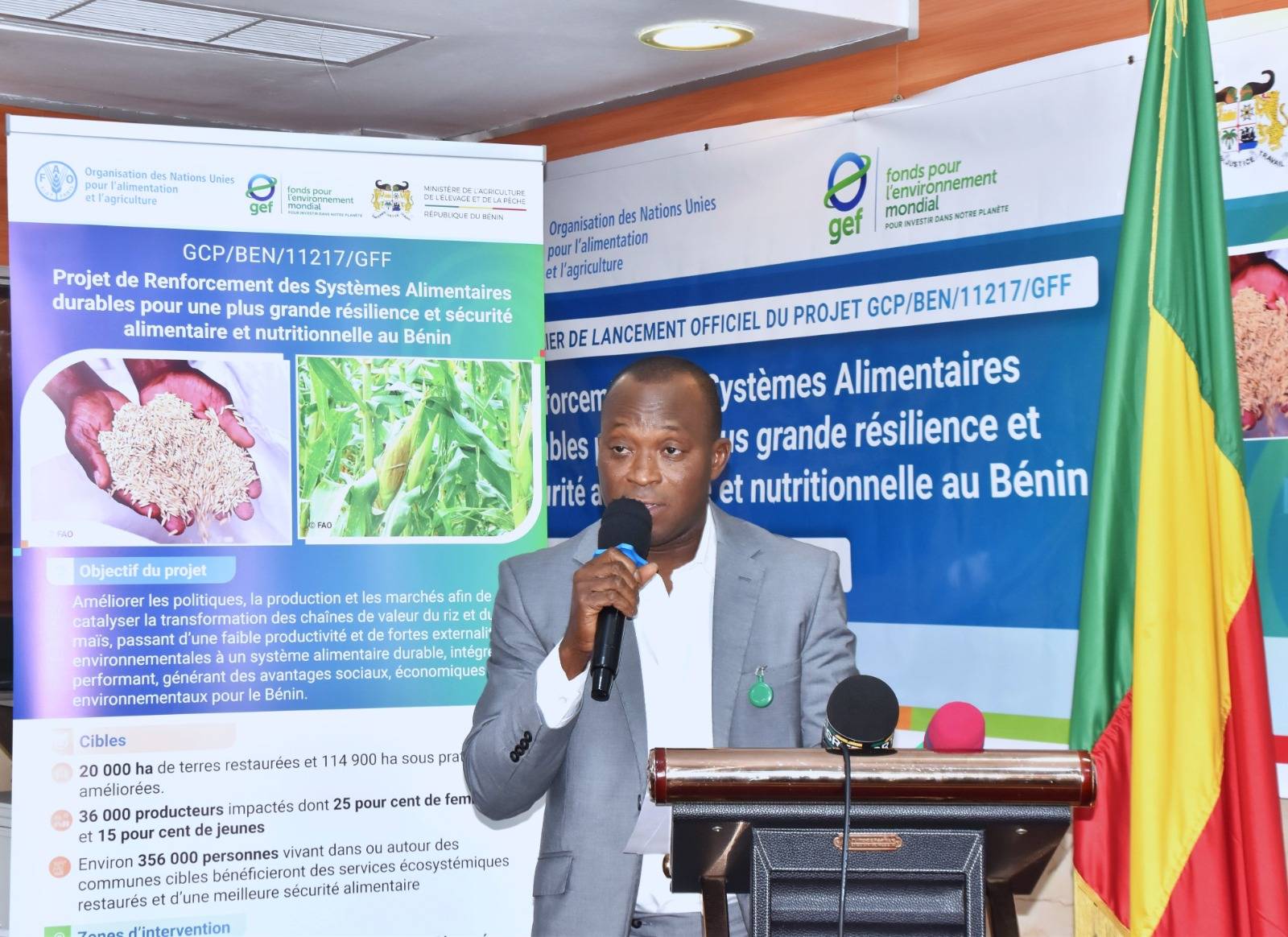
Speaking at the official launch of the ambitious Food Systems initiative in Cotonou’s Bénin Royal hotel, Minister of Agriculture, Livestock and Fisheries Adin Yeton Bloukounon Goubalan delivered a stark warning: “Exhausted soils produce meager harvests, trapping farmers in cycles of poverty that ripple through entire communities.”
The numbers tell a sobering tale. National assessments reveal that 38% of Bénin’s total land area—home to over 5 million citizens—has lost its productive capacity. The consequences are dire: agricultural yields have plummeted by more than half in affected zones, stripping rural populations of both food security and economic opportunity.
Food Systems: a holistic agricultural transformation
In response to this mounting crisis, Bénin has launched the Food Systems program—a comprehensive initiative designed to revitalize the nation’s agricultural foundations. Developed in partnership with the United Nations Food and Agriculture Organization and the Global Environment Facility, this $20.7 million project represents more than financial commitment; it’s a systemic overhaul of how the country grows, processes and markets its staple crops.
The program targets two critical pillars of Bénin’s food basket: rice and maize. These crops form the dietary bedrock for both rural and urban populations, yet their production suffers from outdated techniques and environmental strain. Food Systems aims to transition these vital sectors from low-productivity, high-impact farming toward integrated, sustainable systems that deliver economic and ecological dividends.
Where change will take root
The initiative’s first phase concentrates on five strategic communes where soil degradation has struck hardest:
- Karimama and Malanville in the north
- Glazoué, Kétou and Les Aguégués in central and southern regions
These areas will serve as proving grounds for soil restoration techniques, sustainable farming protocols and market integration strategies that can eventually scale nationwide.
A financial commitment to lasting change
Transforming Bénin’s agricultural landscape requires more than good intentions—it demands substantial investment. The Food Systems program operates on a $20.7 million budget, with financing structured through three key pillars:
- $5.9 million from the Global Environment Facility
- $14.8 million in national co-financing from the Bénin government
- Additional technical contributions from implementing partners
This funding will support a multi-year campaign to:
- Restore 20,000 hectares of degraded farmland
- Train farmers in sustainable techniques across 114,900 hectares
- Directly benefit 36,000 producers
- Indirectly improve livelihoods for nearly 356,000 people in target regions
Implementation with precision and participation
The project’s architects emphasize that success hinges on both technical excellence and community engagement. Minister Goubalan cautioned that the wrong soil restoration methods could do more harm than good, stating, “Every intervention must be vetted for ecological compatibility before widespread adoption.”
For its part, the FAO’s resident representative in Bénin, Paul-Henri Zoéwindé Bouda, stressed that technology alone won’t drive change: “The project’s heartbeat will be the collective commitment of farmers, cooperatives and technical teams who must own this transformation from the ground up.”
A model for regional agricultural resilience
By addressing soil degradation at its source, the Food Systems initiative positions Bénin to achieve multiple breakthroughs by 2030:
- Stabilized rice and maize production to meet national demand
- Reduced reliance on food imports
- Enhanced climate resilience through sustainable land management
- A replicable blueprint for agricultural transition across West Africa
The stakes couldn’t be higher. With soil health restored and farming systems modernized, Bénin can transform its agricultural sector from a vulnerability into a strategic advantage—securing food supplies, boosting incomes and charting a path toward ecological and economic renewal.