Burkina Faso’s crackdown on imams: fallout, public debate, and what lies ahead
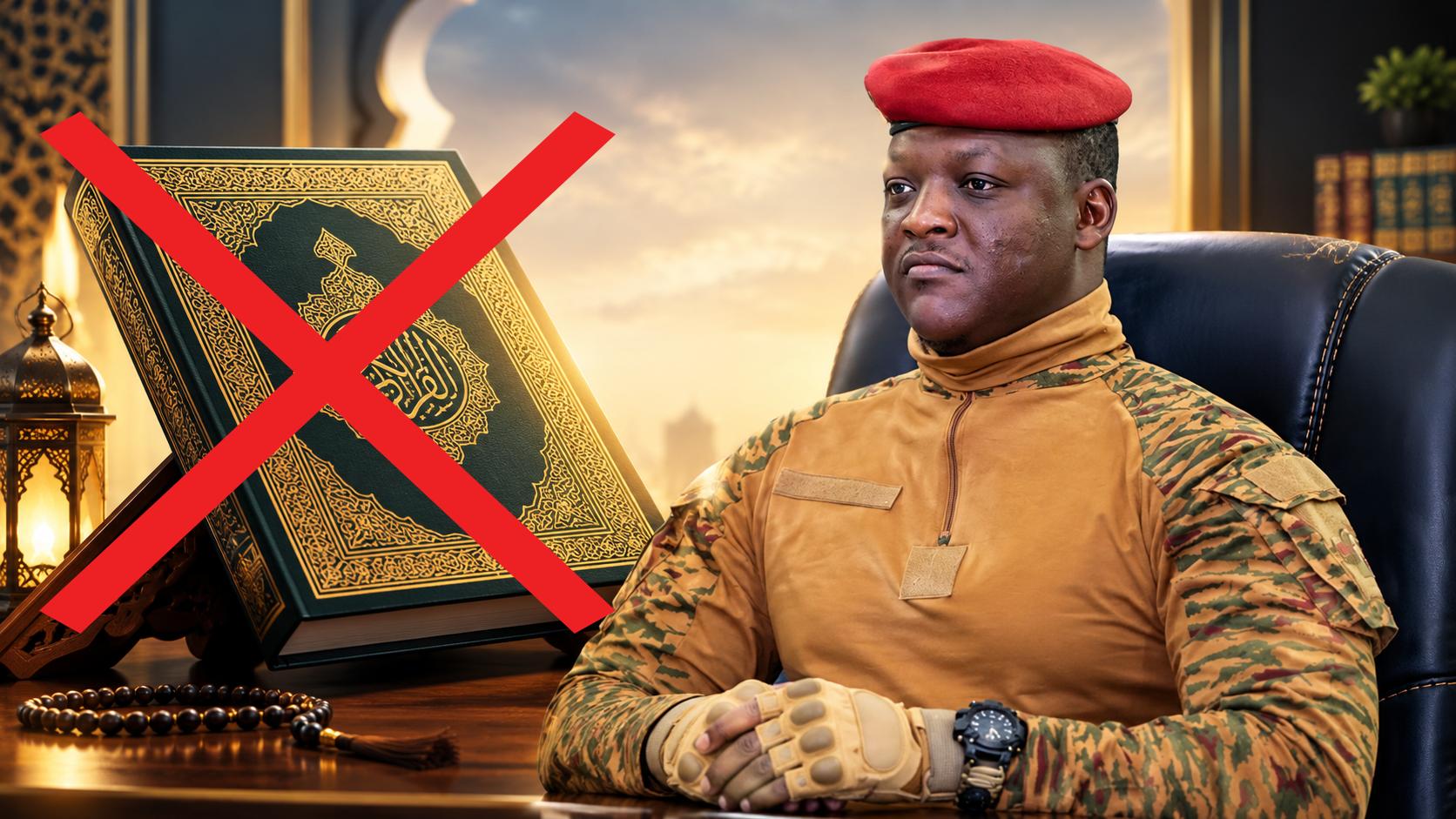
A fragile line between counterterrorism and religious repression
In Burkina Faso, the boundary separating the fight against armed extremism from the suppression of religious freedoms has become dangerously blurred. Under the banner of eradicating the terrorist threat destabilising the nation, the transitional government led by Captain Ibrahim Traoré has launched a strategy of control and repression against the Muslim community — the country’s majority faith — on an unprecedented scale. Behind official rhetoric about “national security”, a systematic subordination of Burkina Faso’s Islamic figures and institutions is being orchestrated from Ouagadougou.
Arrests, closures, and a tightening grip on imams
For months now, security justifications have served as a convenient pretext for targeting independent religious voices. Moderate imams, influential preachers, and leaders of Muslim associations have faced arbitrary arrests, incommunicado detention, or forced conscription into the Volunteers for the Defence of the Homeland (VDP). Their apparent offense: criticising the junta’s methods, questioning how the security crisis is handled, or simply advocating for the preservation of civil rights.
At the same time, mosques and Quranic schools in areas facing severe security challenges are subjected to drastic inspections, arbitrary administrative closures, or systematic accusations of collusion with armed groups. By indiscriminately labelling any religious discourse that does not align with the government as “subversive” or “complicit with the enemy”, the authorities have instilled a climate of fear within a religious community historically recognised for its role in mediation and social cohesion.
Political instrumentalisation and the fracturing of national unity
This iron-fisted approach pursues a clear objective: neutralising any social force capable of articulating structured opposition to military rule. By prioritising networks and figures within local Islam, the transitional regime seeks to impose a single line of thought and lock down the public sphere.
Far from weakening the jihadist groups ravaging the region, this brutal offensive against religious practice risks producing the opposite effect. By stigmatising the Muslim community, dismantling customary and spiritual relays, and depriving worshippers of moderate reference figures, the authorities are fuelling a sense of injustice and alienation. In treating religion as an internal enemy under the guise of sovereignty and security, Ibrahim Traoré risks atomising the social fabric of a country already on its knees.
Reactions and the road ahead
The crackdown has not gone unnoticed. Inside Burkina Faso, voices within civil society and religious circles are expressing growing unease, warning that the pressure on imams could backfire by pushing moderates toward radicalisation or silence. International observers and human rights organisations have also raised concerns, questioning the compatibility of such measures with fundamental freedoms.
Looking forward, the key question is whether the transitional government will recalibrate its approach or double down on a strategy that many see as counterproductive. The coming months will reveal whether dialogue with Muslim leaders can be restored or whether the current trajectory will further isolate the regime and deepen the country’s social fractures.