
Burkina faso’s industrialization push: between propaganda and harsh reality
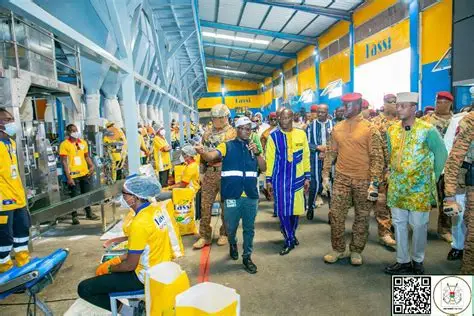
In the past several months, Captain Ibrahim Traoré has intensified his presence at industrial site inaugurations and progress reviews. From tomato processing plants to gold refining facilities, the transitional government’s communications machine has been meticulously orchestrated to project an image of national progress. Yet, beyond the polished RTB camera shots, the Burkina Faso of reality remains choked by deepening security and economic crises that mere propaganda can no longer conceal.
Symbolic construction projects as instruments of reassurance
The strategy is a familiar playbook among regimes seeking legitimacy: the politics of showpiece infrastructure. In Ouagadougou and Bobo-Dioulasso alike, Captain Traoré positions himself as the guardian of national economic sovereignty. The narrative is clear—despite regional blockades and the withdrawal of Western partners, Burkina Faso is purportedly advancing under its own momentum.
The emphasis on self-reliance is constant. Official discourse celebrates job creation and economic independence. For regime supporters, every groundbreaking ceremony represents a triumph over foreign domination. Yet, to economic analysts, these carefully staged events resemble a desperate attempt at image management rather than a coherent development plan.
Industrial projects shrouded in secrecy and suspicion
Scrutiny of these so-called industrial flagship projects often uncovers troubling inconsistencies. While ribbon-cutting ceremonies draw global attention, critical details—such as actual operational viability, precise funding sources, and long-term production capabilities—remain conspicuously absent.
Furthermore, allegations of financial impropriety have cast a long shadow over certain patriotic funds. Questions persist about the allocation and use of resources mobilized for both the counterterrorism effort and industrial expansion. As traditional private enterprises struggle under crushing fiscal pressure and escalating insecurity, the rapid emergence of new entities linked to the ruling circle raises serious concerns regarding procurement transparency and equitable market access.
The widening chasm between official narrative and citizen experience
While the corridors of Koulouba Palace celebrate industrial milestones, the kitchen tables of ordinary Burkinabè households are bearing the brunt of economic collapse.
Rising food inflation: Staple goods such as rice, cooking oil, and millet have soared to unaffordable levels, pushing vulnerable communities to the brink of survival.
Humanitarian catastrophe: With over two million internally displaced persons—one of the most severe crises in the nation’s history—entire villages remain trapped under terrorist blockades, dependent on sporadic and unreliable humanitarian aid.
Economic paralysis: The informal sector, traditionally the backbone of Burkina Faso’s economy, is in freefall. Recurrent power outages and the militarization of key transport routes have brought commerce to a virtual standstill.
The limits of propaganda in a failing state
The disparity is stark: on one side, slickly produced videos showcasing gleaming machinery and a resolute president; on the other, parents unable to afford school fees and soldiers fighting under extreme conditions.
The myth of a thriving Burkina Faso is, for now, a carefully constructed media narrative designed to foster hope and suppress dissent. Yet, propaganda has its limits—the limit of reality itself. No amount of nationalist rhetoric can feed a population when fields lie fallow and newly inaugurated factories exist only as television images.
Captain Ibrahim Traoré has wagered his leadership on the fragile currency of perception. In his relentless quest to project progress, he risks severing the last ties of trust with a population that is suffering in silence. Industrialization remains a worthy ambition, but it cannot be built on shifting sands. Without transparent financial governance and genuine territorial security, presidential photo opportunities will forever remain mirages in the Sahelian expanse.