
Burkina Faso’s military leader dismisses democracy as ‘deadly’
Burkina Faso’s military leader dismisses democracy as ‘deadly’
- Reading time: 5 min
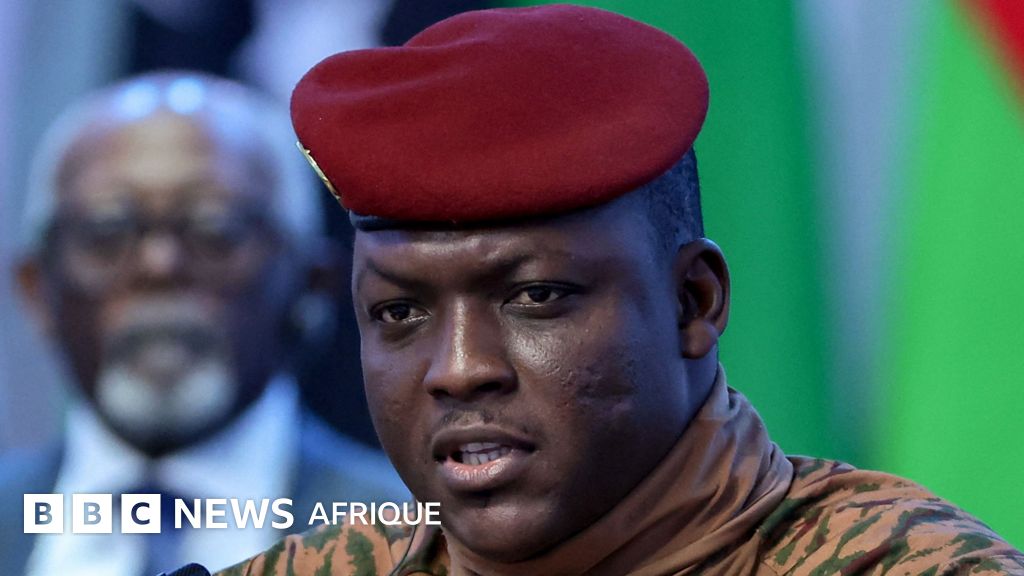
Captain Ibrahim Traoré, Burkina Faso’s military leader, has declared that democracy is “deadly” and must be “forgotten” by the Burkinabè people. His remarks came during a televised interview on national television.
In his address, the 38-year-old leader—who seized power in a coup three years ago—asserted that most Africans reject democratic systems. He claimed Burkina Faso would pursue its own “alternative path,” though he did not elaborate on what this might entail.
Traoré had previously pledged to restore democratic rule by July 2024, but with just two months remaining before the deadline, the military government announced a five-year extension to its mandate.
In January, authorities banned all political parties as part of a broader plan to “rebuild the state.” Traoré justified the move, calling political parties divisive and incompatible with his revolutionary vision.
During the interview, he stated, “People must forget about democracy. Democracy is not for us.” He cited Libya as a cautionary example, warning that Western-backed democratic transitions often lead to chaos and bloodshed.
The Libyan leader Muammar Gaddafi, who ruled for four decades, provided social housing, free education, and healthcare. However, his autocratic regime collapsed following a Western-supported rebellion in 2011. Since then, Libya has been plagued by instability, with rival governments and armed factions vying for control.
Traoré, who portrays himself as an anti-imperialist revolutionary, emphasized the need for Burkina Faso to develop its own system based on sovereignty, patriotism, and revolutionary mobilization. He stressed that traditional leaders and grassroots structures would play a central role in this new framework.
He also highlighted the importance of economic and military self-reliance, arguing that Burkinabè workers must adopt longer hours to accelerate national progress. “Six or eight-hour workdays won’t help us catch up with wealthier nations,” he asserted.
The military leader has faced criticism for suppressing dissent during his rule. Opposition figures, media outlets, and civil society groups have been targeted, with some critics allegedly sent to frontline positions in the fight against Islamist militants.
Despite these controversies, Traoré has cultivated significant support across Africa for his panafricanist rhetoric and vocal opposition to Western influence.
Like neighboring juntas in Mali and Niger, Burkina Faso has distanced itself from Western partners—particularly France—in its battle against Islamist insurgents, which has ravaged the region for a decade. Instead, these nations have turned to Russia for military assistance, yet violence continues unabated.
A recent report by Human Rights Watch (HRW) revealed that over 1,800 civilians have been killed in Burkina Faso since Traoré’s 2023 takeover. The report attributes two-thirds of these deaths to government forces and allied militias, with the remainder linked to Islamist militants.