
Burkina Faso leader rejects democracy as path forward
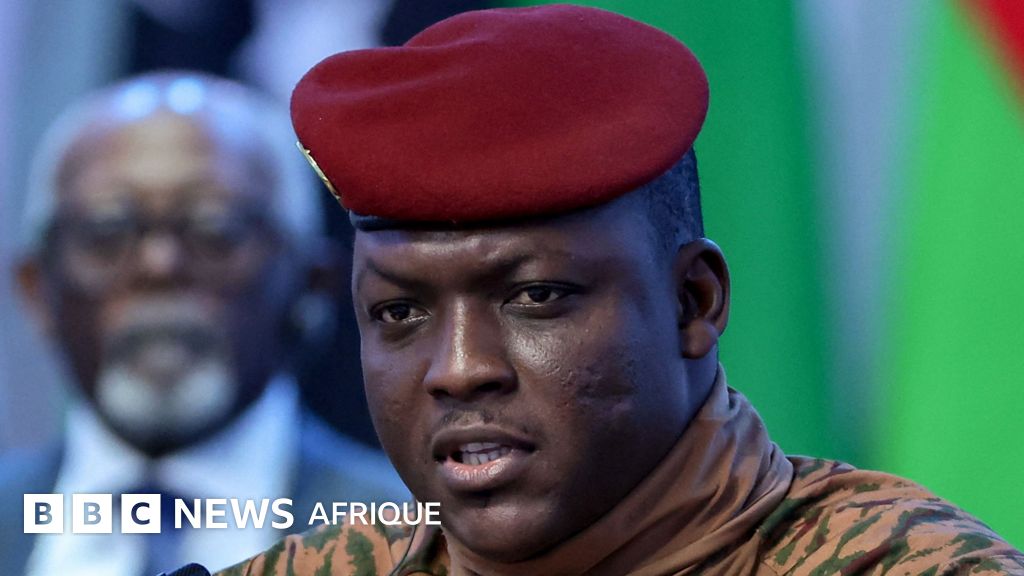
The military leader of Burkina Faso has declared that democracy is not the solution for his nation, urging citizens to abandon the concept entirely.
Military ruler dismisses democratic governance
The captain Ibrahim Traoré, who rose to power through a 2023 coup, made the controversial statement during a state television interview, asserting that Burkina Faso should abandon democratic aspirations entirely.
« People must forget about democracy. Democracy is not for us, » Traoré declared, adding that his nation requires a fundamentally different approach to governance. He suggested that most Africans do not favor democratic systems, though he provided no concrete details about the alternative model his government intends to implement.
This declaration comes despite Traoré’s earlier promise to restore civilian rule by July 2024. Instead, his administration announced a five-year extension of military rule just two months before the original deadline, citing the need for « state reconstruction. »
Political parties banned in sweeping reforms
In January, authorities dissolved all political parties, transferring their assets to state control as part of a broader plan to « rebuild the nation. » Traoré has repeatedly criticized political parties, describing them as divisive and incompatible with his revolutionary vision.
« In Africa—at least in Burkina Faso—the typical politician embodies every vice: deception, flattery, empty rhetoric, » he stated. « We have our own approach. We aren’t copying anyone. We are here to completely transform how things are done. »
Traoré’s vision: sovereignty, patriotism, and revolutionary mobilization
The 38-year-old leader, who presents himself as an anti-Western revolutionary, emphasized the need for a new system rooted in sovereignty, patriotism, and grassroots mobilization. Traditional leaders and community structures, he argued, must play a central role in this vision.
He also stressed the importance of economic and military self-reliance, asserting that Burkina Faso cannot catch up to wealthier nations with standard six-to-eight-hour workdays. « Hard work is essential, » Traoré stated, calling for a cultural shift toward productivity and national pride.
Crackdown on dissent and shifting alliances
Since seizing power, Traoré’s government has suppressed opposition, restricted media freedoms, and targeted civil society groups. Critics have accused his administration of punishing dissent by sending opponents to frontline combat against Islamist militants.
Despite these controversies, Traoré has cultivated significant support across Africa for his panafricanist rhetoric and vocal opposition to Western influence. Like neighboring juntas in Mali and Niger, Burkina Faso has distanced itself from Western partners—particularly France—in its fight against Islamist insurgencies that have plagued the region for over a decade.
Instead, the three nations have turned to Russia for military assistance, though violence in the region shows no signs of abating. Traoré’s administration has also faced criticism for its human rights record, with reports indicating that over 1,800 civilians have been killed in Burkina Faso since 2023. Human rights organizations attribute two-thirds of these deaths to state forces and allied militias, with the remainder linked to Islamist extremists.
The military ruler’s rejection of democracy and embrace of an untested governance model mark a dramatic departure from Burkina Faso’s post-colonial trajectory, leaving the nation’s future—and its people’s freedoms—hanging in the balance.