
Cameroon’s Mayo-Tsanaga devastated by Boko Haram’s relentless violence
Over 50 abandoned villages, thousands displaced, and the government’s troubling silence
Boko Haram’s terrorism is no longer a distant threat in Cameroon. In the Mayo-Tsanaga department, it has become a grim daily reality. The militant group, which originated in Nigeria’s Borno State in the early 2000s, first crossed into Cameroon in 2014. The village of Tourou, nestled near the Gossi Mountain just 35 kilometers from Mokolo, was one of the first Cameroonian localities to suffer an attack.
Since then, Boko Haram has entrenched itself in the region, launching frequent assaults that show no signs of abating. Attacks have escalated, leaving a trail of destruction: homes burned, lives lost, women violated, and communities torn apart. Schools, markets, health centers, and security outposts have all been targeted. Over nearly 13 years, the violence has forced entire villages to empty, with families either massacred or forced to flee. Yet, despite the mounting toll, the response remains painfully inadequate.
The Mayo-Tsanaga region now bears the scars of this crisis. From Mokolo to Koza and through Mayo-Moskota, the landscape tells a story of unprecedented abandonment. More than 50 villages—including Gossi, Tourou, Vizik, Ldamang, Magoumaz, and Chougoulé—have been completely or partially deserted. Life here has been shattered, and hope is fading.
In May 2022, Mahadek Nicolo Nouhou, then the fifth deputy mayor of Mokolo, presented a grim assessment to the Minister of Public Health, Manaouda Malachie, during the Fraternal Meetings of Mayo-Tsanaga held in Tourou and Mokolo. His report highlighted ten villages completely abandoned, two occupied by Boko Haram, and seven others frequently under siege. Areas like Gossi, Toufou 1, Toufou 2, Roum, and Hitawa—once thriving communities—now lie under the group’s control, forcing residents to flee.
The situation has only worsened since. Residents of Tourou express their despair: “We feel abandoned, left to fend for ourselves. Why does the government remain silent while we suffer? Do we, the people of Mayo-Tsanaga, not count as true Cameroonians?”
Fear dictates daily life here. By night, men flee to the mountains, seeking refuge in caves shared with wildlife to avoid the terrorists’ wrath. When dawn breaks, they return to their villages—if they dare—only to work the land before darkness falls again. The state’s military presence is a cruel joke. In Ldamang and Ldubam, during the June 18, 2026 attack at 2 a.m., only two soldiers were stationed nearby. Two soldiers against heavily armed militants—it’s a mismatch that speaks volumes about the government’s failure to protect its people.
Local elites, too, have turned a blind eye. Despite their influence and access to power, they remain conspicuously silent as villages burn and lives are lost. Their absence in this crisis is not accidental—it’s a calculated political choice. Ministers have visited, made speeches, and promised aid, but the words ring hollow. The attacks continue unabated, and the promises remain unfulfilled.
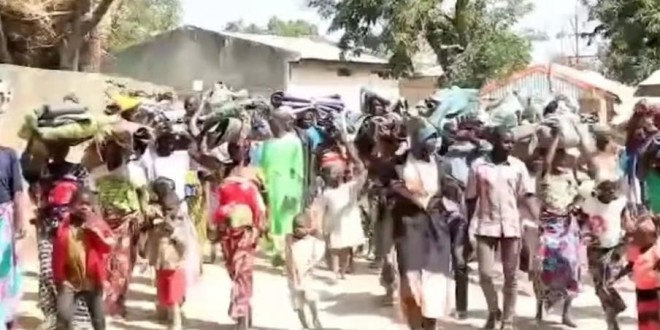
The humanitarian toll is staggering. Over 9,000 people have been displaced by Boko Haram’s violence, with numbers climbing as attacks persist. In early June 2026 alone, the International Organization for Migration (IOM) recorded 482 new internally displaced persons—78 households—fleeing from Mokolo, Koza, and Mayo-Moskota. The crisis has spilled beyond Mayo-Tsanaga’s borders; by July 2026, a local authority in Kalfou, Mayo-Danay department, reported welcoming nearly 300 displaced individuals who had traveled over 200 kilometers to escape the violence.
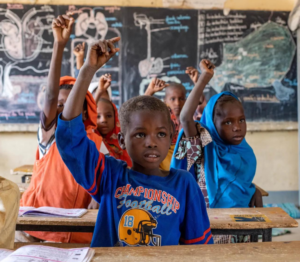
The exodus is heartbreaking. Families abandon their homes, their fields, and even their deceased loved ones, leaving behind charred documents and shattered lives. The most devastating loss, however, is the fracturing of families. In the chaos of an attack, parents flee in different directions, often unable to save their children. The youngest victims—children and adolescents—are left to navigate a harsh reality without protection, schools, or stability. For many, the future is bleak: some abandon their education, others turn to crime, and young girls face a future stripped of hope.
The Mayo-Tsanaga is being hollowed out. Agriculture is collapsing, schools are closing, and the local economy is vanishing. If nothing changes, the department faces irreversible depopulation. The state cannot afford to turn a blind eye simply because these communities are far from Yaoundé. The question remains: How many more villages must be abandoned before this crisis is treated as a national emergency?