Cameroun: Paul Biya’s absence stirs military reshuffle and succession fears
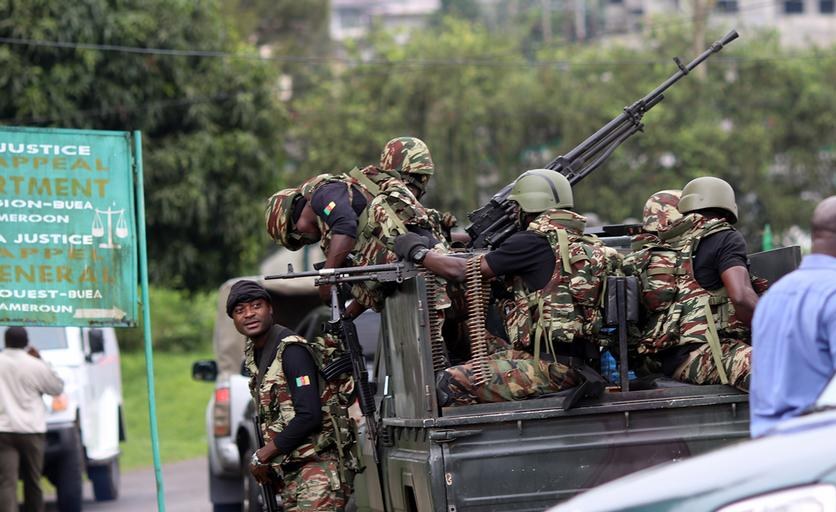
Absence of a 93-year-old leader and military shifts raise alarm in Yaoundé
A 93-year-old president, 57 days out of the public eye, and a series of controversial military appointments are fueling fears of an ethnic-driven power struggle in Cameroon. The situation, marked by institutional opacity and rising tensions, has plunged the country into uncharted territory.
Paul Biya, Africa’s longest-serving leader, left Yaoundé on June 7, 2026, for what was officially described as a short private stay in Europe. More than two months later, the whereabouts of the Cameroonian head of state remain unknown, with no public appearances or credible updates on his health or return.
Military reshuffle fuels speculation over succession plans
The absence of the president has coincided with a sweeping overhaul of Cameroon’s military leadership. A presidential decree signed in early August 2026 appointed five new brigadier generals, a new commander for the Presidential Guard, and a new army chief of staff. Among the most notable changes was the appointment of General Beko’o Abondo Raymond Jean Charles as head of the Presidential Guard—a unit tasked with protecting the head of state and the presidency.
Analysts warn that these moves, taken while Biya remains absent, suggest a deliberate effort to reshape the security apparatus. “No one else has the authority to make such appointments in the military,” noted a retired colonel, speaking on condition of anonymity.
Unprecedented timing raises questions
The timing of these appointments—while the president is unreachable—has intensified concerns about who is truly in control. Six territorial commanders were also reassigned across four of Cameroon’s five military regions, further consolidating changes in the chain of command.
Critics argue that the government’s insistence on a “soon return” for Biya does not justify such sensitive decisions being made in his absence. “Why proceed with such high-stakes appointments when the president’s condition remains unclear?” questioned an analyst familiar with the matter.
A nation at a crossroads: tribalism, militarization and instability
The military reshuffle is not happening in a vacuum. Cameroon is grappling with deepening political fractures and the looming specter of ethnic division. Two rival factions within the regime have emerged as key players:
- The consanguine faction: Centered around Biya’s eldest son, Franck Biya, seen as a symbol of continuity for the ruling elite.
- The First Lady’s camp: Led by Chantal Biya and Ferdinand Ngoh Ngoh, the powerful Secretary-General of the Presidency.
These tensions have been exacerbated by constitutional amendments adopted in April 2026, which reintroduced the position of vice-president—intended to ensure an orderly transition in case of a power vacuum. Yet, the position remains vacant, leaving Cameroon without a constitutional safeguard.
Opposition demands answers as constitutional crisis deepens
The silence from government officials has only amplified public unease. Opposition leader Maurice Kamto and his Movement for the Rebirth of Cameroon (MRC) have called for the Constitutional Council to declare a power vacuum. “The Council must recognize the vacancy at the highest level of the state,” asserted MRC Secretary-General Roger Justin Noah.
Without a vice-president, the constitutional mechanism for succession is paralyzed. Cameroon now faces an institutional impasse, with no clear path forward.
Historical parallels and the risk of ethnic division
Analysts draw unsettling comparisons to Rwanda’s 1994 genocide, where a political succession crisis fueled by ethnic militarization led to catastrophe. In Cameroon, ethnic tensions simmer beneath the surface, and fears are growing that the army could become a tool for factional control rather than a unifying force.
Public intellectual Jean-Pierre Bekolo has warned that the country is “sliding into both tribalization and militarization of power”, a dangerous trajectory with no guaranteed outcome.
Can Cameroon avert a crisis?
Despite the gravity of the situation, analysts suggest several steps that could still stabilize the country:
- Clarity on Biya’s health: The government must provide transparent updates on the president’s condition and expected return.
- National dialogue: A structured conversation among political forces to address communal tensions and prevent further fragmentation.
- Filling the vice-presidential vacancy: Appointing a vice-president would restore institutional balance and reduce risks of a power vacuum.
“History will remember not only the actions taken, but also the silences,” Bekolo cautioned. “Cameroon cannot afford to gamble with its future.”
The clock is ticking
As days pass without credible leadership or answers, the risk of escalation grows. Cameroonians, long accustomed to Biya’s 43-year rule, are now watching closely—demanding transparency and accountability from those in power. The message is clear: “Stop playing with fire. Tomorrow, it may be too late.”