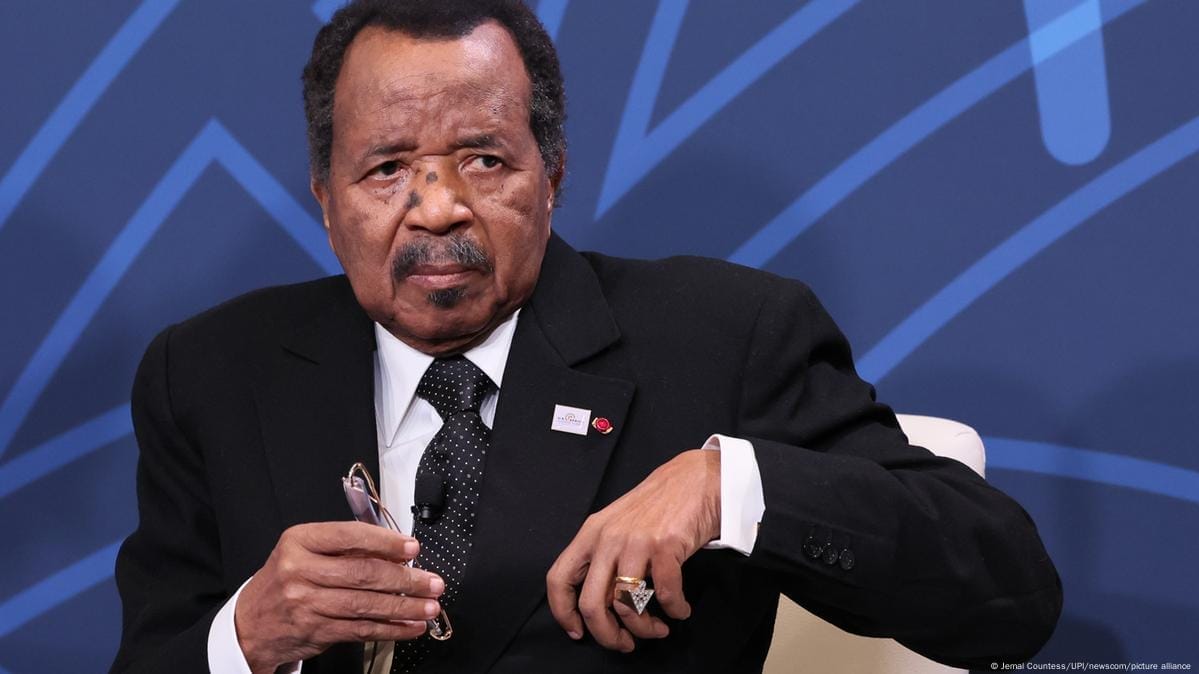

The prolonged absence of Cameroon’s head of state, Paul Biya, has reignited public debates about governance and leadership continuity. Departing on June 7, 2026, for what was described as a brief private stay in Europe alongside his wife, the 93-year-old president has yet to return after 44 days, intensifying speculation over his health and the functioning of state institutions.
Government attempts to ease concerns
As rumors swirl, the ruling Cameroon People’s Democratic Movement (CPDM) has moved to reassure the public. In an editorial published July 15 in the party’s official newspaper L’Action, party propaganda chief Christophe Mien Zok dismissed claims of a power vacuum, declaring, ‘The Lion has not left his post.’ He emphasized that state institutions remain fully operational, denying suggestions of remote governance or automatic pilot leadership.
Official presidential channels have continued to release statements attributed to Biya, including congratulatory messages to foreign leaders like French President Emmanuel Macron on Bastille Day and the President of Montenegro. However, no public appearances or detailed updates on his activities have been provided.
Opposition demands clarity on presidential absence
The opposition has seized on the situation to challenge the lack of transparency. Deputy Jean-Michel Nintcheu has formally petitioned the Constitutional Council to assess whether the president’s prolonged absence constitutes a vacancy in office. Meanwhile, the Cameroon Democratic Union (CDU) has urged caution in speculating on Biya’s personal situation but stressed that institutional stability cannot depend on unofficial information and assumptions.
The CDU argues that while prolonged foreign travel does not automatically constitute a vacancy, it raises critical questions about the continuity of government, the effective exercise of presidential powers, and the mechanisms in place for handling temporary impediments to leadership.
Constitutional gaps exposed by prolonged absence
Legal experts point out that the absence has exceeded symbolic thresholds where constitutional review could be warranted, though no legal provision sets a maximum duration for a president’s international travel. The CDU has also highlighted the absence of a designated vice president since constitutional reforms in April, calling for institutional reforms to establish clear rules governing prolonged presidential absences and ensure state continuity.
As the days without visible leadership stretch on, the divide between the government’s assurances of normalcy and opposition demands for transparency grows. Authorities insist institutions are functioning as usual, while critics push for greater openness about the president’s condition and a robust legal framework to address such scenarios.