Côte d’Ivoire secures record international funding for 2030 development plan
The Côte d’Ivoire has cemented its reputation as an economic powerhouse in West Africa, securing unprecedented international funding that far exceeds initial projections for its ambitious National Development Plan (NDP) 2026–2030.

Record-breaking financial commitments exceed all expectations
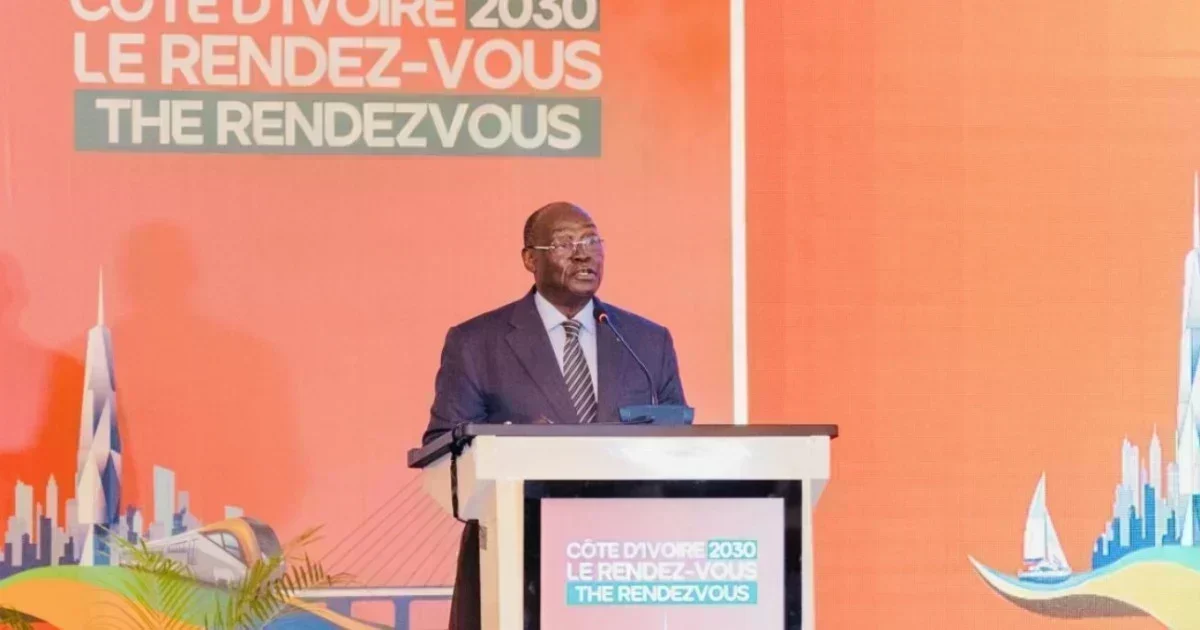
Government officials revealed on Thursday that Côte d’Ivoire has attracted international public investments four times higher than anticipated to fund its National Development Plan through 2030. The announcement came during a high-profile investor forum in Abidjan that brought together government representatives and hundreds of public and private sector stakeholders.
The country’s economic resilience—demonstrated by an average growth rate of 6.5% in recent years—has made it a prime destination for development partners. After a decade of political and military turmoil in the early 2000s, Côte d’Ivoire has not only stabilized but emerged as one of the region’s most dynamic economies.
Key sectors targeted in the development blueprint
The NDP outlines transformative initiatives across multiple critical sectors:
- Security enhancement: Strengthening national stability measures
- Agricultural modernization: Boosting productivity in a sector that currently contributes 20% of GDP
- Industrial champions: Supporting the emergence of national corporate leaders across key industries
- Infrastructure revolution: Major road network upgrades and high-speed rail development
Substantial funding commitments from global partners
Initially seeking approximately $20 billion in public financing, Côte d’Ivoire secured commitments exceeding $80 billion from international development partners. The minister of planning, Souleymane Diarrassouba, highlighted the overwhelming response from major institutions including:
- The World Bank
- The African Development Bank
- The European Union
«This overwhelming support confirms that all our economic indicators are performing exceptionally well,» Diarrassouba stated, noting that over 70% of the total funding—amounting to more than $147 billion—is expected to come from private sector contributions.
The total NDP funding requirement stands at $209 billion, with the Ivorian government also playing a significant role in financing the plan.
Strong track record of economic achievement
The recent funding success builds on Côte d’Ivoire’s impressive financial track record. In February, the country successfully raised $1.3 billion on international markets at particularly favorable interest rates for an emerging economy. Additionally, the International Monetary Fund recently approved nearly $833 million in disbursements through multiple assistance programs, citing the nation’s resilient economy.
While the IMF projects a slight growth moderation to 6% in 2026 (down from 6.5% in 2025), inflation is expected to rise to around 3.3% this year. The economic diversification efforts—moving beyond traditional agriculture to include mining, gas, and oil discoveries—continue to gain momentum.