Côte d’Ivoire unveils landmark national spatial planning framework for 2045
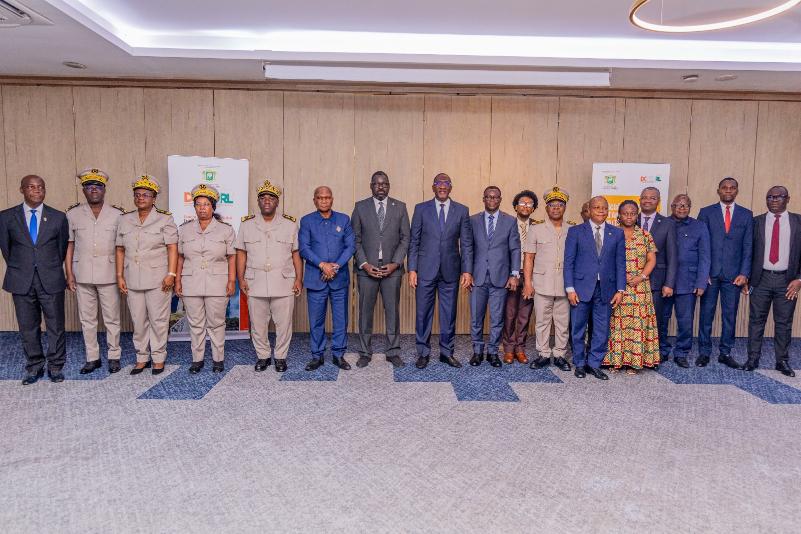
Under the leadership of Dr. Souleymane DIARRASSOUBA, Minister of Planning and Development, officials from Côte d’Ivoire’s institutions, prefectural corps, local governments, technical and financial partners, public administrations, private sector representatives, civil society organizations, academics, experts, and media convened in Abidjan for a pivotal national workshop. The gathering marked the validation of the study for the National Spatial Planning Framework (SNAT CI-2045), a groundbreaking initiative set to shape the country’s developmental trajectory through 2045.
This milestone paves the way for Côte d’Ivoire’s first-ever national territorial planning reference, designed to steer public and private investments toward sustainable growth. The framework will enhance the effectiveness of government initiatives while fostering balanced regional development across the nation.
Championed by President Alassane Ouattara, the Government of Côte d’Ivoire continues to reinforce its strategic planning mechanisms to align with the country’s economic, social, and environmental evolution. Spatial planning plays a pivotal role in this vision, ensuring investments are strategically distributed, regional assets are leveraged, and development policies are unified.
Structuring long-term development through territorial planning
The SNAT CI-2045 will serve as the definitive blueprint for long-term spatial organization, guiding the allocation of both public and private investments. It harmonizes state actions with local governance and development stakeholders, assigning specific roles to each region to maximize their potential. This framework will not only align with but also amplify the National Development Plan (PND 2026-2030), translating its mid-term priorities into a long-term territorial strategy.
« The PND 2026-2030 outlines our medium-term priorities and investments for national development. The SNAT CI-2045 ensures these are spatially implemented for long-term impact, serving as the foundation for future National Development Plans. Together, these frameworks enable cohesive public action nationwide. Our mission, as the ministry overseeing territorial planning and regional development, is to ensure every territory contributes meaningfully to national progress, » Dr. DIARRASSOUBA emphasized.
Key challenges and strategic pillars of the SNAT CI-2045
The validated orientations stem from a rigorous, participatory, and multi-scale consultation process, grounded in a comprehensive national territorial diagnosis. They address critical challenges such as:
- Narrowing regional disparities
- Managing urban expansion
- Boosting territorial competitiveness
- Strengthening local governance
- Preserving natural resources
- Enhancing regional integration
The framework envisions a Côte d’Ivoire where territories are resilient, competitive, and inclusive, built on five strategic axes:
- Balanced territorial development to reduce inequality
- Efficient urban and rural networks for connectivity and growth
- Strengthened territorial governance for accountability
- High-performance, resilient, and inclusive economy to drive prosperity
- Accelerated climate transition for sustainability
Next steps: From validation to law
Following the workshop, the draft framework will be submitted to the Government for review before being presented to Parliament for adoption via a dedicated law establishing the National Spatial Planning Framework. This landmark initiative will equip Côte d’Ivoire with its first national territorial planning reference, empowering the state to direct investments where they yield the highest impact while fostering equitable national development.