
Families in eastern Democratic Republic of Congo face an unrelenting double crisis. The resurgence of Ebola looms over communities already battered by years of armed violence, while dwindling access to farmland, markets and income pushes millions to the brink of food insecurity. In this precarious landscape, humanitarian teams are racing to restore critical food and seed distributions—reaching over 80,000 people despite relentless logistical and health constraints.
How can aid workers deliver support when families must choose between fleeing violence, dodging disease, or risking starvation? The answer lies in adaptive strategies that prioritize both survival and dignity.
Ebola strikes a region already ravaged by war
The current Ebola outbreak compounds decades of turmoil in eastern DRC. Decades of conflict have eroded livelihoods, displaced communities, and left deep scars on social and economic structures. Each wave of violence weakens resilience further, making recovery increasingly difficult. When health crises like Ebola emerge, they don’t just add pressure—they collapse coping mechanisms entirely.
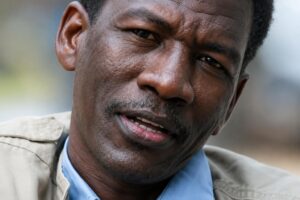
“Ebola doesn’t arrive in a vacuum,” explains Abdoule-Karim Diomande, Head of Programs for the International Committee of the Red Cross (ICRC) in the DRC. “It lands in communities where families have already lost homes, fields, and income sources. Restrictions on movement and market closures during outbreaks only deepen their vulnerability, especially for women, children, and the elderly.”
Farming crippled: fields abandoned, markets shut
The intersection of conflict, disease, and economic collapse has devastated agricultural productivity in eastern DRC. With insecurity spreading, many households have retreated to safer but overcrowded zones near villages or displacement sites. This has led to:
- Land degradation: Over-farmed plots lose fertility rapidly, reducing future harvests.
- Broken supply chains: Agricultural extension services—critical for improving yields—are often inaccessible due to conflict and displacement.
- Collapsed trade: Border closures and insecurity disrupt food imports and local commerce, cutting off vital income sources for rural families.
“Families once thriving on cross-border trade now find themselves trapped in subsistence cycles,” says Diomande. “Without markets, even a good harvest means little. Without mobility, seeds and tools can’t reach those who need them most.”
Humanitarian aid under fire: delivering in the danger zone
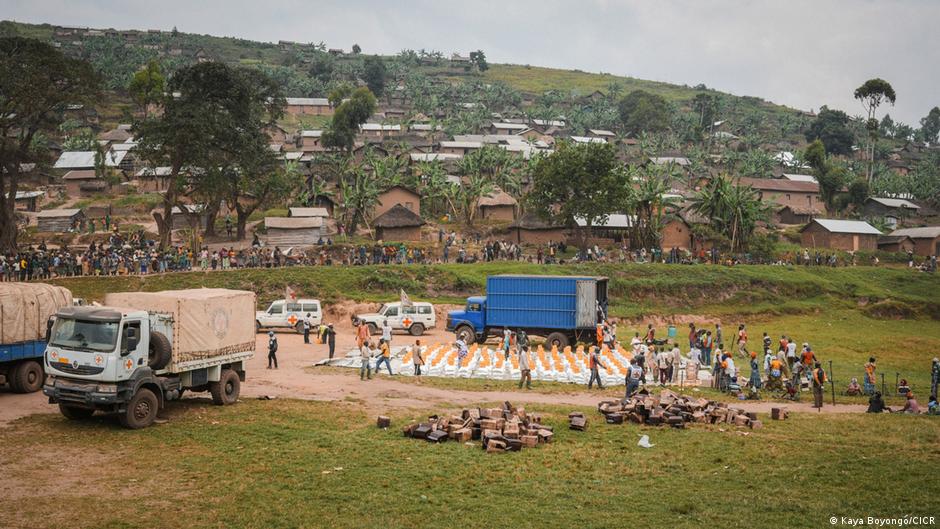
Despite the odds, organizations like the ICRC are scaling up interventions. Recent food and seed distributions have provided a lifeline to over 80,000 people in conflict-affected areas. These efforts include:
- Emergency food rations to stabilize nutrition during disease outbreaks.
- Seed and tool kits to restart planting cycles in safer zones.
- Cash-based assistance to restore purchasing power in local markets.
“Every distribution is a negotiation with armed groups, a race against time, and a test of trust,” notes Diomande. “But when families receive support, it’s not just about food. It’s about hope—hope that resilience can outlast both war and disease.”
What the future holds: a fragile path to recovery
The road to recovery in eastern DRC depends on two critical factors: long-term peace and sustained humanitarian access. Until then, communities face a brutal calculus—protecting themselves from violence, avoiding infection, or securing the next meal. Each choice carries life-altering consequences.
For now, aid workers remain on the ground, adapting each day to shifting frontlines and emerging health threats. Their message is clear: survival is possible, but only if the world recognizes that in eastern DRC, hunger and Ebola are not separate crises—they are partners in destruction.