
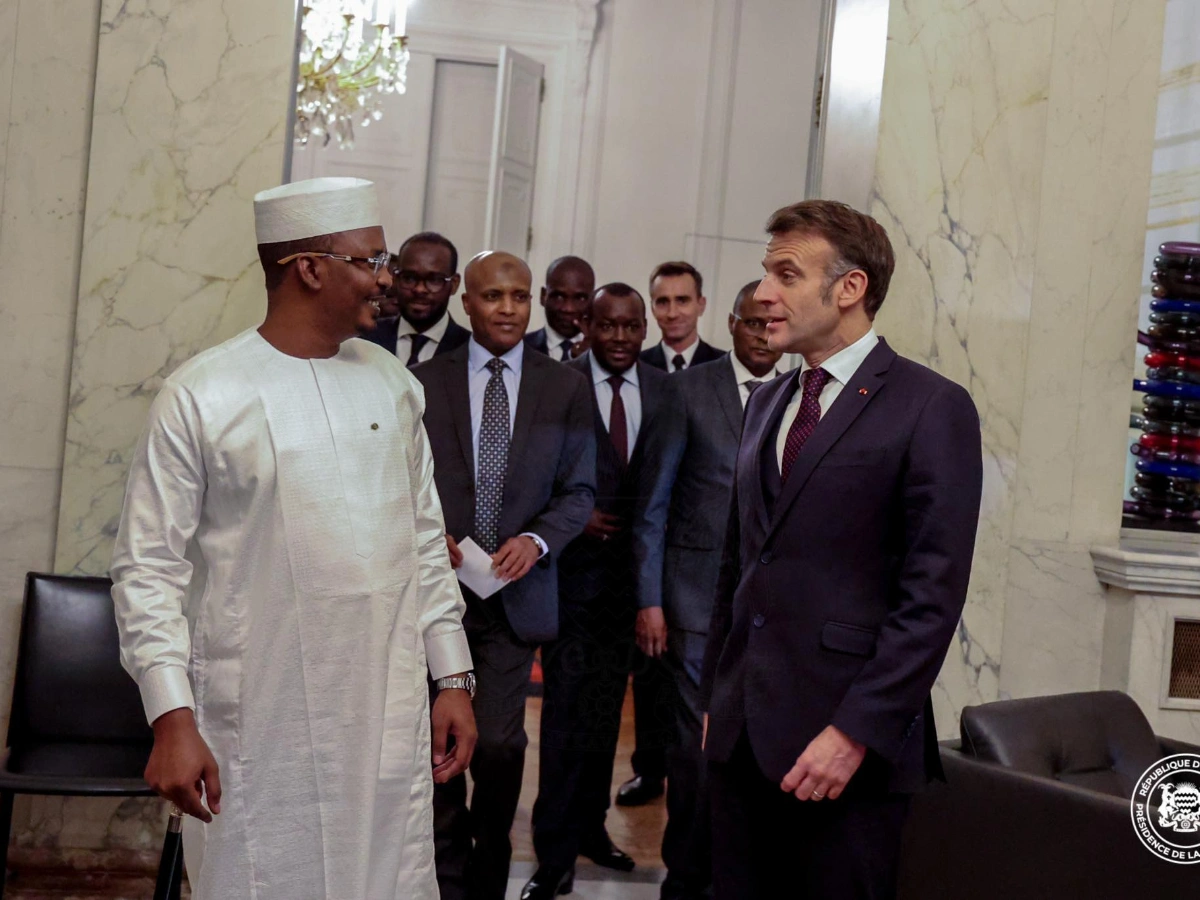
French military officers return to Chad: a strategic shift or political misstep?
Reports indicate that French military officers have quietly returned to Chad since mid-April, reviving military cooperation less than two years after France’s historic withdrawal from the country. While Paris insists no permanent redeployment is planned, the resumption of intelligence-sharing and limited military support has sparked intense debate about its impact on President Mahamat Idriss Déby Itno’s image and the credibility of his sovereignty-driven policies.
Sovereignty vs. security: a delicate balancing act
Following the withdrawal of French forces, President Déby framed the move as a triumph of national sovereignty and a reclaiming of strategic independence. He positioned it as part of a broader push for emancipation from foreign dependencies and the strengthening of balanced partnerships aligned with Africa’s growing panafricanist momentum.
The re-establishment of military ties with France, even in a limited capacity, risks undermining one of the regime’s most celebrated sovereign decisions. This is particularly significant given that authorities justified the initial withdrawal by citing the lack of tangible results and overwhelming public pressure demanding the departure of French troops.
Chad’s regional image at stake
Analysts note that in the past two years, Chad has successfully positioned itself as a key regional player in security matters, leveraging cooperation with neighboring countries and diversifying international partnerships. President Déby has also emerged as a regional mediator and a central figure in Sahel and Central African stabilization efforts.
However, renewed reliance on French intelligence could weaken this carefully cultivated image, suggesting that N’Djamena may not have fully broken free from its traditional partner despite its professed commitment to strategic autonomy.
Another critical factor in this equation is the fact that the initial withdrawal was driven by public demand. Multiple protests had called for France’s departure from Chad, making the move a widely accepted sovereign achievement. Any rapprochement with Paris now risks alienating a significant portion of the population that views the French withdrawal as a hard-won victory not to be undone.
France’s shifting role: from adversary to security partner?
The irony lies in the fact that France, now returning as a security partner, was one of the most vocal critics of the Déby regime in recent years. In July 2024, French judicial authorities accused the president and several of his family members of embezzling public funds, allegedly spending on luxury hotels, high-end vehicles, and expensive clothing. These cases resurfaced in March 2026, accompanied by speculation about potential asset freezes linked to the presidential family.
For many observers, the decision to resume cooperation with a state that has used its legal and media institutions to target the president personally raises legitimate questions about the political trust between the two nations.
Adding to the tension, France hosted a major gathering of the Chadian opposition in Nantes in October 2025. Nearly twenty political and politico-military organizations attended to coordinate their efforts against N’Djamena’s authorities. Paris also played a notable role in the case of Succès Masra, providing legal support, facilitating his transfer to France for medical treatment, and amplifying the issue in French and European parliamentary forums.
Security imperatives vs. political fallout
Few would deny that Chad faces escalating security threats along its borders with the Lake Chad region and its eastern and northern frontiers. The central question now is whether the potential security benefits of closer ties with France outweigh the political and symbolic costs of such a rapprochement.
President Déby has built much of his legitimacy on a discourse centered on sovereignty, independence, and resistance to foreign interference. Any renewal of military cooperation with France could weaken the credibility of this narrative and provide ammunition to his political opponents to challenge the sincerity of his sovereignist project.
The final question remains: how can the regime justify turning to a partner that has hosted the opposition, criticized the government, and applied pressure through legal and diplomatic channels—only to be rebranded as indispensable for national security?