Gabon at the UN: mixed reactions as Tassyla-Ye-Doumbeneny takes the vice-presidency stage
The dust is settling on Gabon’s newly acquired vice-presidency of the United Nations General Assembly, and the debate is already shifting from the symbolism of the win to the harder question of what it actually delivers. Since the 81st session opened on 22 September in New York, Libreville has been testing a role it has never held before: a seat on the General Committee of the UN’s main deliberative body, earned through a June election that put the country in the room where the agenda is shaped.
The immediate reaction inside diplomatic circles has been cautiously positive, but not unanimous. Supporters see the post as overdue recognition of Gabon’s steady return to multilateral life. Sceptics, meanwhile, ask whether a vice-presidency translates into real influence or remains largely ceremonial. Either way, the appointment has given Gabon’s presence in New York a visibility it did not have a year ago.
A delegation under scrutiny as expectations rise
Leading that delegation is Marie-Édith Tassyla-Ye-Doumbeneny, the minister of foreign affairs, cooperation, integration and the diaspora, who is carrying the mandate of President Brice Clotaire Oligui Nguema. Her role goes well beyond attending plenary sessions. She is the voice of the head of state at one of the biggest set-pieces in global diplomacy, and every gesture she makes is being read as a signal of where Libreville intends to position itself.
Observers note that the stakes are unusually high for a first outing in this role. The vice-presidency places Gabon inside the machinery that sets the tone of the session, but it also invites closer scrutiny of whether the country can convert procedure into concrete outcomes.
What the delegation has already put on the table
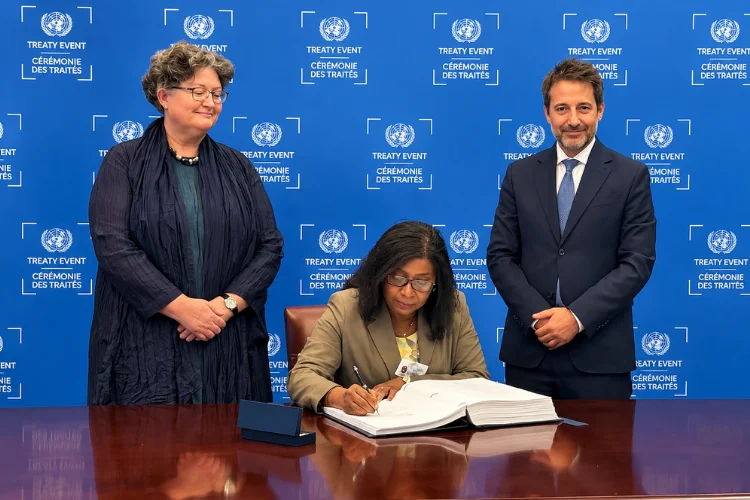
Ahead of the general debate, the team held a coordination meeting at Gabon’s permanent mission to the UN to align its positions. The groundwork produced tangible results. On Wednesday, the minister signed two instruments on behalf of the Gabonese state: the Treaty on the Prohibition of Nuclear Weapons and the convention on combating cybercrime.
Behind those signatures sits a broader national agenda that several ministries have been mobilised around. The priorities include climate action, the protection of forests and oceans, health, housing and digital transformation. For a country that markets itself as a guardian of the Congo Basin, the climate and forest files are the ones likely to draw the most international attention.
Signals from New York and what comes next
For now, the mood around Gabon’s participation mixes pride with impatience. The vice-presidency offers a platform to defend national interests and deepen partnerships, but it also raises the bar. Analysts argue that the real test will be whether Libreville can turn a procedural seat into a durable diplomatic asset, especially on issues where it wants to be heard.
The week’s headline moment is expected on 26 September, when Tassyla-Ye-Doumbeneny delivers Gabon’s official address before the General Assembly on behalf of the president. That speech will be watched closely, not only for its content but for the tone it sets for the rest of the session.
Beyond the podium, the debate at home and abroad is likely to continue. The question now is less about whether Gabon belongs at the table and more about what it intends to do with the seat it has finally secured.