
The Guinean government has taken a bold step against illegal gold mining by terminating the appointments of 22 public officials and security personnel. This unprecedented move, announced through a presidential decree, underscores deeper administrative and environmental concerns that have long fueled unregulated mining practices in the country.
The decision, broadcast nationwide, signals a pivotal moment in Guinea’s efforts to reclaim control over its mineral wealth and enforce environmental safeguards across its gold-rich regions.
Behind the sanctions: roles, responsibilities, and environmental fallout
The suspended officials, including Colonel Fayimba Mara, Prefect of Siguiri, have been implicated in both illegal gold panning and environmental violations. Their removal comes amid growing national and international pressure to address the destructive consequences of clandestine mining operations.
These practices have led to severe land degradation, water pollution, and loss of arable land—directly threatening the livelihoods of local communities. Reports indicate that the use of toxic chemicals in extraction processes has further exacerbated ecological damage, contaminating rivers and farmlands critical to regional food security.
Who was removed from office?
The decree targets a cross-section of territorial and security leaders operating in Siguiri, a key gold-producing area in Upper Guinea. The list includes:
- Captain Mohamed Lamine Keita, Acting Prefect of Kintinian
- Captain Sory Camara, Acting Prefect of Siguirini
- Commandant Fodé Isaac Camara, Sub-Prefect of Niagassola
- Lieutenant-Colonel Pépé Doualamou, Sub-Prefect of Bankon
- Naman Kourouma, Sub-Prefect of Kiniébakoura
- Abou Kanté, Sub-Prefect of Norassoba
- Richard Yaradouno, Sub-Prefect of Naboun
This coordinated removal reflects a systemic challenge in enforcing mining regulations and highlights the involvement of public servants in facilitating illegal activities.
State institutions mobilized for enforcement and accountability
The implementation of this decree relies on a broad inter-ministerial collaboration. Six key ministries have been tasked with overseeing the enforcement process:
- Territorial Administration and Decentralization
- National Defense
- Security and Civil Protection
- Justice and Human Rights
- Employment and Social Protection
- Modernization of Public Administration and Civil Service
This unified response points to a strategic shift in governance, positioning regulatory compliance and environmental protection as core national priorities. However, questions remain about the practical effectiveness of monitoring mechanisms and the capacity to prevent future violations.
Nimba Gold Refinery: a step toward national value creation
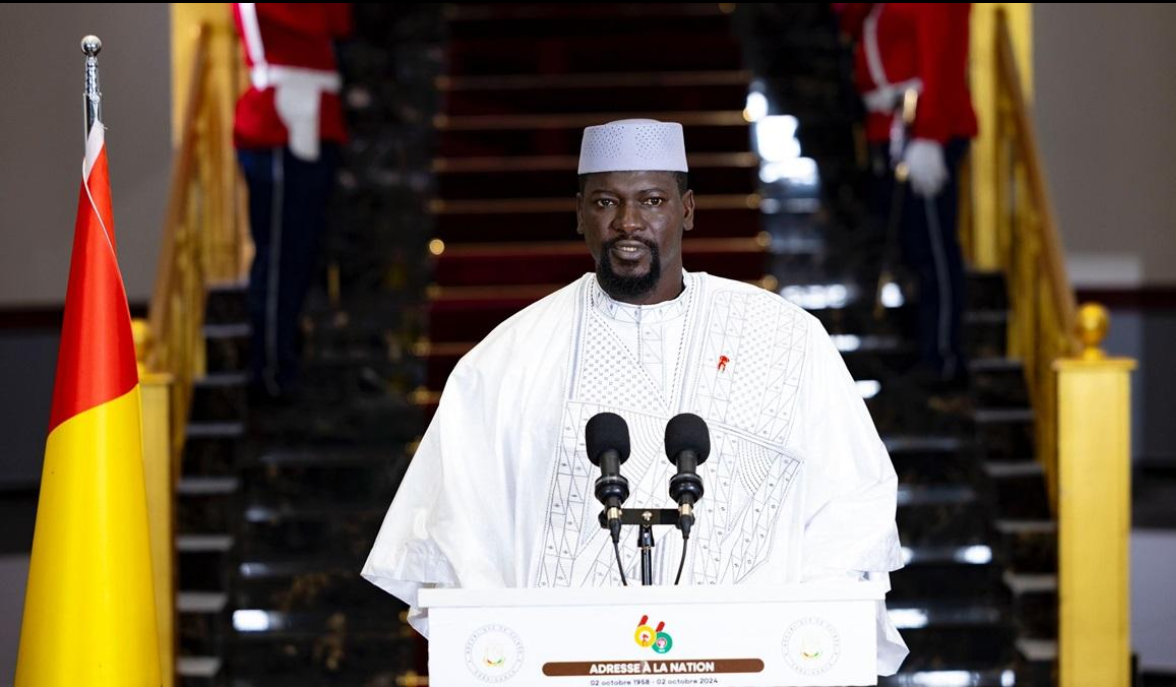
Just days before the sanctions were announced, President Mamadi Doumbouya inaugurated the Nimba Gold Refinery (NGR) in Conakry. Located within the Cité de l’Air industrial zone, the facility represents Guinea’s first gold refining plant and marks a turning point in the country’s mineral processing ambitions.
The refinery aims to reduce reliance on raw material exports by enabling local transformation of gold, thereby increasing economic value and job creation. Its establishment aligns with the national development strategy, including the Simandou 2040 program, which seeks to integrate industrialization with sustainable resource governance.
The dual challenge: enforcement vs. economic transformation
Guinea now faces a dual imperative: curbing illegal mining through strict enforcement while building a legal and sustainable gold industry. The recent sanctions demonstrate political resolve, but their long-term success hinges on transparent oversight, equitable resource distribution, and environmental conservation.
As authorities move forward, the spotlight turns to whether Guinea can balance economic growth with ecological responsibility—ensuring that its mineral wealth benefits all citizens, not just the networks that exploit regulatory gaps.
Ultimately, the true test lies not in the removal of officials, but in the sustained ability to protect both the environment and the nation’s future.