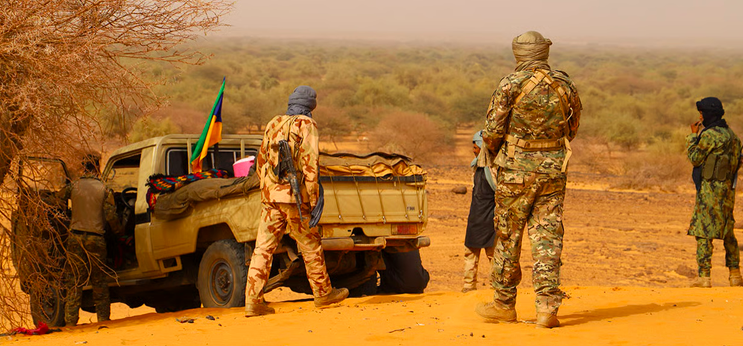

A massive ransom payment of nearly $50 million, disbursed in late 2025 to secure the release of foreign hostages held by Al-Qaïda-affiliated militants in Mali, has become a turning point in the group’s financial and operational expansion across West Africa.
United Nations experts highlighted in a confidential report that this unprecedented ransom not only bolstered the Jama’at Nusrat al-Islam wal-Muslimin (JNIM) operations in the Sahel but also funneled a portion of the funds to the central command of Al-Qaïda and its Yemeni branch.
From ransom to regional power
The report, dated August 10, 2026, details how the funds were distributed among various Al-Qaïda-linked factions operating in the Sahel region. While neither the hostages nor the payers were explicitly named, three regional sources identified the United Arab Emirates as the entity responsible for transferring the funds. Three individuals—an Emirati national, a Pakistani, and an Iranian—were reportedly freed in exchange for the payment.
An official from the United Arab Emirates declined to comment on the specifics, reaffirming the country’s commitment to combating terrorism and cutting off extremist financing channels.
The JNIM’s growing influence
The JNIM, considered the most active Al-Qaïda affiliate in the Sahel, has seen its ranks swell to between 7,000 and 8,000 fighters, with half based in Mali. The report underscores how the ransom money played a pivotal role in funding the group’s military campaigns, particularly its offensive operations across Mali.
In April 2026, JNIM militants launched a bold attack on Bamako, the Malian capital, resulting in the death of the country’s Defense Minister. Just two months later, the group escalated its tactics by offering multi-million euro bounties for intelligence leading to the capture of the Malian President.
Financing extremism through kidnapping
Security sources reveal that ransom demands for foreign hostages typically range from $4 to $6 million. However, the 2025 payment dwarfed these figures, signaling a shift in strategy. According to the UN, the JNIM views kidnapping not just as a lucrative revenue stream but also as a psychological weapon to undermine public trust in state institutions across the Sahel.
Analysts warn that such large-scale ransom payments risk encouraging further hostage-taking, creating a dangerous cycle of funding for extremist networks in the region.