
Kemi Seba and the Bittereinders leader: an alliance that exposes a radical reality
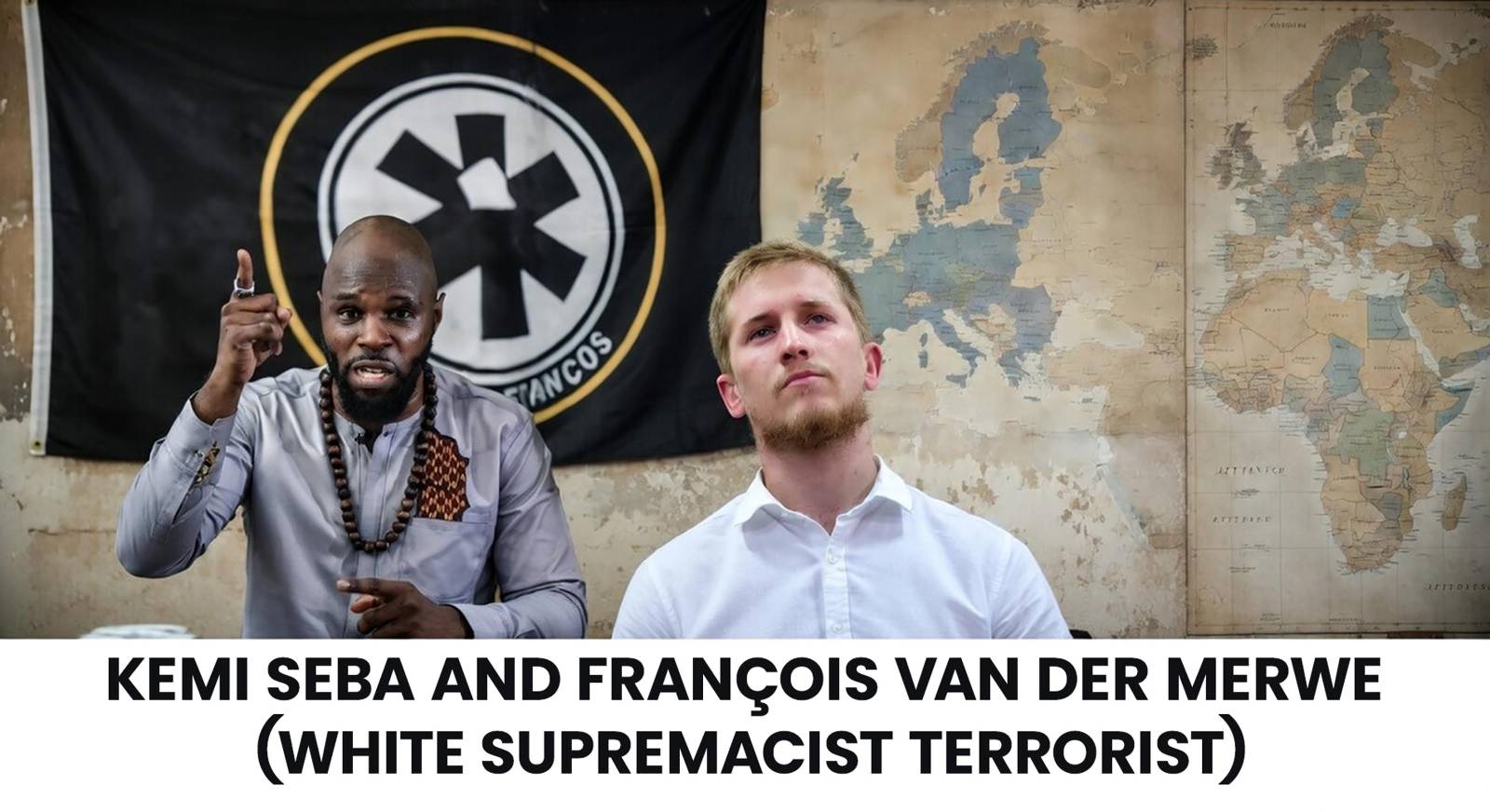
Certain arrests do more than just remove a person from the streets; they serve as a profound revelation of hidden truths. The detention of Kemi Seba in South Africa on Wednesday, April 15, falls into this category. It is not just the arrest itself that is significant, but the identity of the individual taken into custody alongside him and the nature of their financial arrangement.
The profile of François van der Merwe and the Bittereinders
Accompanying Seba was 26-year-old François van der Merwe, a Pretoria native who serves as the director of the Bittereinders. This organization is not merely a political group; South African authorities have officially classified it as a terrorist entity. To grasp the weight of this association, one must look at the history and objectives of the movement Van der Merwe leads.
The term “Bittereinders” dates back to the final stages of the Second Boer War (1899–1902). It referred to a faction of Boer fighters who viewed any form of surrender to British forces as a betrayal of their race and civilization, choosing to fight to the “bitter end.” Van der Merwe has intentionally revived this name to signal a continuation of that uncompromising struggle, moving from a symbolic legacy to a modern, radical program.
The modern movement and the Volkstaat vision
The contemporary Bittereinders emerged following the unrest in Senekal after the murder of Brendan Horner. Van der Merwe founded the group on the belief that Black political power in South Africa represents a fundamental threat to the Afrikaner people. Their platform is explicit: they advocate for the creation of a Volkstaat—a sovereign, racially exclusive state where Black South Africans would be denied citizenship.
This ideology mirrors the most extreme wings of Afrikaner nationalism seen during the transition from Apartheid, such as the AWB. Since its founding in 2021, the movement has been under the watch of the State Security Agency. The group openly participates in paramilitary-style tactical training and self-defense drills, often sharing footage of these activities to showcase their preparedness for conflict.
A history of legal defiance
Van der Merwe’s personal history is marked by repeated clashes with the law. In late 2023, he was arrested for a physical altercation in a pub. While out on bail, he led a group of Bittereinders to a protest in Groblersdal, where he was again arrested for assaulting a police officer and inciting violence. During his legal battles, he has adopted the slogan “Soet is die Stryd” (Sweet is the Struggle), a phrase from Afrikaner poetry that highlights his deepening commitment to his cause despite judicial pressure.
The 250,000 rand transaction
The connection between the Pan-Africanist activist Kemi Seba and this extremist leader is reportedly financial. According to the Hawks, South Africa’s specialized crime unit, Van der Merwe allegedly acted as a fixer for Seba. It is claimed that Seba paid him approximately 250,000 rands (over 13,000 euros) to facilitate an illegal crossing into Zimbabwe via the Limpopo River, with the eventual goal of reaching Europe.
This payment is legally precarious. Under South African counter-terrorism laws, providing funds to a leader of a designated terrorist organization is a major criminal offense, regardless of the intent behind the transaction. Seba did not just coordinate with Van der Merwe; he allegedly financed him.
A narrative in collapse
For years, Kemi Seba has cultivated an image as a defender of Black sovereignty and a critic of Western imperialism. He has built a significant following by speaking about African dignity and the fight against systemic oppression. However, these recent events create a sharp contradiction. By allegedly funding a man whose movement seeks to restore a form of Apartheid and views Black political rights as an “occupation,” Seba’s public persona is facing a crisis of legitimacy.
The legal challenges now facing Seba—ranging from illegal immigration and conspiracy to the potential financing of a terrorist entity—are severe. Beyond the courtroom, he faces a historical reckoning: the champion of Pan-Africanism stands accused of bankrolling a movement dedicated to white supremacy and racial segregation.