
Mali’s economic outlook darkens as moody’s flags rising risks
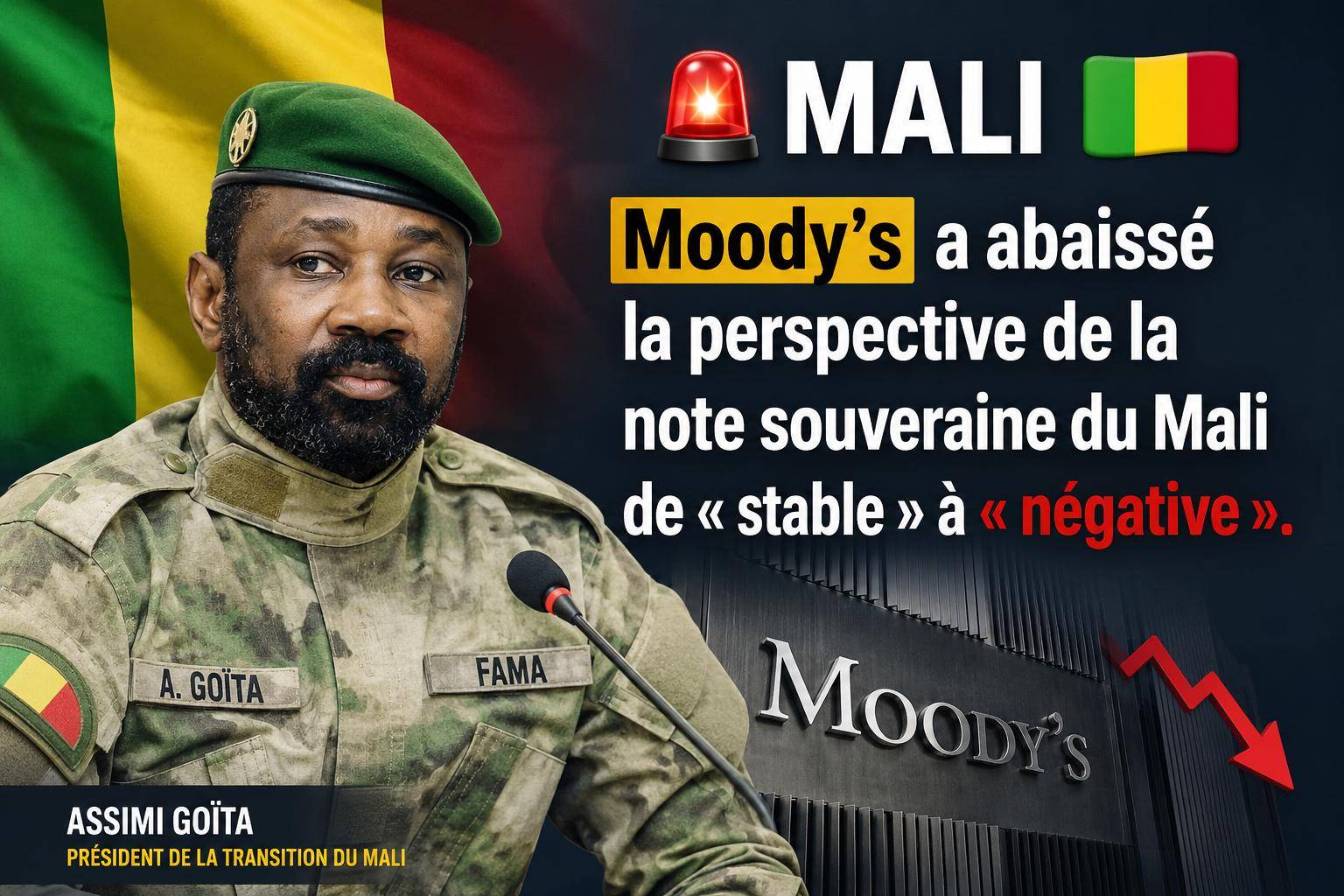
Mali’s economic trajectory has taken a sharp turn for the worse after the global ratings agency Moody’s downgraded the country’s sovereign credit outlook from stable to negative, while keeping its Caa2 rating unchanged. The move reflects mounting pressures on multiple fronts—security threats, financing bottlenecks, and political instability—all of which are eroding investor confidence and complicating the nation’s path to sustainable growth.
Security woes and fiscal strain weigh heavily on Mali’s economy
The decision by Moody’s serves as a stark warning to international and regional investors. By shifting the outlook from stable to negative, the agency signals a heightened risk of further credit rating downgrades in the near to medium term. The existing Caa2 rating already places Mali’s sovereign debt in the speculative, high-risk category, a status that discourages long-term investments.
The primary concern highlighted by Moody’s is the escalating security crisis. Despite ongoing military reforms and counterterrorism operations, violent extremism continues to ravage key regions. These attacks disrupt supply chains, cripple agricultural productivity, and hinder the government’s ability to collect taxes efficiently, particularly in rural and border areas.
Regional financing crunch tightens its grip on Bamako
Beyond security, Mali faces a severe financing squeeze. After losing access to traditional external funding due to diplomatic and institutional ruptures, the country has increasingly relied on the regional debt market of the West African Economic and Monetary Union (WAEMU). However, this lifeline is now under strain.
The West African Central Bank (BCEAO) has aggressively raised interest rates to combat inflation, pushing borrowing costs to record highs. For Mali’s Treasury, this means paying significantly more to raise capital. Recent bond and treasury bill issuances have seen lukewarm subscription rates, revealing growing wariness among regional investors—especially commercial banks—toward Mali’s creditworthiness. This tightening of the financial spigot limits the government’s ability to fund critical infrastructure and essential public services.
Political uncertainty casts a long shadow over economic recovery
Mali’s prolonged political transition is another major red flag for Moody’s. Repeated delays in holding elections and the unclear path to restoring constitutional order have dampened the enthusiasm of both domestic and international lenders. The government’s recent withdrawal from the Economic Community of West African States (ECOWAS), formalized under the Alliance of Sahel States (AES) alongside Niger and Burkina Faso, has further complicated the outlook.
While Malian authorities frame this move as a step toward regained sovereignty and new strategic partnerships, global financial markets view it with skepticism. Investors fear potential trade barriers, capital flow restrictions, and legal ambiguities that could disrupt cross-border commerce and financial integration in the subregion.
Real-world consequences for Mali’s citizens
The ripple effects of Moody’s downgrade extend far beyond balance sheets. Higher borrowing costs for the state mean less funding available for essential services like healthcare, education, and food subsidies. For businesses, the impact is immediate and severe. Local banks, heavily exposed to government debt, are tightening credit lines to the private sector. Small and medium-sized enterprises (SMEs), the backbone of Mali’s economy, are struggling to access loans, stifling job creation and economic dynamism.
Despite these challenges, Mali’s economy retains pockets of resilience, particularly in the gold mining and cotton production sectors. Yet, these strengths cannot fully insulate the country from the realities of global finance. To reverse the negative outlook and restore investor trust, Malian leaders must strike a delicate balance: restoring security, clarifying the political roadmap, and demonstrating fiscal discipline. Only then can the nation hope to unlock the capital it desperately needs to rebuild and grow.