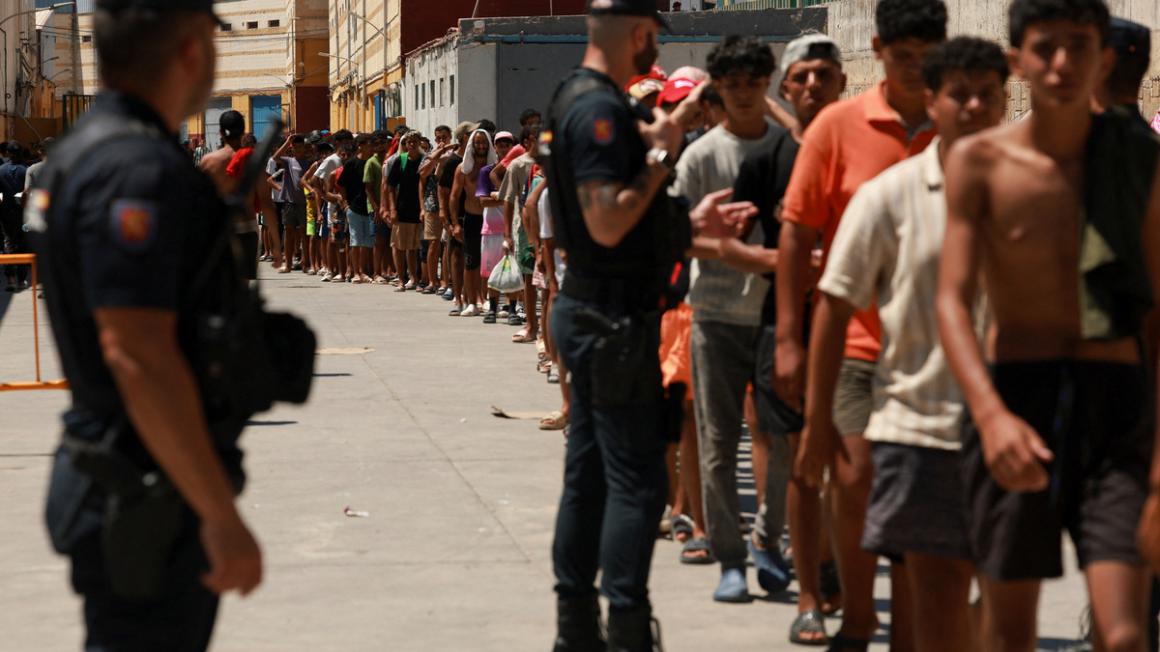
Following the sudden arrival of thousands of migrants from Morocco into the Spanish enclave of Ceuta, Moroccan authorities have pledged their full cooperation in facilitating the return of unaccompanied minors.
Morocco is taking decisive action. The government in Rabat has confirmed it is prepared to assist in the repatriation of unaccompanied minors currently stranded in Ceuta after tens of thousands crossed illegally from Morocco into the Spanish territory. However, officials point to significant legal challenges within Spain’s judicial system that may hinder these efforts, according to a diplomatic source.
Under this commitment, Morocco will work to identify and document unaccompanied minors with the goal of reuniting them with their families. The country will also collaborate closely with Spanish and European partners to ensure safe and orderly returns, a source told the official Moroccan Press Agency (MAP) on condition of anonymity.
Yet, these partners must first resolve internal legal and administrative hurdles that currently block the process, the source emphasized.
Ceuta sees record migration surge
In late July, Ceuta experienced an unprecedented migration wave, with nearly 72,000 people entering irregularly within days—a figure that shattered previous records. Of those, approximately 70,000 have already been returned to Morocco, according to Spain’s Interior Ministry. The remaining individuals, including unaccompanied minors, remain in Ceuta, as Spanish law prohibits their expulsion.
Local authorities in Ceuta report that over 1,000 of the roughly 2,000 people still present are unaccompanied minors. Their countries of origin have not been disclosed. Child protection groups have raised urgent concerns about the heightened risks these vulnerable individuals face, including exploitation, human trafficking, and abuse.
Meanwhile, at least 80 lives have been lost during the crossing, primarily due to drowning, according to a Spanish forensic medicine commission. Moroccan officials have separately reported 11 fatalities on their side of the border.