Niger enacts harsh anti-lgbtq law with up to 20 years in prison
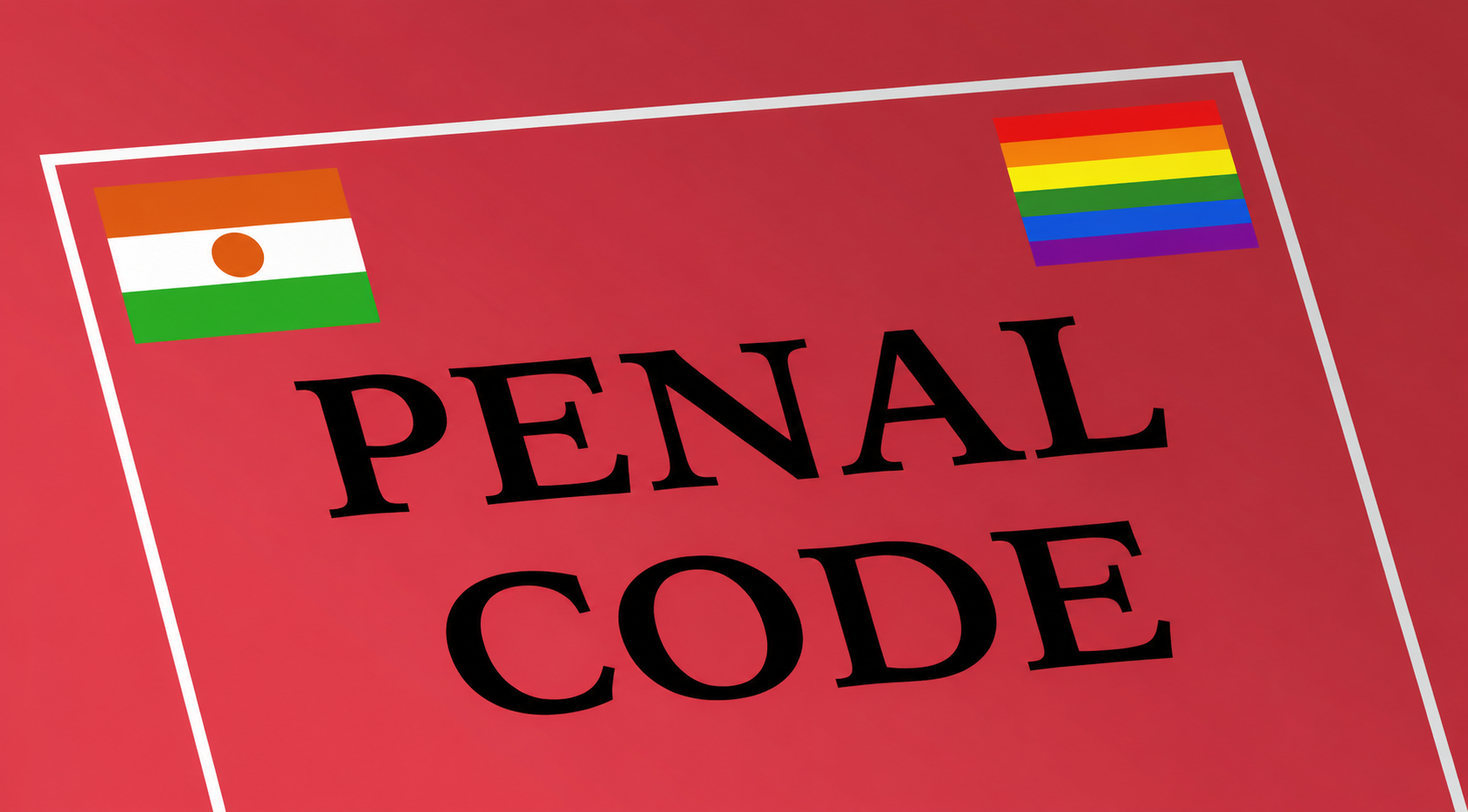
Niger has taken a dramatic legal step, officially criminalising same-sex relations and LGBTQIA+ advocacy. The country, which previously had no explicit law on the matter, now enforces some of the stiffest penalties in West Africa under a new penal code quietly signed by the military regime in February 2026.
What the new law says
The legislation, published in the official journal, goes beyond banning homosexual acts. It broadly defines crimes and imposes severe sentences:
- Base prison terms: Anyone committing or attempting an “indecent or unnatural act” or LGBTQIA+ practices faces 5 to 10 years in prison.
- Aggravated circumstances (up to 20 years): Penalties may double to 20 years for certain specific offences tied to such practices.
- Record fines: Financial penalties can reach 500 million CFA francs (about €750,000), with no possibility of parole or suspended sentences.
- Targeting activism and support: The same prison terms apply to anyone who “manages, directs, operates, finances or participates in clubs, societies, organisations or associations for homosexuals or LGBTQIA+.” Organisers or witnesses of same-sex weddings also face identical sanctions.
Authorities cite sovereignty and cultural values
General Abdourahamane Tiani’s regime presents the reform as essential for national cohesion. Justice Minister Alio Daouda publicly backed the direction, stating, “We wanted to adapt our law to the country’s social and cultural values.”
This rhetoric aligns with the junta’s broader political stance, emphasising sovereignty and rejecting what it calls “Western interference” in local customs. The societal hardening was not sudden: as early as 2024, the government removed certain sex education modules from school curricula and banned reproductive health awareness apps, arguing they undermined the values of this predominantly Muslim and conservative nation.
Regional trend of stricter laws
Niger’s move is part of a pattern across West Africa, where several countries have tightened anti-LGBTQ legislation amid political transitions and religious pressure:
- Niger (February 2026): From legal ambiguity to one of the region’s harshest codes, with up to 20 years in prison and record fines.
- Senegal (May 2026): Recently doubled prison terms for “unnatural acts,” raising the maximum sentence to 10 years.
- Burkina Faso (2025): Formally criminalised homosexuality last year, setting a maximum penalty of 5 years.
- Ghana (2024–2026): After a prolonged legislative and judicial battle over its anti-LGBT+ bill, the legal framework now punishes such practices and their promotion with 3 to 5 years in prison.
Human rights groups sound alarm
The enforcement of this penal code has sparked deep concern among international bodies and local NGOs. Human rights defenders warn that the law exposes an already stigmatised minority to greater risks of violence, false accusations, and extortion.
Humanitarian workers on the ground fear these provisions will hinder access to essential healthcare, particularly HIV prevention, by driving vulnerable populations further underground. With more than 30 of Africa’s 54 countries now criminalising same-sex relations, Niger has aligned itself with the most repressive legal regimes in the sub-region.