
Six key air bases across Libya have become critical hubs for Russian military operations, raising serious concerns about Moscow’s growing influence in North Africa. Intelligence assessments indicate that Russian forces are not only reinforcing their presence but also using these facilities to channel weapons, mercenaries, and fighters into active conflict zones across the continent.
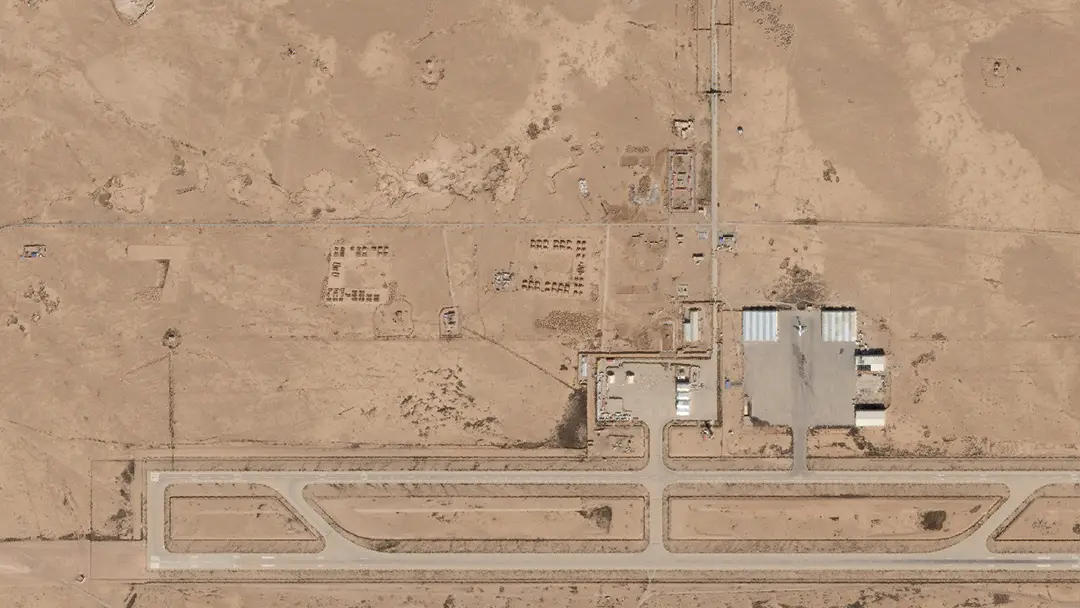
Satellite and geospatial data reveal that the Kremlin is actively funding, constructing, and staffing infrastructure at these bases—Al-Joufra, Al-Khadim, Al-Qardabiyah, Brak Al-Shati, Maaten al-Sarra, and Tamenhant—each strategically positioned to project power deep into the Sahel and beyond. These locations now host advanced military hardware, including air defense systems, MiG-29 fighter jets, and drones, alongside Russian military personnel and allied mercenaries.
Maaten al-Sarra: A strategic gateway to the Sahel
Among these bases, Maaten al-Sarra stands out as a linchpin for Russian operations in the Sahel. Situated in southern Libya near the borders with Chad and Sudan, this once-abandoned facility was revitalized in late 2024 through the deployment of Syrian troops and Russian technicians. The base now serves as a logistical nexus, enabling Moscow to supply arms and fighters directly to conflict hotspots in Burkina Faso, Mali, and Sudan.
Analysts warn that the base’s proximity to these countries allows for discreet arms trafficking into Sudanese and Chadian territories, bypassing international scrutiny. The restored runways and reinforced storage warehouses at Maaten al-Sarra have transformed it into a critical transit point for destabilizing activities across the region.
Al-Khadim: A multifunctional military and logistical center
Located roughly 100 kilometers east of Benghazi, Al-Khadim has evolved into a hub for arms trafficking and resource exploitation. In recent years, the base has seen significant upgrades, including the construction of three new hangars, a recreational facility, and what appears to be a communications tower and temporary housing. A barracks was added in 2026, reflecting the base’s expanding role.
Investigations have linked Al-Khadim to covert operations in the Central African Republic, where a Gazprom affiliate was documented traveling from the base to a Russian-controlled mine in 2023. Geolocated social media posts have also identified a Russian officer from the 102nd Motorized Rifle Division stationed at the base, underscoring Moscow’s direct involvement in its operations.
Al-Joufra and Al-Qardabiyah: Power projection in central Libya
The air base at Al-Joufra, active since 2019, has undergone substantial upgrades, including refurbished hangars and the construction of new structures, barriers, and storage facilities. Meanwhile, Al-Qardabiyah—connected to the Syrte International Airport—has seen new infrastructure, runway renovations, and perimeter defenses added in 2024, with additional hangar repairs completed this year.
These bases are not merely static military outposts; they are active platforms for conducting operations, facilitating arms transfers, and undermining regional stability. Their continued expansion suggests a long-term strategy to consolidate Russian influence in Libya and the broader Sahel.
Brak Al-Shati and Tamenhant: Southern strongholds with expanding roles
Since March 2024, Russian forces have significantly expanded operations at Brak Al-Shati in southwestern Libya, constructing new hangars and maintenance buildings to support aerial operations. The base’s personnel strength has grown from 300 to 450 since late 2024, indicating a deliberate buildup.
Tamenhant, located in southern Libya, has historically been a launchpad for Wagner Group mercenaries—now part of the Africa Corps—to conduct military operations and facilitate arms shipments to Sudan. Recent expansion projects, including new housing, improved roads, and runway modifications, signal ongoing efforts to enhance its operational capacity.
Obstacles to peace and regional stability
The Kremlin’s military footprint in Libya is also complicating efforts to unify the country under a single government. Foreign troops and mercenaries, including Russian forces, continue to operate with impunity, undermining the fragile peace process. Analysts note that Moscow’s presence emboldens foreign-backed factions to resist peace initiatives, prolonging instability in the region.
As Russian military activity intensifies across these Libyan air bases, the implications for North Africa and the Sahel are profound. The expansion of infrastructure, personnel, and logistical capabilities points to a sustained strategy to deepen Moscow’s influence, with potential consequences for regional security and conflict dynamics.