Russian wheat delivery to Burkina Faso sparks debate over food sovereignty claims
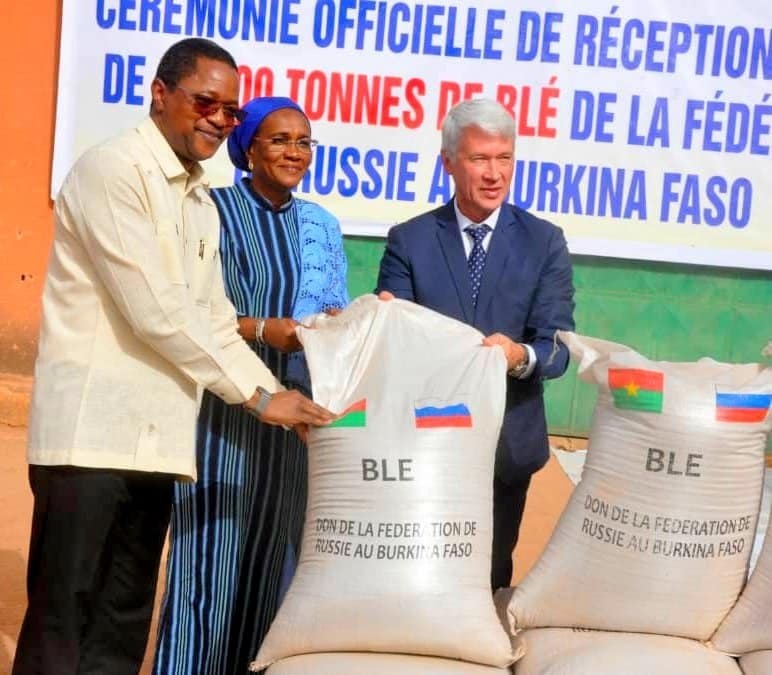
The gap between official rhetoric and reality on the ground has become almost absurd. While Captain Ibrahim Traoré repeatedly declares in his speeches that Burkina Faso is on the verge of food self-sufficiency thanks to its agropastoral initiatives and “reclaimed sovereignty,” the transitional authorities once again rolled out the red carpet on Wednesday, September 23, 2026, to receive a shipment of 25,000 tonnes of wheat donated by the Russian Federation.
Reactions to the wheat donation: a nation divided
The arrival of this Russian wheat has ignited a fierce public debate across Burkina Faso. Supporters of the government view the shipment as a testament to strengthened international partnerships and a pragmatic response to urgent food needs. Critics, however, see it as a glaring contradiction to the self-sufficiency narrative, arguing that a truly sovereign nation should not rely on foreign grain to feed its people.
Social media and local radio stations have become arenas for this heated exchange. Some citizens express gratitude for the immediate relief the wheat will bring to vulnerable communities, while others question the long-term implications of such dependency. The government has yet to address these concerns directly, leaving many to wonder what this means for the country’s agricultural future.
What lies ahead for Burkina Faso’s food sovereignty
The timing of this donation raises pressing questions about the trajectory of Burkina Faso’s agricultural policy. If the country is indeed approaching self-sufficiency, why does it continue to accept massive grain shipments? The answer may lie in the ongoing security crisis, which has displaced millions and disrupted farming across large swaths of rural territory. Reclaiming those areas and restoring agricultural productivity will be essential for any genuine progress toward food independence.
Looking forward, the government faces a critical choice: double down on its self-sufficiency rhetoric or acknowledge the need for sustained external support while working to rebuild domestic capacity. The international community, particularly Russia, will likely play an increasingly prominent role in shaping this outcome, with geopolitical and economic consequences that extend far beyond the wheat itself.
The hidden costs of a “gift”
Behind the label of “humanitarian generosity” and strategic partnership with Moscow lies a political and financial transaction whose details remain deliberately obscured. In diplomatic jargon, the term “free gift” serves as a smokescreen. Several informed observers point to a disguised purchase or a highly political barter: in exchange for these grain shipments, Russia consolidates its geopolitical, security, and economic grip on the country, trading food for strategic concessions in gold mines, economic contracts, and unreserved diplomatic alignment.
These 25,000 tonnes of wheat are not free; they are paid for at a high price of external dependency and sovereign concessions. Far from an act of selfless solidarity, this transfer resembles a political bill settled indirectly by the Burkinabe taxpayer.
The diplomacy of the feeding bowl
Presenting an external supply operation as a symbol of sovereignty amounts to an inversion of values. A truly sovereign people produces what it consumes on its own soil, under the protection of its own security forces. As long as Captain Ibrahim Traoré’s rhetoric of rupture clashes with the reality of imported wheat sacks to meet immediate emergencies, sovereign self-sufficiency will remain what it is today: a communication illusion.