
May has long been synonymous with social upheaval in Senegal, dating back to the iconic uprisings of 1968. The month begins with International Workers’ Day, a date that amplifies calls for labor rights and economic justice.
This year, the Senegalese capital is witnessing a resurgence of tensions across multiple critical sectors. What began as isolated grievances has rapidly evolved into a coordinated wave of protests, uniting students, transport workers, public employees, and civil servants in a shared demand for accountability.
a month steeped in historical protest
The timing of these demonstrations is far from coincidental. May holds deep symbolic weight in Senegal’s collective memory, echoing the 1968 French May protests that inspired student movements across West Africa. The 1st of May, International Workers’ Day, serves as a rallying point for labor unions, while the broader month often becomes a flashpoint for social dissatisfaction.
transport workers halt Dakar’s mobility
On May 14, drivers and agents of the Association de Financement des Professionnels du Transport Urbain (AFTU) launched a strike that crippled urban transport in Dakar. The dispute centers on electronic ticketing systems, with AFTU accusing a private operator of mismanaging fare collection. The Tribunal de Grande Instance de Dakar intervened by suspending new ticketing machines and seizing installed units at terminals, sparking outrage among transport workers. The gridlock left commuters stranded and highlighted the fragility of the capital’s transport infrastructure.
ageroute employees challenge leadership over human rights concerns
Tensions at the Agence des Travaux et de Gestion des Routes (Ageroute) have escalated following public criticism from Human Resources Director Cheikh Ahmed Tidiane Thiam. In a scathing statement, Thiam condemned the agency’s new leadership for its lack of consultation and systematic undermining of staff morale. Workers allege that 23 employees were abruptly dismissed, further straining an already tense work environment.
students of cheikh hamidou kane university demand overdue stipends
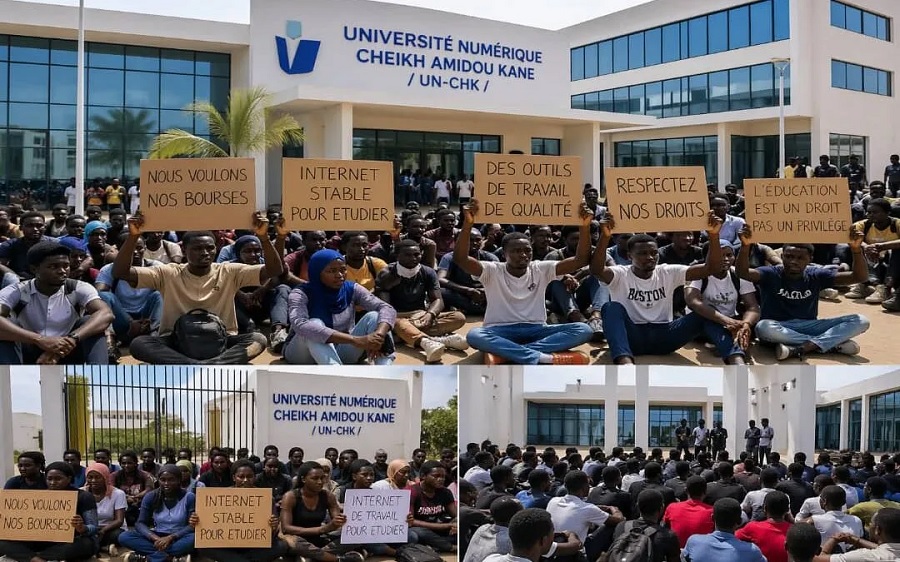
Students from the 10th cohort at the Université Numérique Cheikh Hamidou Kane (UN-CHK) have taken to the streets, protesting the non-payment of their full scholarships. They report receiving only two years of financial aid out of the three allocated for their three-year degree program. The students have urged authorities to resolve the payment delays, warning that academic progress is being jeopardized.
a growing chorus of discontent
From transport strikes to university sit-ins, Senegal’s social fabric is under strain. Workers, students, and public servants alike are raising their voices against what they perceive as systemic neglect and administrative failures. The convergence of these protests in May underscores a broader dissatisfaction with governance and economic policies, leaving policymakers under intense scrutiny.