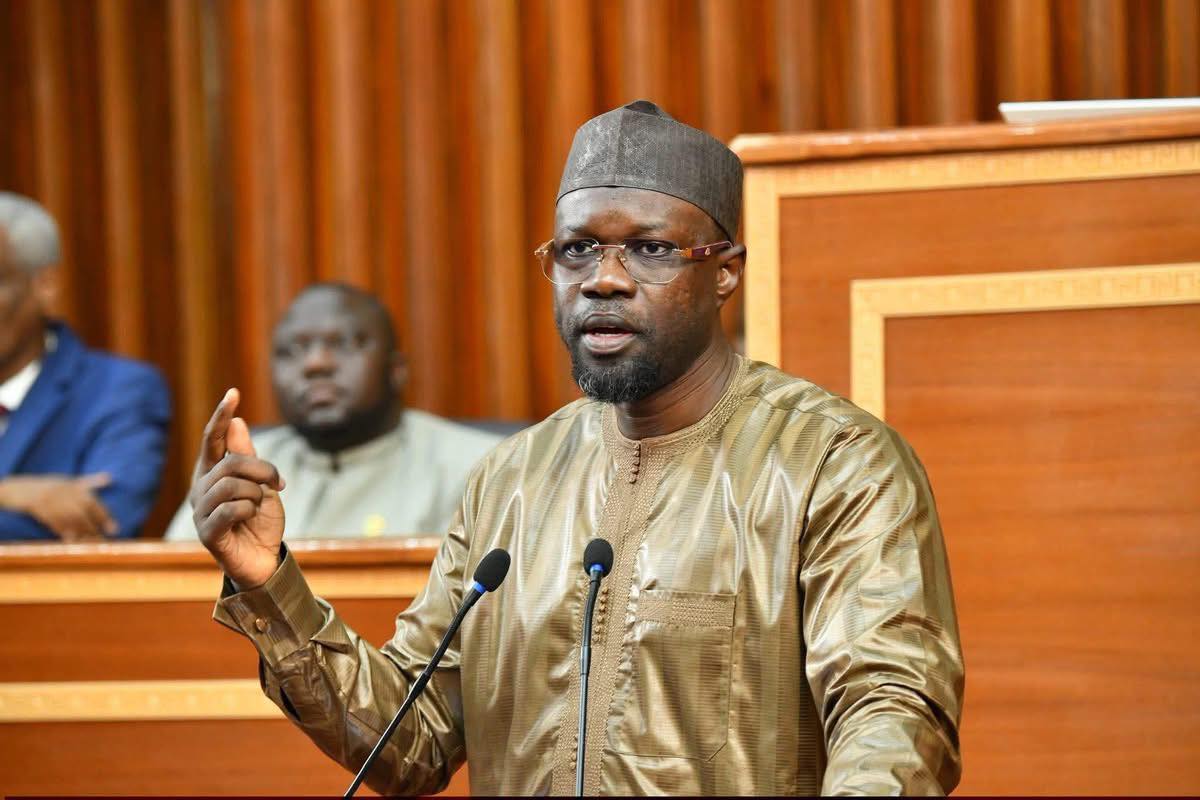

In a sequence of political maneuvers that appears meticulously planned, the leader of the Patriots has swiftly ascended to the presidency of the National Assembly, reinforcing perceptions of his relentless pursuit of institutional dominance. Could this development signal an impending deadlock at the highest echelons of the state?
The swiftness of Ousmane Sonko’s political rebound is striking. Following his abrupt removal from prior responsibilities, his sudden elevation to the Assembly’s presidency raises questions about the deliberate orchestration behind this transition. The timing of events—particularly the immediate resignation of the sitting Assembly President after Sonko’s disqualification—has left many observers questioning the natural flow of political processes.
Within days, the former opposition figure was installed in the speaker’s chair, granting him control over the legislative machinery. Critics argue that this move grants Sonko unprecedented influence over the nation’s legal and budgetary frameworks, effectively positioning him as a direct rival to the executive branch.
Institutional warfare: a new battleground
With the Assembly under his command, Sonko now wields the power to shape legislative agendas, influence lawmaking, and potentially obstruct government initiatives. Political analysts describe this as more than mere political rivalry—it represents a calculated strategy to paralyze governance.
« This is no longer standard political competition; it is a deliberate attempt to asphyxiate the state apparatus, » remarked one analyst who requested anonymity. « The battle for institutional supremacy has officially begun. »
From opposition to institutional dominance
The shift in Sonko’s public image has been stark. Once hailed as a champion of reform, he now faces accusations of prioritizing personal ambition over national progress. Detractors portray him as a pragmatic operator who exploits crises to consolidate his own power, rather than serving the public interest.
Regardless of perspective, one fact remains undeniable: Sonko has secured a pivotal role within Senegal’s political hierarchy. Whether this marks the fulfillment of a long-held aspiration or the opening salvo in a broader confrontation remains to be seen. What is certain is that the political landscape is undergoing a profound transformation, with the struggle for institutional control intensifying.