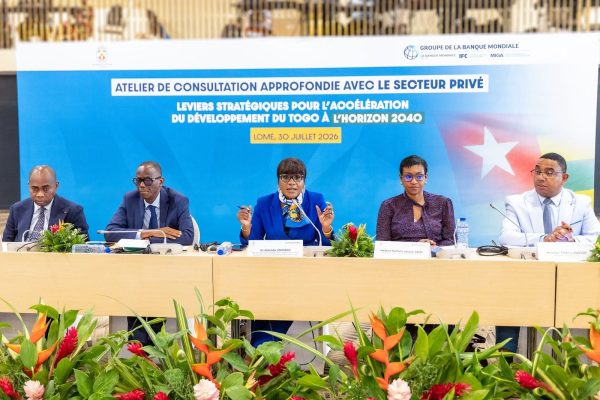
LOMÉ — The Togolese government is placing private enterprise at the heart of its long-term economic ambitions. On July 30, key economic stakeholders gathered in Lomé to address a critical question: how can the private sector become a driving force behind the country’s expected economic transformation in the coming years?
The workshop, focused on Vision Togo 2040 and the 2026-2031 government roadmap, brought together representatives from the World Bank Group, the Patronat, the Chamber of Commerce and Industry, major Togolese companies, and international experts. The event was inaugurated by Sandra Ablamba Johnson, Minister-Secretary General of the Presidency, acting on behalf of President Faure Essozimna Gnassingbé.
Elevating private sector ambitions
Beyond technical discussions, the workshop underscored a sweeping ambition: by 2040, the government aims to double the average Togolese standard of living and reduce poverty rates to below 15%. Achieving these goals will require leveraging the private sector’s investment capacity and job creation potential.
The reasoning is clear: the state alone cannot shoulder the burden of such a large-scale economic transformation. Greater capital attraction, support for local enterprises, and an enabling investment environment are essential.
From vision to actionable strategies
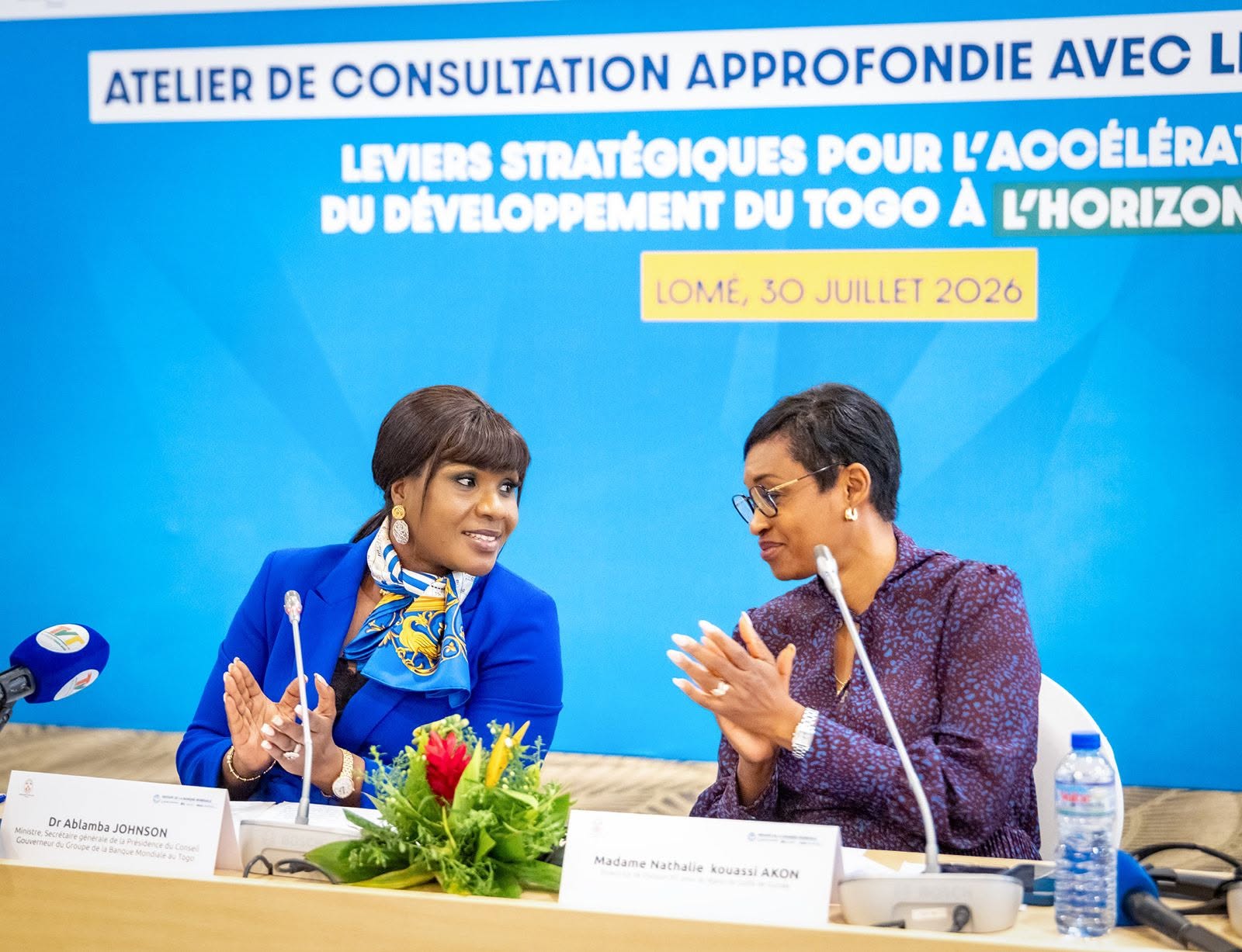
The workshop aimed to translate these aspirations into concrete measures. Participants explored how to transition the private sector from an economic participant to a full-fledged partner in public initiatives. Discussions centered on improving investment conditions, fostering business growth, mobilizing capital, and developing new productive activities.
Yet the ambition extends beyond setting goals. The government is now seeking an operational framework to turn the Vision Togo 2040 guidelines into tangible initiatives. The involvement of the World Bank and international experts adds a unique dimension to the process, allowing national priorities to be aligned with global best practices.
The private sector’s role in shaping Togo’s future

The message from the Lomé meeting is unequivocal: the next phase of Togolese development must rely more heavily on private enterprise and investment. Ultimately, this gathering marks a step toward a new growth model, with a 2040 vision of an economy capable of significantly improving living conditions for the population.
For Togolese authorities, the challenge now is to convert this ambition into decisive actions and, in turn, those actions into tangible results. Only then can the goals set for the coming years move beyond projections to become an economic and social reality.