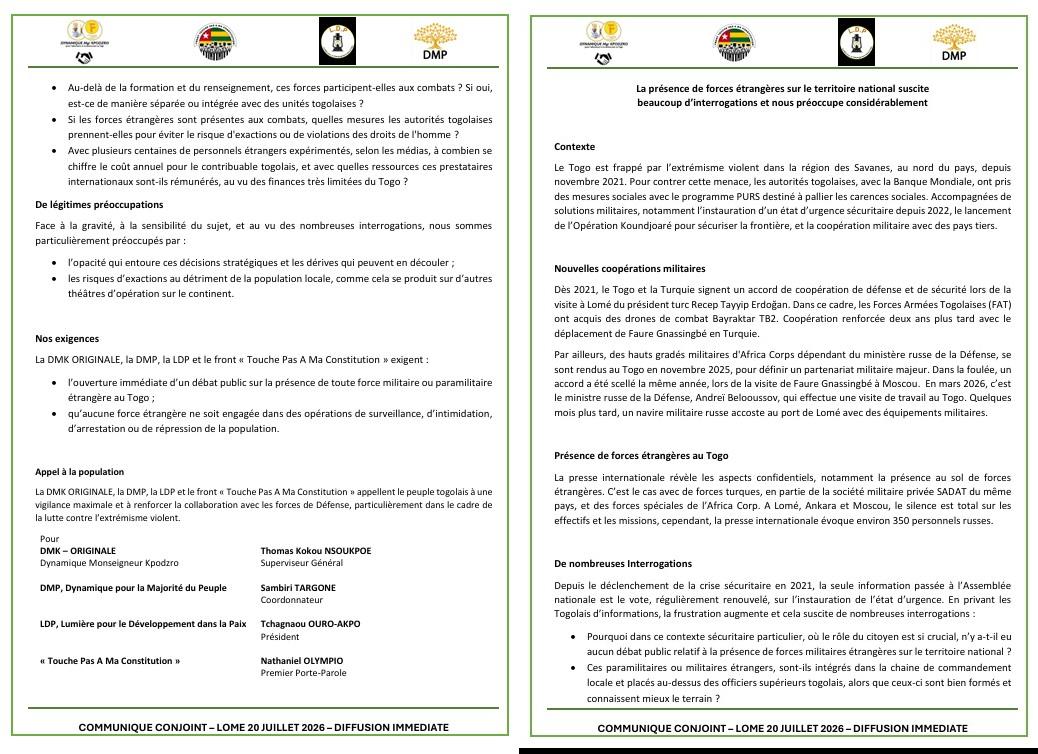

The presence of foreign military personnel on Togolese soil has sparked growing questions, as authorities remain tight-lipped about their exact roles and the terms of their deployment. Observers have noted the arrival of military advisors and personnel from countries such as Russia and Turkey, yet the government has provided no detailed public explanation regarding their missions or the legal framework governing their activities.
Questions over motives and transparency
In a democracy, matters of national defense are often treated with discretion, but persistent secrecy can erode public trust rather than bolster it. The lack of clarity surrounding these foreign military figures has fueled speculation about their true purpose, particularly as Togo grapples with domestic pressures. President Faure Gnassingbé’s administration has faced sustained criticism over governance issues, including economic challenges and allegations of institutional manipulation, raising concerns that external military support may be intended less for national security and more as a safeguard against potential political instability.
Is this a defensive strategy or a political lifeline? Critics argue that the deployment of foreign troops aligns less with protecting sovereign borders and more with reinforcing the regime’s grip on power. The opacity surrounding these partnerships only deepens skepticism, as citizens demand accountability in how their country’s security is managed.
Unanswered questions on operational and legal grounds
The absence of official details has left several key questions unaddressed. What are the precise duties of these foreign military personnel in Togo? Are they involved in training, intelligence-sharing, strategic advising, or the maintenance of military equipment? Alternatively, are their roles more direct, such as providing close protection for state officials or participating in internal security operations alongside Togolese forces?
Equally pressing is the issue of legal oversight. When foreign military personnel operate on national soil, their activities must be governed by clear agreements outlining their rights, responsibilities, and accountability mechanisms. What legal frameworks have been established in Togo to regulate their presence? Are there provisions to prevent abuses or ensure compliance with national and international laws?
The financial burden of secrecy
The cost of these foreign military engagements also remains unclear. How many personnel are currently deployed? What is the duration of their missions? Who bears the financial burden—Togo’s national budget, the partner countries, or bilateral cooperation agreements? Taxpayers, who fund public expenditures, have a right to understand the scale and implications of these arrangements.
While cooperation with foreign militaries is not inherently problematic—many nations engage in such partnerships to address shared threats, including regional terrorism—Togo’s failure to communicate openly risks fostering misinformation. A transparent approach would not only clarify objectives but also reinforce public confidence in the government’s security policies.
Transparency as a cornerstone of legitimacy
In an era of shifting security alliances across West Africa, the Togolese government faces a critical test: balancing national defense imperatives with the demand for accountability. While some details must remain classified for security reasons, authorities can—and should—provide sufficient information to dispel doubts. After all, in a functioning democracy, silence is not a sustainable policy. It merely paves the way for speculation, erodes trust, and undermines the very legitimacy the government seeks to preserve.