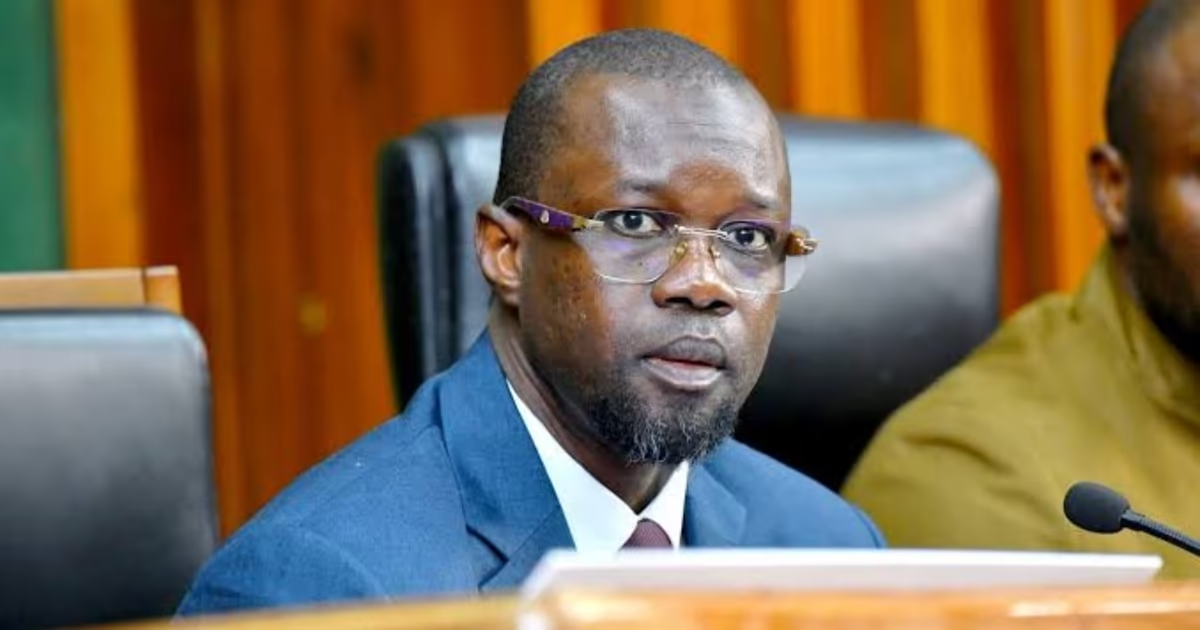

The corridors of the National Assembly in Dakar are buzzing with activity as Ousmane Sonko and his parliamentary bloc prepare to push forward a sweeping legislative agenda focused on accountability and institutional reforms. This parliamentary session promises to be one of the most consequential in recent years, with several high-stakes proposals taking center stage.
Legislative priorities: transparency and accountability at the forefront
At the top of the agenda is a landmark bill that would require the President of the Republic to submit a formal declaration of assets upon leaving office. This initiative, already receiving strong backing from the Minister of Justice, aims to establish a uniform standard for all senior public officials, ensuring greater financial transparency across government institutions. The proposed amendment to Article 37 of the Constitution reflects a broader push for open governance and reduced opacity in public finances.
Tightening controls on political financing
Another critical piece of legislation seeks to overhaul the regulation of political funds, which have long operated in a legal gray area. The new framework would introduce stricter oversight mechanisms to track the origins and utilization of these funds, addressing longstanding concerns about financial irregularities in political campaigns and party operations.
Parliamentary probes and strategic ratifications
The Bureau of the National Assembly has approved the formation of three investigative commissions, each tasked with examining sensitive files. The first will scrutinize the management of state-owned real estate assets, particularly after controversies surrounding the Cité Fayçal project and activities linked to the Sogepa. A second commission will re-examine the long-delayed TRS dossier, a persistent issue despite previous parliamentary initiatives from the Takku Wallu group. Additionally, the government is prioritizing several ratification bills, including the highly anticipated Petroleum Code, which aligns with the country’s evolving energy sector priorities.
Key takeaways
- Constitutional reform: A proposed amendment to Article 37 would mandate asset declarations for outgoing presidents, with full support from the Justice Ministry.
- Financial oversight: New legislation aims to bring political funding under stricter legal control, enhancing transparency in campaign financing.
- Commissions of inquiry: Three parliamentary probes will investigate state asset management, the TRS dossier, and other lingering governance issues.
- Energy legislation: The Petroleum Code ranks among the government’s top priorities, reflecting its focus on economic diversification.