Togo stands still: a silent protest against decades of entrenched power
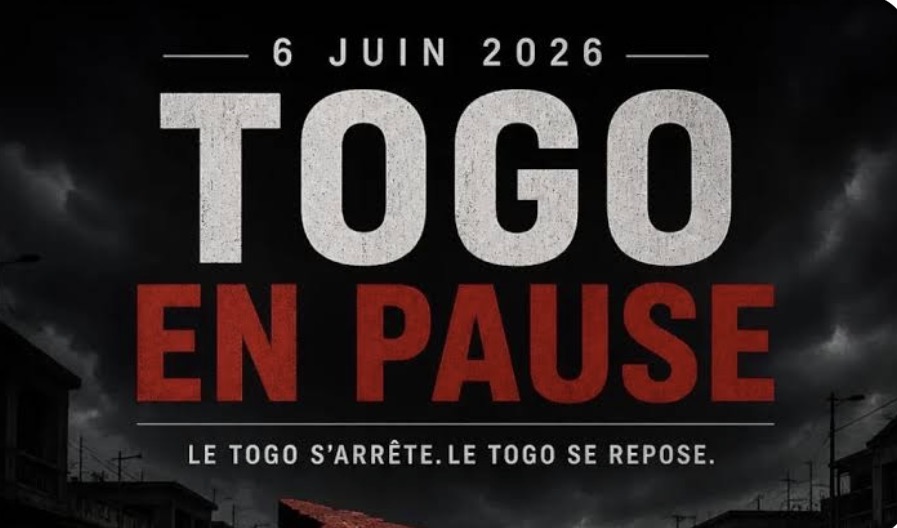
June 6, 2026, is not just another day of protest—it is a day of deliberate rupture. Since 1967, Togo has been governed by a deeply rooted system built on clan loyalty, military control, and ethnic favoritism. This structure has survived generations, reproducing itself without ever questioning its own legitimacy. Now, the movement « Togo en Pause », supported by the M66 coalition and the broader Togolese resistance, is calling for a radical shift: a refusal to play any role in a system designed to exclude the people.
Elections come and go, institutions are reshaped, and speeches are delivered—but the power never changes hands. Repression of dissent, suppression of critical voices, and systematic curtailment of freedoms are not exceptions; they are the very foundation of a regime built to endure.
A generation that rejects the status quo
The youth of Togo have grown up in a landscape where political alternatives are rare. They have heard the government’s narrative far more often than the voices of their own people. They have witnessed protests broken up by force, leaders silenced, and media outlets muzzled. They have experienced deep territorial inequalities, social stigmatization, and persistent divisions. Yet, they refuse to accept this as inevitable.
With « Togo en Pause », they are embracing a form of resistance that is both peaceful and uncompromising. The strategy is no longer to flood the streets, but to withdraw from them entirely. By staying home, suspending daily routines, and refusing to feed the system, they send a powerful message: absence speaks louder than presence. On June 6, every closed door, every empty market stall, and every quiet street will echo their demand for change.
A system designed to exclude
For decades, power in Togo has been concentrated in the hands of a tightly knit network blending military, ethnic, and civilian elites. Key positions in the army, security forces, public administration, and state-owned enterprises are held by loyalists who prioritize self-preservation over national progress. This is not a flaw in the system—it is its defining feature.
Both citizens and the diaspora are acutely aware of this reality. Despite official promises of modernization and international partnerships, the underlying structures remain unchanged. Poverty persists, inequality deepens, and opportunities for most remain scarce. « Togo en Pause » is not just a protest—it is an act of collective clarity, a refusal to normalize what should never have been accepted.
A movement without borders
The strength of this call lies in its simplicity and inclusivity. It reaches beyond political affiliations, economic status, or social background. Workers, traders, students, civil servants, artisans, farmers, and members of the diaspora are all invited to participate by withdrawing their labor and engagement from the system. No one is exempt from the possibility of choice.
June 6 is not a typical day—it is a declaration of dignity. To participate is to reject the hollow rituals of politics, the empty promises, and the endless cycles of stagnation. It is to say, in unison: « We are not extras in your political theater. »
A test of collective courage
Choosing to stay home, to pause work, to avoid public spaces—this is not a passive act. It demands facing the fear of financial loss, political retaliation, and uncertainty. It challenges years of resignation, nurtured by division and intimidation. The movement poses a fundamental question to every Togolese: Do we continue to accommodate a system that has failed us, or do we dare to demand something different?
The message of June 6 is not tied to a specific slogan or organization. It is the culmination of decades of frustration, unheard grievances, and silenced aspirations. It reflects a will that transcends generations—a shared hunger for a Togo that belongs to all its people.
June 6: not the beginning, not the end—but a turning point
On June 6, « Togo en Pause » is not a movement—it is a moment of reckoning. It is the day the Togolese people declare that they will no longer tolerate a system that has controlled their destiny for over sixty years. It is a day of stillness, not surrender. A day to stop feeding the machine in order to build something new.
On June 6, Togo pauses.
To rise stronger.