
The illusion of gold sovereignty: who truly controls Burkina Faso’s mines?
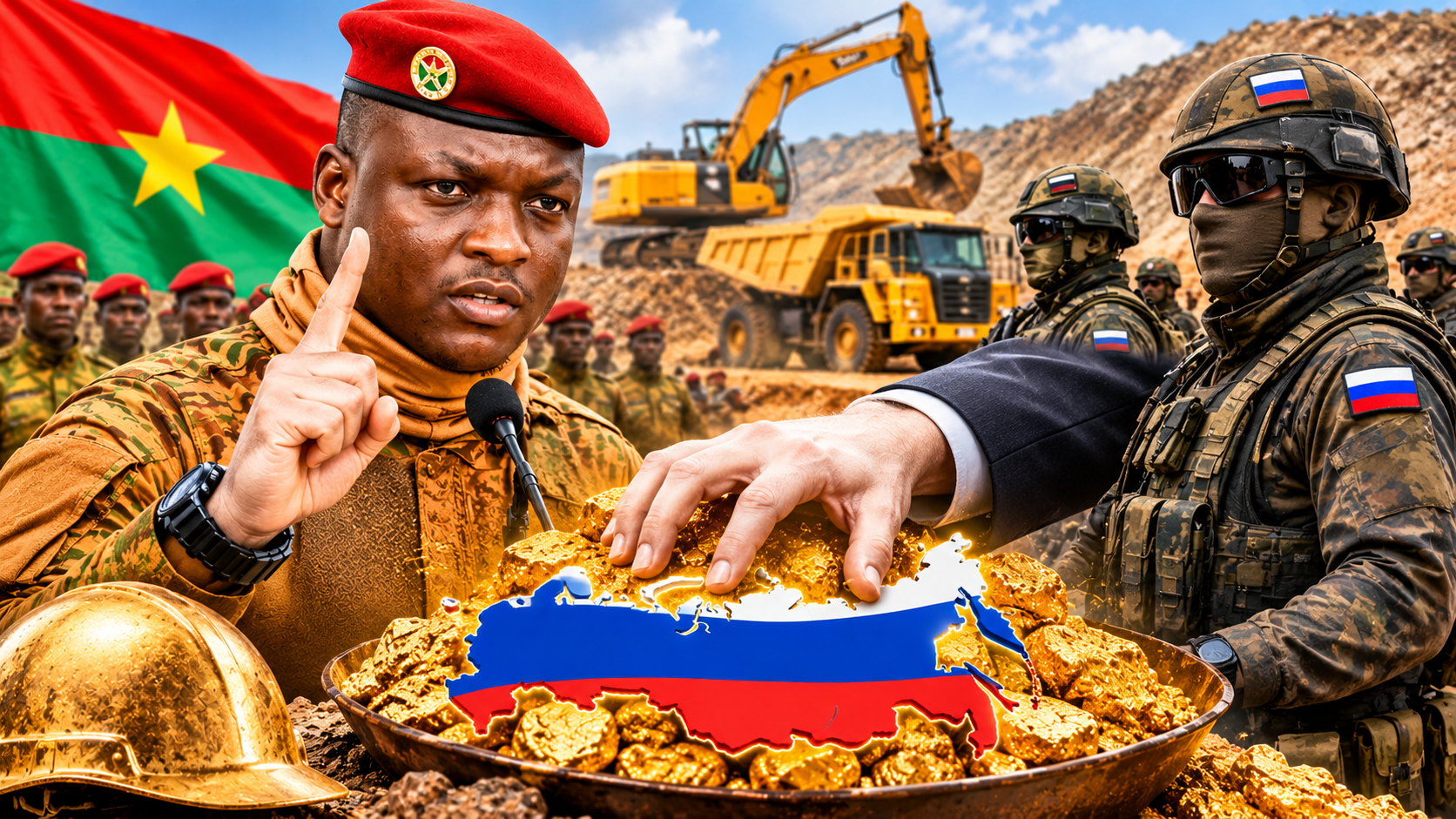
President Ibrahim Traoré has repeatedly declared that Burkina Faso’s natural resources belong solely to its people. Yet, the growing presence of Russian security firms in protecting gold mining sites raises critical questions about the real extent of national control over this strategic wealth. When foreign entities begin dictating terms around a nation’s gold reserves, the promise of full sovereignty requires far closer examination than political declarations alone.
Since assuming power, Traoré has positioned economic autonomy and resource control as cornerstones of his administration’s narrative. Gold, in particular, has been framed as a symbol of liberation from historical dependencies. The regime celebrates the nationalization of mining operations as a triumph for the Burkinabè people, yet beneath the rhetoric lies an unsettling reality: ownership claims do not automatically translate into operational or security oversight.
Security outsourcing: a double-edged sword for mineral sovereignty
The Burkina Faso government’s strategic pivot toward Moscow was justified as a means to reclaim territorial integrity and reduce reliance on traditional partners. However, the deployment of Russian security firms to safeguard gold mines introduces a fundamental contradiction. When foreign entities vie for influence over extraction sites, the issue transcends commercial rivalry it challenges the very foundation of national resource governance.
A gold mine is not merely a production facility; it is a high-stakes economic ecosystem encompassing site security, mineral transit, financial stakes, and operational oversight. In this context, the participation of foreign actors in such sensitive roles demands rigorous scrutiny of their mandates, remuneration structures, contractual terms, and the mechanisms ensuring ultimate authority remains with Burkinabè institutions.
From rhetoric to reality: the gap in sovereign claims
For Traoré, “100% Burkinabè gold” is more than a slogan it is a policy directive. Yet sovereignty cannot be measured solely by legislative changes or public pronouncements. True independence is evidenced by the ability to dictate how resources are exploited, who secures them, who benefits financially, and how revenue is allocated to benefit citizens.
When foreign firms assume pivotal roles in the security architecture of gold mining, transparency and accountability become non-negotiable. Citizens deserve clarity on the scope of these firms’ authority, the financial flows associated with their contracts, and the safeguards preventing them from becoming de facto stakeholders in national wealth.
The paradox of claiming sovereignty while relying on foreign security
It is not disputed that foreign firms may operate within legal frameworks, but their involvement in core security functions around gold production blurs the line between partnership and external influence. The distinction between legal ownership of resources and operational control must be acknowledged: one does not automatically confer the other.
Crucially, Burkina Faso’s sovereignty is not reinforced by replacing one foreign partner with another. The challenge lies in ensuring that every alliance regardless of origin advances national interests, adheres to transparent governance, and remains subject to democratic oversight.
What the Burkinabè public has the right to know
The people of Burkina Faso are entitled to answers: Who exactly is responsible for protecting their mines? Which entities profit from security contracts? Who makes the final decisions on extraction operations? How are revenues generated from gold sales being used, and are they reaching local communities?
Their gold must serve the development of Burkina Faso not the interests of foreign governments, private corporations, or opaque networks. While Traoré may assert that Burkinabè gold belongs exclusively to its people, sovereignty is not declared in speeches; it is demonstrated through concrete control, verifiable transparency, and uncompromised national decision-making.
By Moussa Samuel Coulibaly — Journalist