
Behind the simultaneous security breaches in Burkina Faso’s north and center-east lies a calculated campaign to stretch the nation’s defenses to their limits. On September 26, coordinated strikes zeroed in on Lalgaye in the Koulpélogo province and Ouahigouya in the Yatenga region, leaving a trail of casualties and wrecked military hardware. The assaults, later publicly acknowledged by the Group for the Support of Islam and Muslims (JNIM), were not merely acts of violence—they were deliberate steps in a broader strategy to erode state authority and resupply militant networks.
Understanding the coordinated timeline of violence
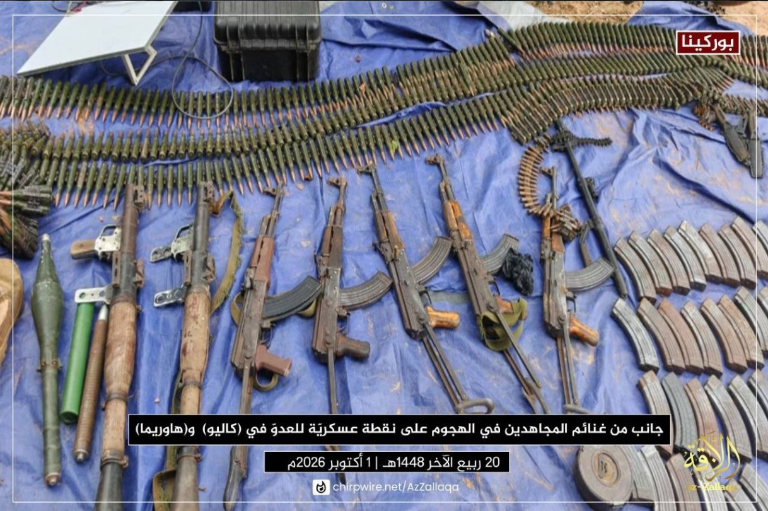
September 26 started with a predawn assault on the Lalgaye military outpost, located roughly 20 kilometers from the town of Ouargaye. The attackers, armed with heavy weaponry, overpowered the garrison and seized a significant cache of small arms, explosives, and communication equipment before retreating into nearby wooded areas. Hours later, in the far north, heavily armed cells targeted two military positions near Ouahigouya, the regional capital, destroying at least one armored vehicle and forcing local forces to regroup.
The parallel nature of the strikes—executed within mere hours across a 400-kilometer span—points to a sophisticated operational infrastructure. This suggests that the JNIM retains the capacity for large-scale, synchronized maneuvers, a hallmark of groups that blend local recruitment with transnational support networks. Such coordinated actions are not impulsive; they reflect months of reconnaissance, supply chain adjustments, and tactical refinements.
The playbook of attrition: why hit Lalgaye and Ouahigouya?
Weakening local defenses
By striking isolated military posts like Lalgaye, militants deliberately target units that are logistically vulnerable. These detachments often operate with limited backup and are critically exposed to ambushes and quick raids. The loss of even a single outpost creates a domino effect: it forces redeployment of reinforcements, thinning coverage across vast rural regions and allowing militants to exploit security vacuums elsewhere.
Fueling the war economy
The haul from Lalgaye—arms, radios, and intelligence gear—does more than arm the next assault. It sustains a self-sustaining cycle. Captured equipment reduces the need for external supply lines, minimizes exposure during smuggling, and boosts morale by demonstrating operational success. This captured materiel is then used to launch fresh attacks, creating a feedback loop that sustains both the insurgency and its propaganda value.
Psychological warfare and state credibility
The delayed public claim by the JNIM—issued days after the violence—serves a dual purpose. First, it reinforces the perception that the state cannot fully secure its borders or protect its forces. Second, it counters official narratives of progress in the fight against terrorism, sowing doubt among both domestic and international observers about the credibility of military updates.
Strategic geography: why these regions matter
The Koulpélogo province, bordering Togo and Ghana, is a geographic chokepoint. It serves as a transit corridor for militants moving between Burkina Faso’s volatile east and West African coastal states—regions that offer safe havens, smuggling routes, and potential recruitment grounds. Controlling or destabilizing this area weakens Burkina Faso’s southern flank and opens new pressure points against neighboring countries.
Ouahigouya, in contrast, sits at the heart of the Sahel. Its strategic location connects the country’s northern trade routes to Burkina Faso’s central cities. Disrupting stability here cuts off supply lines, isolates rural communities, and forces civilians into reliance on militant-controlled zones—accelerating the cycle of displacement and radicalization.
The military’s response: adapting under pressure
In the immediate aftermath, Burkina Faso’s armed forces and civilian auxiliaries launched pursuit operations, deploying air surveillance in both affected regions. Reconnaissance flights aimed to track retreating attackers and identify potential regrouping zones. Yet, the challenges are stark: rugged terrain, improvised explosive devices (IEDs) on major roads, and a lack of air mobility assets make real-time interception difficult.
Civilian volunteers—volunteers for the defense of the nation—are bearing a heavy burden. Many serve as the first line of defense in villages far from any military base. Their commitment is undeniable, but without sustained logistical and medical support, their effectiveness remains limited. Reports from local leaders in Lalgaye indicate that repeated incursions have led to food shortages and disrupted access to healthcare, deepening humanitarian strain.
What the attacks reveal about Burkina Faso’s security landscape
The Lalgaye and Ouahigouya assaults are not isolated incidents. They are part of a broader pattern that has shaped Burkina Faso’s security reality for years: militants exploiting gaps in territorial control, using hit-and-run tactics to degrade state presence, and leveraging propaganda to undermine public trust. Each successful raid emboldens further action, and each delayed response reinforces the perception of state weakness.
As the transition government reaffirms its commitment to reclaiming lost territories, the reality on the ground tells a different story. The resilience of Burkina Faso’s people is unbroken, but the cost of sustaining that resilience—measured in lives, livelihoods, and territory—continues to rise. The path to recovery demands more than military action; it requires strategic depth, regional cooperation, and a concerted effort to address the root causes of insurgency: poverty, marginalization, and weak governance in border areas.
The September 26 strikes were not just attacks. They were a calculated probe into the limits of Burkina Faso’s defenses—and a reminder that the battle for the Sahel is far from over.