Burkina Faso under Traoré: behind the curtain of military rule’s silent costs
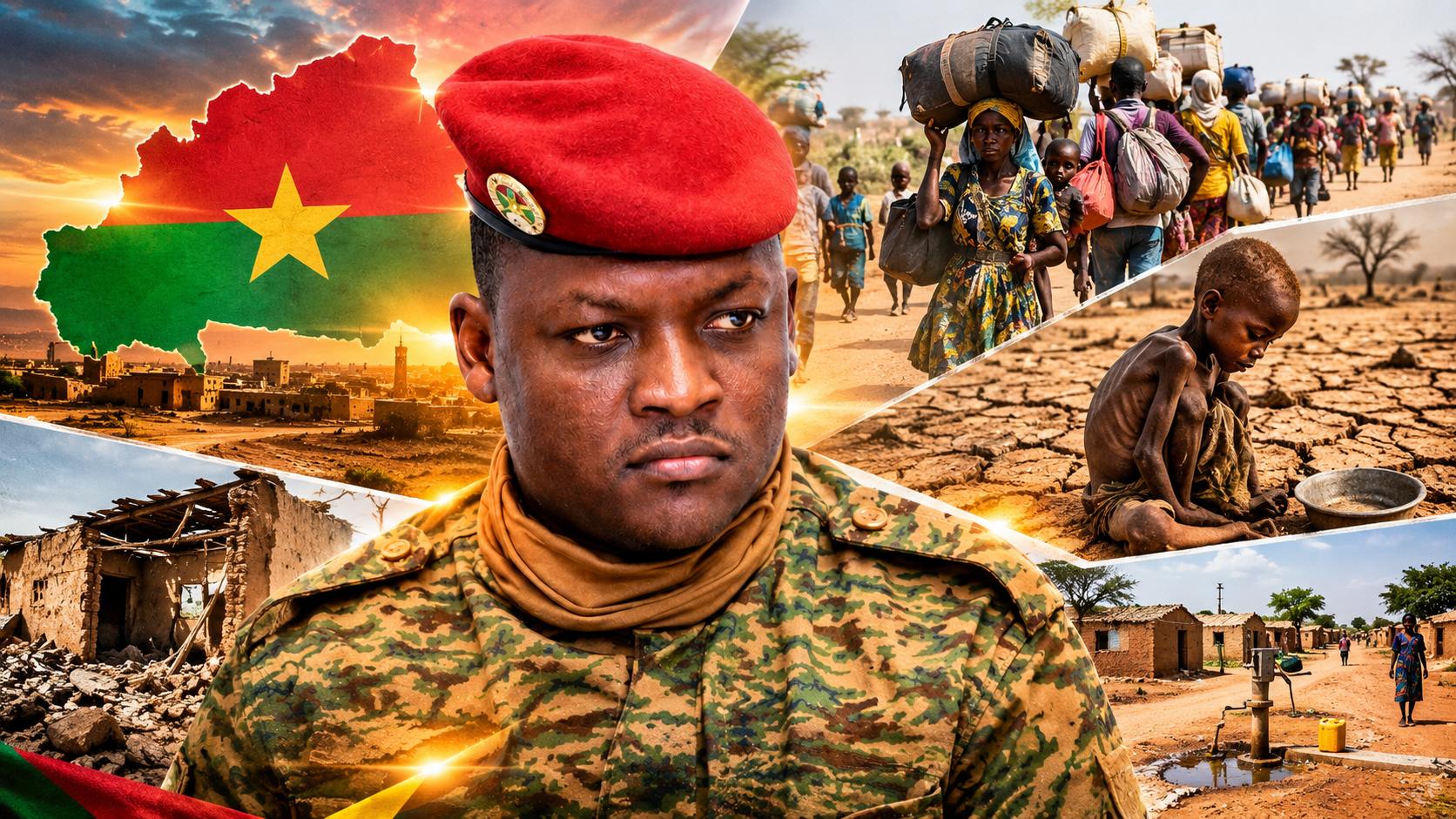
Four years of military leadership: how Ibrahim Traoré reshaped Burkina Faso’s security landscape
On September 30, 2022, Captain Ibrahim Traoré seized power in Burkina Faso, overthrowing Lieutenant Colonel Paul-Henri Sandaogo Damiba. Four years into his tenure, the young junta leader portrays his rule as a turning point for the nation: territorial recovery, military expansion, and a bold assertion of national sovereignty—especially by distancing Burkina Faso from Western allies. Yet beneath the official narrative, the human and societal toll raises serious questions about security, civil freedoms, and the true cost of this transition.
The situation presents a paradox. While the government claims to have reclaimed areas previously under jihadist control, violence persists. Armed groups continue to strike military posts and civilian areas with alarming frequency, challenging the narrative of progress. The persistence of attacks—documented by independent conflict monitors—underscores that territorial control does not automatically translate to safety for those living in these regions.
When the fight against terrorism reshapes a nation
The cornerstone of Traoré’s strategy has been the war against armed Islamist groups, which he declared the top priority upon taking office. His administration expanded the national armed forces and launched the Volontaires pour la Défense de la Patrie (VDP), civilian volunteers recruited to support military operations. These units have played a visible role in joint patrols and local defense, positioning the government as mobilizing not just the state, but the people themselves.
Officials point to regained zones and enhanced troop mobility as signs of success. However, the reality on the ground tells a different story. Despite these efforts, jihadist factions retain operational capacity. Attacks against civilians—including targeted killings, raids on villages, and forced displacements—remain a constant feature of the conflict. The African Centre for Strategic Studies and other conflict trackers have recorded no significant long-term decline in violence since 2022, signaling that while the army has grown in size, the insurgency has not been neutralized.
Over two million displaced: the human face of insecurity
No statistic better reflects the depth of the crisis than the staggering number of internally displaced persons. By late 2025, more than 2.06 million Burkinabè had been forced from their homes due to violence—more than 10% of the national population. These are not just abstract numbers. Each figure represents a family, a livelihood lost, a community uprooted. Most are displaced multiple times, fleeing violence only to face new threats in overcrowded camps.
But displacement in Burkina Faso is not driven solely by jihadist attacks. Reports from international human rights monitors highlight a disturbing pattern: security forces and VDP units have also been implicated in violence against civilians. Allegations include extrajudicial killings, mass arrests, and collective punishment of villages suspected of aiding insurgents. Between 2023 and 2025, these incidents accounted for over 1,800 documented civilian deaths, according to Human Rights Watch. While some cases may involve genuine counterterrorism operations, others appear to be indiscriminate or punitive, blurring the line between security and abuse.
This dual source of violence—external insurgency and internal overreach—has created a cycle of fear and mistrust. Reclaiming land does not bring peace if the people who return live in perpetual dread of the next attack—whether from armed groups or their own defenders.
The press in the crossfire: erosion of media freedom amid national mobilization
Another defining mark of Traoré’s presidency has been the tightening grip on public information. Authorities argue these measures are necessary to protect national morale and operational secrecy in wartime. But press freedom advocates describe a steady erosion of journalistic independence, with journalists caught between military service and censorship.
Reporters Without Borders (RSF) documented multiple cases where journalists were forcibly enrolled in the armed forces or detained under vague security laws. In October 2025 alone, eight media workers were questioned by intelligence services. The case of Atiana Serge Oulon, editor of *L’Événement*, became a symbol of this trend. Reported as voluntarily joining the army in 2024, RSF’s 2026 investigation later revealed he had been secretly detained in Ouagadougou, not sent to combat zones as claimed.
Forced enlistment has extended beyond journalists. Civil society activists, opposition figures, and even magistrates have reportedly been drafted under duress, often with no legal recourse. Human Rights Watch found evidence of dozens of dissenting individuals being mobilized and sent to frontline zones, raising concerns that conscription is being used as a political tool to silence critics.
This practice not only violates international human rights standards but also undermines public trust. When dissent becomes a crime punishable by forced service, democracy withers under the guise of patriotism.
From sovereignty claims to retreat from civic space
Traoré’s administration has framed its policies as a fight for true national sovereignty. Burkina Faso has distanced itself from traditional partners, strengthened ties with Russia, and deepened cooperation with Mali and Niger within the Alliance of Sahel States. The government also champions local resource transformation, particularly in mining, aiming to reduce dependence on foreign corporations.
Yet this pursuit of autonomy has come at a cost. Civil society organizations report a sharp decline in political and civic freedoms. Journalists, human rights defenders, and opposition leaders have faced arbitrary arrests, prolonged detentions without trial, and forced exile. The space for open debate has narrowed, with public criticism increasingly treated as subversion.While the state emphasizes self-reliance and strategic autonomy, the shrinking civic space suggests that sovereignty, as defined in Ouagadougou, may prioritize control over pluralism.
A legacy still unwritten: what four years of military rule have delivered
Four years after the 2022 coup, Ibrahim Traoré’s legacy remains contested. On one side stands a narrative of resilience: a nation reclaiming its soil, citizens mobilized in defense, and a government charting its own course free from foreign interference. On the other, a sobering record of displacement, unresolved violence, and systemic rights violations.
Can Burkina Faso emerge stronger from this storm? The answer may depend less on how many towns are recaptured, and more on whether the people who live in them feel safe—safe not only from insurgents, but from the very forces meant to protect them.
The true test of leadership is not the number of soldiers under arms or the volume of official propaganda, but the protection of life, dignity, and voices in a nation still searching for peace.