
In the Democratic Republic of Congo, the National Council for Monitoring the Agreement and Electoral Process (CNSA) has begun compiling a roster of political and opinion prisoners—a step seen as a critical confidence-building measure ahead of a long-anticipated inclusive national dialogue.
The initiative underscores the CNSA’s commitment to fairness, with its leadership emphasizing that justice must be blind. The council is meticulously reviewing cases to identify individuals who may qualify for amnesty, with a final list to be submitted to President Félix Tshisekedi for decisive action before formal talks commence.
Defending the principle of equal justice
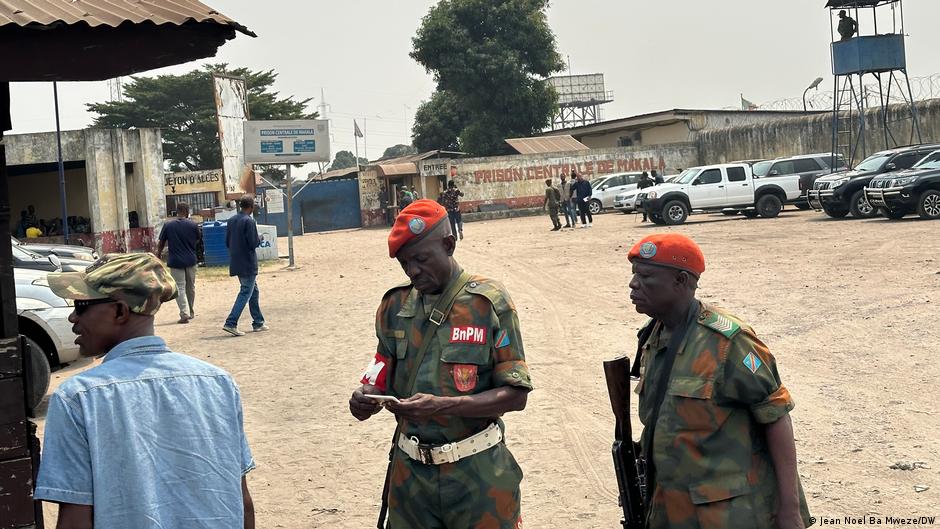
Joseph Olenghankoy, president of the CNSA, has been vocal about the urgency of correcting what he describes as legal oversights. He pointed out that many detainees have been held for months without due process, stating, “Within 48 hours of arrest, suspects must appear before their natural judges. In several documented cases, this hasn’t happened—some have languished for nearly half a year.”
The CNSA’s criteria for inclusion in its roster include reviewing case files to assess whether detention conditions comply with constitutional rights. Olenghankoy’s stance is clear: “The law does not discriminate. If justice is owed, it must be granted. Our role is to ensure these concerns reach the highest authority so these individuals can be freed, paving the way for meaningful dialogue among Congolese.”
Political allies push for the release of detained leaders
The initiative has been warmly received by the political circle of Aubin Minaku and Emmanuel Ramazani Shadary, both prominent figures in the People’s Party for Reconstruction and Democracy (PPRD), which was led by former president Joseph Kabila. A party spokesperson welcomed the move, stating, “If the CNSA’s efforts lead to the release of our detained comrades—Aubin Minaku, Emmanuel Ramazani Shadary, Dunia Kilanga, Parole Kamizelo, and others—we can only applaud this step.”
The momentum has grown with human rights group Justicia ASBL recently submitting a dossier to the Justice Minister, listing over a hundred individuals it considers political or opinion prisoners.
Addressing the shadow of capital punishment
Beyond those awaiting trial, the roster may also address high-profile cases involving death sentences. Former president Joseph Kabila and Corneille Nangaa, former coordinator of the AFC/M23 rebellion, both face capital punishment—a situation human rights advocates argue undermines political trust.
Timothée Mbuya, coordinator of Justicia ASBL, argues that annulling these sentences would signal a genuine commitment to reconciliation. “A political decision must be made to overturn convictions against figures like Joseph Kabila and Corneille Nangaa. These measures are essential to foster the trust needed for an inclusive dialogue to take root.”
As calls for national reconciliation grow louder across the DRC, all eyes are now on whether the CNSA’s efforts will translate into tangible steps toward easing political tensions before the dialogue begins.