
DRC’s CNSA moves to ease tensions before national dialogue
In the Democratic Republic of the Congo, one week after the launch of the political and opinion prisoner census, the National Council for Monitoring the Agreement and Electoral Process (CNSA) emphasizes that this initiative encompasses all eligible individuals. The Council underscores a fundamental principle: justice must be blind to all.
This initiative aims to fuel the de-escalation measures that the CNSA considers essential before convening an inclusive national dialogue in the DRC. The Council intends to compile a comprehensive list to be submitted to President Félix Tshisekedi, empowering him to take preemptive measures ahead of the dialogue among Congolese stakeholders.
“Justice knows no boundaries”
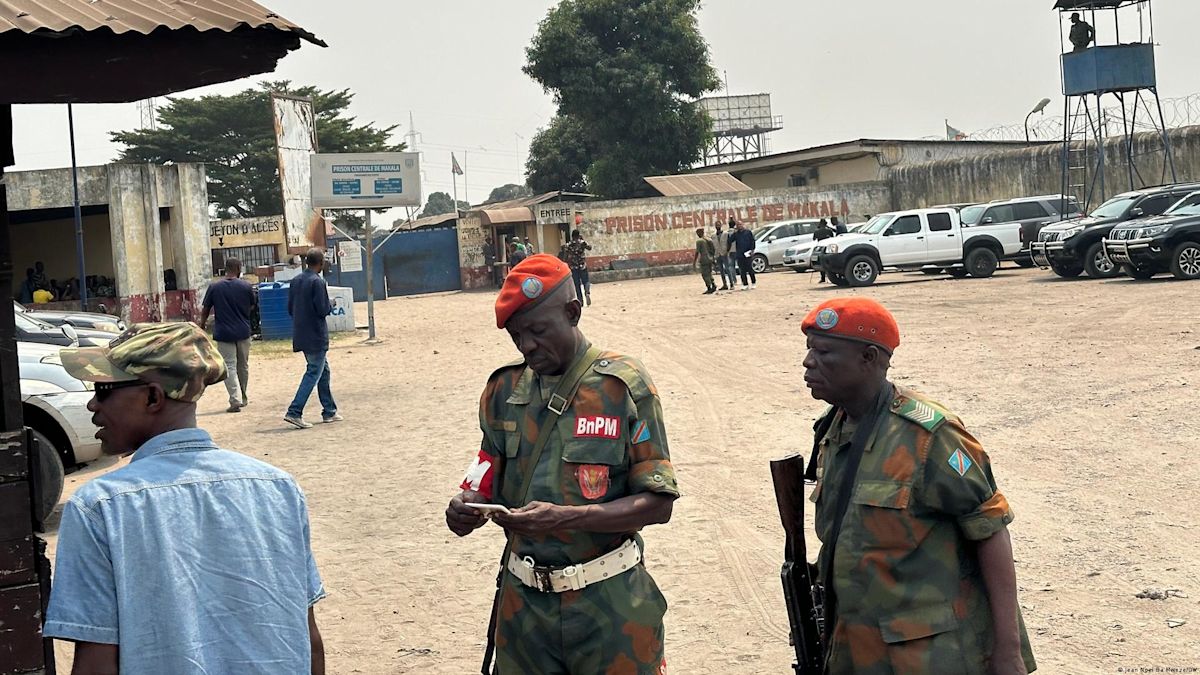
The CNSA has established clear criteria, focusing on reviewing the cases of individuals whose names could be included in its list, potentially leading to their amnesty. The Council stresses the urgency of addressing prolonged detentions without due process.
“Detainees must be brought before a judge within 48 hours of arrest. Reports indicate some have been held for over six months without trial,” explains Joseph Olenghankoy, President of the CNSA. He adds, “This is a clear violation of the law. Justice must be blind to all. Our duty is to present these concerns to the relevant authorities to secure their release and pave the way for national reconciliation.”
PPRD rallies behind detained leaders
The political family of Aubin Minaku and Emmanuel Ramazani Shadary, prominent figures in the People’s Party for Reconstruction and Democracy (PPRD), has warmly welcomed this initiative.
“If the CNSA’s efforts lead to the release of our detained comrades, we wholeheartedly support it. Any initiative, regardless of its origin, that aims to secure the freedom of our leaders—Aubin Minaku, Emmanuel Ramazani Shadary, Dunia Kilanga, Parole Kamizelo, and others—deserves our full backing,” states Lucain Kasongo, a PPRD cadre.
Justice ASBL, a human rights organization, recently submitted a list of over a hundred individuals to the Minister of Justice, identifying them as political or opinion prisoners.
Death sentences complicate de-escalation efforts
Among those awaiting justice are figures like former President Joseph Kabila and Corneille Nangaa, leader of the AFC/M23 rebellion, both sentenced to death. Timothée Mbuya, Coordinator of Justicia ASBL, argues that these sentences must be lifted to foster trust.
“A political decision is needed to overturn these convictions, particularly for Joseph Kabila and Corneille Nangaa. We believe such measures are critical to building the political trust required for an inclusive dialogue,” he asserts.
The CNSA’s initiative could mark a turning point, but its success hinges on translating these efforts into tangible actions, as calls for an inclusive dialogue grow louder across the DRC.