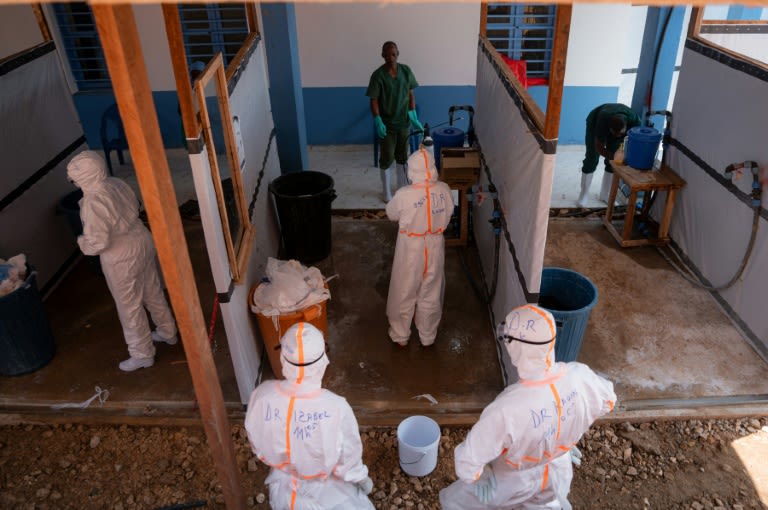

Global nursing leaders have issued a stark warning over the escalating Ebola response in the Democratic Republic of the Congo, demanding immediate financial compensation for healthcare workers risking their lives on the front lines.
The International Council of Nurses (ICN) has called on Congolese authorities to address critical payment delays that have left many nurses and medical staff unpaid for months, despite their vital role in combating the latest outbreak.
Unpaid heroes of a deadly outbreak
Howard Catton, ICN’s Chief Executive Officer, emphasized that without proper remuneration, the fight against Ebola cannot be sustained. In an official statement, he declared:
“You cannot fight Ebola if those leading the charge go unpaid. Nurses and healthcare workers are putting their lives on the line every day, yet months into this crisis, many have yet to receive a single franc of their due wages.
This is unacceptable. Immediate action is required: pay healthcare workers what they are owed, ensure regular salaries moving forward, and provide the protections they desperately need to do their jobs safely.
”
The ICN, representing over 140 national nursing associations with more than 30 million members worldwide, has formally urged DRC’s Health Minister Roger Kamba to implement urgent measures.
Financial and health risks mount as epidemic spreads
The latest Ebola outbreak, declared in May, has already claimed over 2,100 lives and infected nearly 4,600 people, making it one of the deadliest in the country’s history. Alarmingly, the spread is accelerating faster than any previous Ebola epidemic, with seven times more cases and five times more deaths recorded in the first three months compared to the West Africa outbreak of 2014–2016.
Despite the urgency, the response remains severely underfunded. Of the $518 million required for the joint preparedness and response plan launched in June by the Africa CDC and the World Health Organization (WHO), only half has been secured so far.
Compounding the crisis is the lack of a specific vaccine or treatment for the Bundibugyo Ebola virus strain driving this outbreak. In response, the WHO is pushing to fast-track clinical trials using the existing Ervebo vaccine, which is currently approved for the Zaire strain.
Demands for systemic change
The ICN is not only calling for immediate back pay but also for structural improvements to safeguard healthcare workers. Their demands include:
- Consistent salary payments to avoid future disruptions in the workforce;
- Provision of adequate personal protective equipment (PPE) to minimize infection risks;
- Comprehensive insurance coverage and hazard allowances for high-risk roles;
- Psychological and logistical support to address burnout and operational challenges in remote areas.
The current strain on the healthcare system is unsustainable. With over 3,500 health workers deployed in the response—many operating in under-resourced facilities—the need for financial and operational support has never been more urgent.
The situation reflects broader systemic issues in DR Congo’s health infrastructure, which has faced repeated Ebola outbreaks since 1976. The 2018–2020 epidemic, the deadliest on record, resulted in nearly 2,300 deaths and highlighted chronic vulnerabilities in the sector.
A race against time
WHO Director-General Tedros Adhanom Ghebreyesus has warned that without accelerated funding and intervention, the current outbreak could surpass all previous ones. He stressed the need for global solidarity to prevent further devastation:
“This is already the second-largest Ebola epidemic ever recorded, and it is spreading faster than any before. If we do not act now, it risks eclipsing even the West Africa outbreak of 2014–2016.
Every day counts. We must mobilize resources, ensure frontline workers are protected, and bring this outbreak under control before it claims more lives.
”
As the DRC battles yet another Ebola crisis, the world watches closely. The stakes are high—not just for the health of the Congolese people, but for the global community’s ability to respond to emerging infectious threats.