
Former boko haram captives handed to nigerian authorities after rescue
Former Boko Haram captives handed to Nigerian authorities after rescue
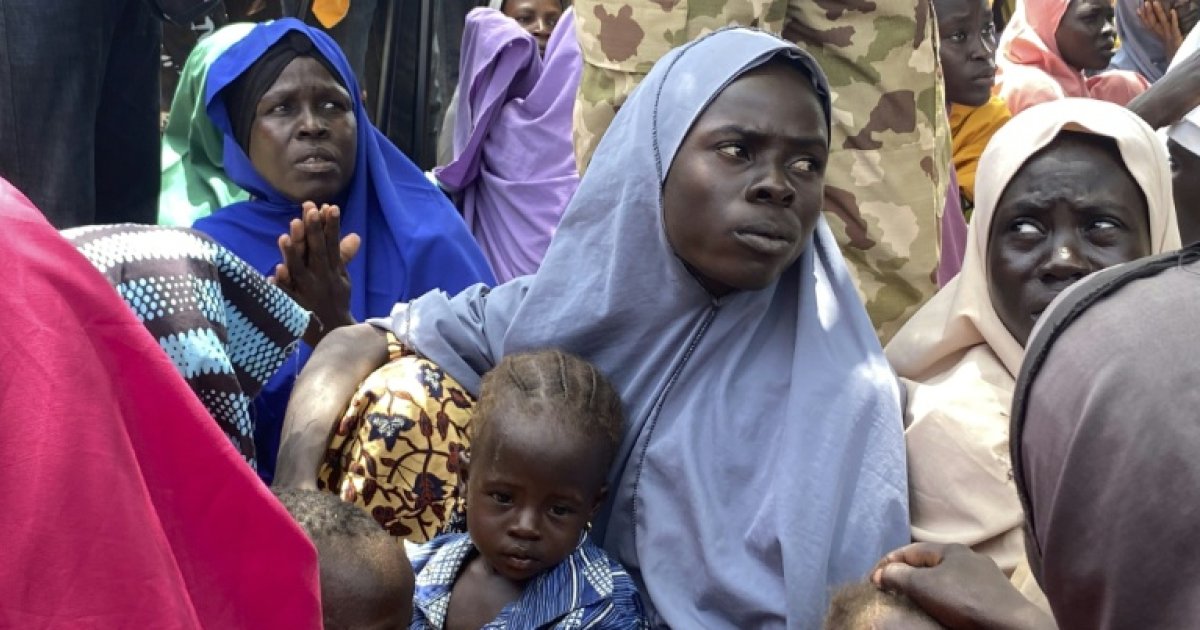
A woman, released after being kidnapped by Boko Haram in Nigeria, is handed over to local authorities in Pulka.
The Nigerian military transferred over 400 women and children to local authorities on Monday, all of whom had been rescued from captivity after being abducted earlier this year by the jihadist group Boko Haram in Borno State, located in the country’s northeast.
Since 2009, this insurgency—first led by Boko Haram and later by its splinter faction, the Islamic State’s West Africa Province (ISWAP)—has claimed tens of thousands of lives and displaced millions across Nigeria’s most populous region. The conflict has also been marked by systematic mass abductions, often involving ransom negotiations for releases.
According to military statements, approximately 360 individuals were freed over the weekend—not as a result of negotiations with Boko Haram but through a military operation executed “based on intelligence.” An additional 82 people were rescued “two to three weeks earlier,” bringing the total number of freed captives to around 434, as confirmed by Borno State Governor Babagana Umara Zulum.
The victims were originally taken from Ngoshe, a village fewer than 10 kilometers from the Cameroonian border in the Gwoza Hills, a long-standing stronghold of Boko Haram. This area has frequently endured violent assaults by Islamist fighters.
Speaking to reporters at the Pulka displacement camp where the freed individuals were handed over, one of the rescued women, 43-year-old Hassana Buba, expressed her gratitude. “We thank Allah for this rescue,” she said. “We are deeply grateful and celebrating this moment.”
While authorities deny paying ransoms, critics argue that such payments remain a common practice, both by the government and the families of victims. A recent report by SBM Intelligence, a Lagos-based consultancy firm, revealed that between July 2024 and June 2025, nearly $1.66 million in ransoms was paid to various armed groups in Nigeria, including jihadists, armed bandits, and separatist factions.