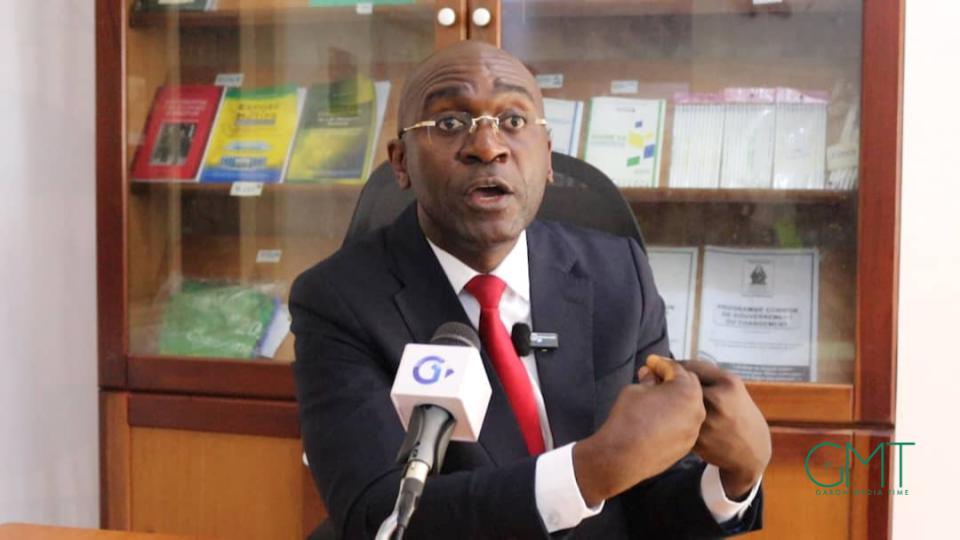

As inflammatory remarks and personal attacks from certain Gabonese activists abroad escalate, civil society leader Geoffroy Foumboula Libeka Makosso is drawing a clear line between free speech and harmful rhetoric. Speaking at a press briefing in Libreville, he strongly condemned recent insults directed at President Brice Clotaire Oligui Nguema, his wife, and mother. Yet, his message also extends to the authorities, urging them to move beyond symbolic condemnations and pursue legal action when offenses are proven.
The line between vigorous public debate and defamation is a fine one, Foumboula emphasized. He singled out an activist using the pseudonym Lanlaire, whose recent statements crossed that line by targeting the president and his family personally rather than addressing policy or governance issues.
Free speech has its limits
For Foumboula, civic engagement should never be reduced to personal insults. Reflecting on his own activism, he stressed the importance of advocacy, public statements, and legal action when necessary. “Disagreement doesn’t justify insults,” he declared. His stance underscores a broader principle: while political criticism is a cornerstone of democracy, it must remain within the bounds of decency and legality.
He also warned that restoring constitutional order in Gabon requires consistent enforcement of the law—not selective indignation. The transition period, which allowed for reconciliation with some diaspora figures, should not be misread as a blanket amnesty. “Insults, defamation, and outrage are crimes, not expressions of free speech,” he asserted. Criticism of leaders and institutions is valid, but it must not shield authors from accountability under the law.
Questioning the ties between power and disruptive activists
Foumboula’s critique doesn’t stop at the activists themselves. He also questioned the proximity between certain government circles and diaspora figures known for their relentless verbal attacks on authorities. He cited instances of activists being invited to Gabon, appearing on state media, or even allegedly receiving financial incentives during presidential visits—allegations that, for now, remain unconfirmed.
One activist, he claimed, publicly boasted of receiving 150,000 euros (around 100 million CFA francs) from a presidential delegation member to attack the head of state verbally. Foumboula emphasized this was an unverified account, not a judicial fact.
Ending dangerous alliances
The civil society leader called on the presidency and state institutions to distance themselves from such figures. “The President and his team must put an end to this troubling closeness with activists whose only achievement is outrage and insults,” he stated. He argued that failing to address these abuses legally could foster a culture of impunity, where offensive rhetoric becomes a shortcut to visibility—or even access to power.
His appeal targets both the speakers and the institutions responsible for upholding the law. Publicly condemning misconduct while neglecting legal consequences, he warned, risks normalizing the very behaviors being denounced.
Legal action over normalization of insults
Foumboula urged judicial authorities to take action against those spreading defamatory content. Without consequences, he cautioned, the public may conclude that certain activists operate under protection. He also called on internet users to resist amplifying such rhetoric by unsubscribing, avoiding shares, and reporting abusive accounts through platform tools.
Beyond the immediate controversy, his remarks highlight a deeper issue: the quality of public debate in Gabon. Free speech is vital in any democracy, even when it challenges authority. But, in his view, political disagreement must never devolve into personal humiliation. Criticism is part of democracy; legal accountability is the domain of the courts.