
Niger three years after coup: mounting human rights crisis under military rule
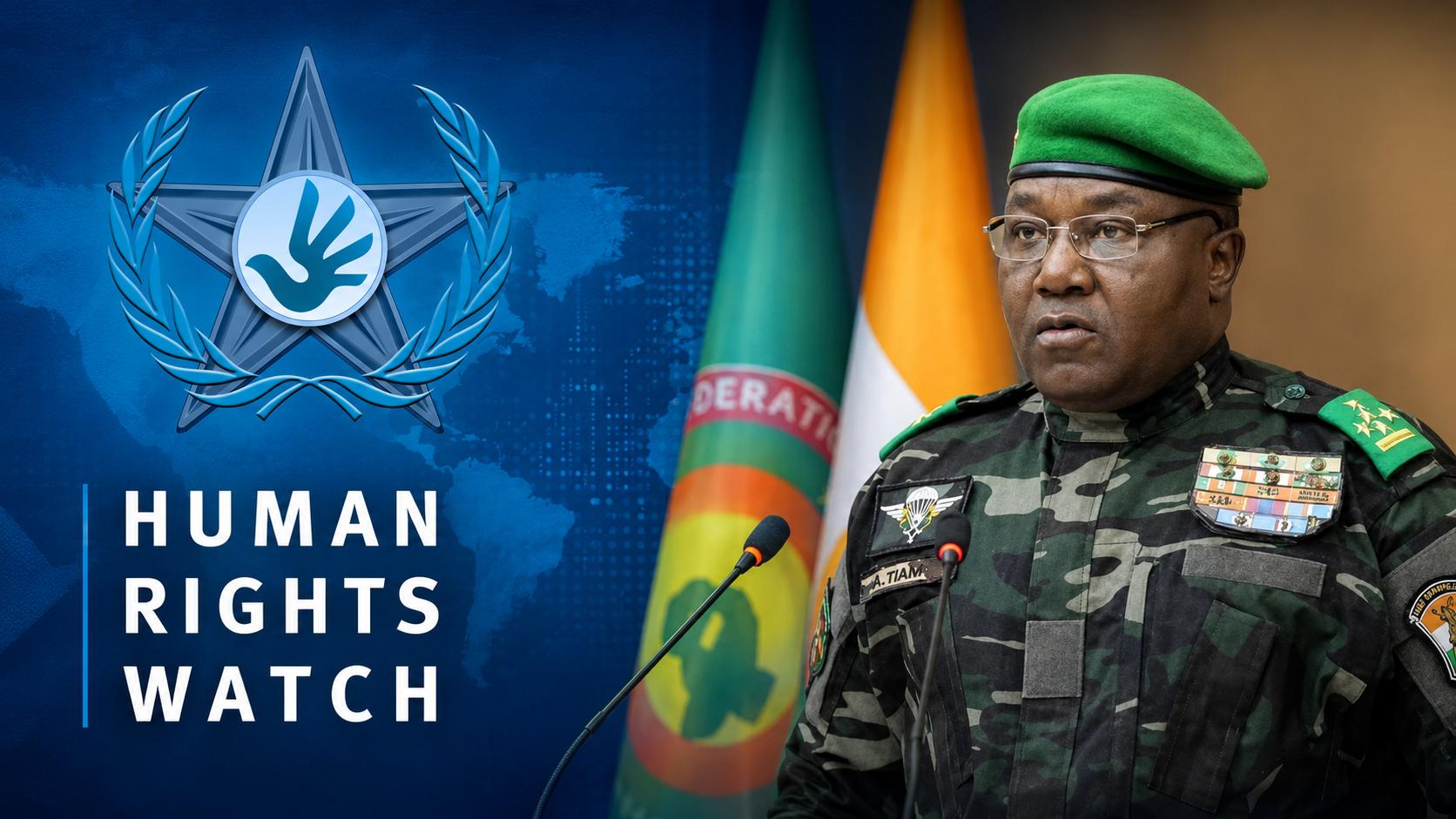
Three years after General Abdourahamane Tiani seized power in Niger, a scathing assessment by Human Rights Watch exposes the deepening human rights crisis gripping the nation. From arbitrary detentions to political repression and diplomatic isolation, the country faces an institutional collapse of unprecedented scale.
On July 26, 2023, democratically elected President Mohamed Bazoum was overthrown by a military junta led by General Tiani. Today, Human Rights Watch’s latest findings confirm what many have long feared: the National Council for the Safeguard of the Homeland (CNSP) has systematically dismantled Niger’s democratic foundations to entrench authoritarian control.
The junta has justified its crackdown under the guise of security imperatives and national sovereignty, but the consequences are clear. Civic space has shrunk dramatically, judicial recourse has been all but erased, and opposition voices have been systematically silenced.
Judicial manipulation and detained dissenters
The detention of former President Mohamed Bazoum and his wife, held without legal justification for over three years, serves as the most glaring symbol of this political impasse. Despite repeated calls from international bodies and the United Nations Working Group on Arbitrary Detention urging their immediate release, the military leadership remains defiant.
The repression extends beyond political figures. In December 2024, Moussa Tiangari, a prominent human rights defender, was arrested—a move that underscores the regime’s relentless targeting of civil society. When his legal team invoked standard provisional detention limits (12 months for terrorism-related cases), authorities swiftly amended the Criminal Procedure Code to extend this to four years. Critics condemn this as a blatant retroactive judicial overhaul designed to prolong detentions indefinitely.
Press freedom and dissent under fire
The erosion of public freedoms has accelerated in recent months:
- Political and labor suppression: All opposition parties have been dissolved, while independent unions and NGOs face suspension or forced closure.
- Media crackdown: Revised cybercrime laws now criminalize dissent, leading to arrests of journalists for minimal infractions. In October, six reporters in Niamey were detained for merely publicizing a press conference invitation.
- Exile repression: The regime has intensified efforts to silence opponents abroad, including revoking citizenship—as seen with opposition figure Mariama Djibrine, stripped of her nationality for her activism.
Societal regression and global alienation
The military government has doubled down on regressive policies, most notably by amending the Penal Code in March to impose 5 to 20 years in prison for same-sex relations and LGBTQ+ advocacy. This draconian measure has already led to arrests and disrupted critical public health initiatives, including HIV prevention programs.
Diplomatically, Niger has chosen a path of deliberate isolation. Following its withdrawal from the Economic Community of West African States (ECOWAS), Niamey exited the International Criminal Court (ICC) in June—a move analysts warn will leave citizens without legal recourse amid escalating insecurity, particularly in the Tillabéri region, where civilian casualties continue to mount during military operations.
As the crisis deepens, human rights organizations urge the international community to abandon its cautious pragmatism. Their demand is clear: an immediate end to the detention of political prisoners and a commitment to restoring a civilian-led transitional process.