
Russian troops arrive in Togo amid rising security partnerships
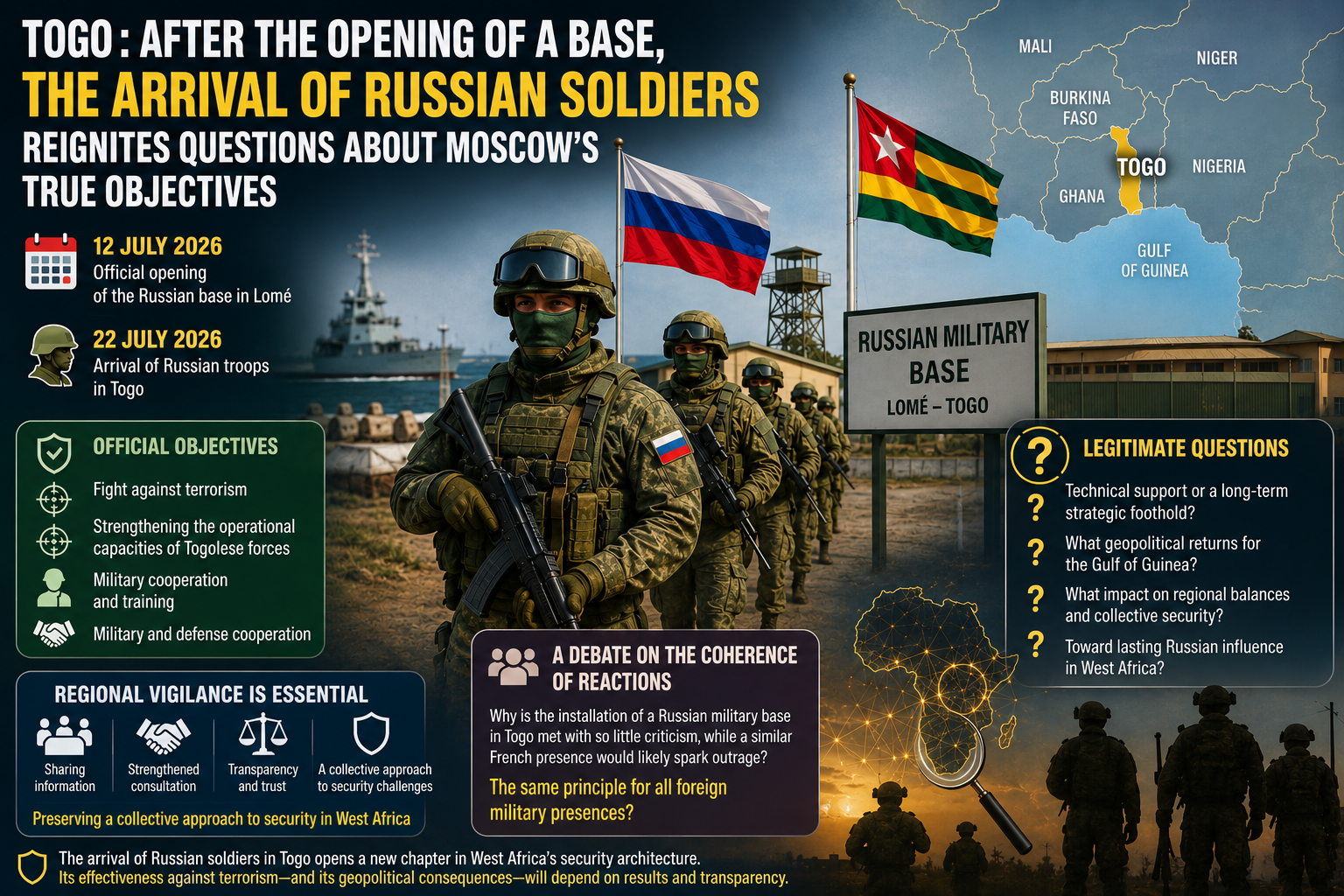
Togo has welcomed Russian military personnel following the inauguration of a new Russian base in the capital, Lomé, marking a significant step in strengthening defense ties between the two nations. The deployment, announced on July 22, 2026, comes just days after the base’s opening on July 12, with Moscow presenting the move as part of collaborative efforts to combat terrorism and enhance Togo’s operational military capabilities.
Strategic implications of foreign military presence
While the cooperation is framed as a sovereign decision by Togolese authorities, the persistent presence of foreign troops in West Africa’s volatile security landscape raises questions about its long-term impact on regional stability. Russia’s deepening engagement across the continent—through defense agreements, training programs, arms supplies, and military deployments—has become a defining feature of its foreign policy in recent years. Togo’s decision to host Russian soldiers aligns with this broader strategy of fostering military partnerships in Africa.
The key question now centers on the scope of this cooperation. Is the Russian deployment purely a tactical response to the threat posed by armed groups operating near Togo’s northern borders, or does it represent a calculated move to embed Moscow more firmly in the Gulf of Guinea’s strategic dynamics? The answers will likely unfold over time, as the partnership’s objectives extend beyond immediate security concerns to include intelligence sharing, logistical support, defense diplomacy, and even industrial cooperation.
A debate on double standards in military partnerships
The arrival of Russian forces has also sparked discussions about the uneven scrutiny applied to foreign military presence in West Africa. Analysts note a stark contrast in reactions depending on the origin of the troops. Had a French base been established in Togo under similar circumstances, social media and regional discourse would likely have been far more critical, if not outright hostile. This disparity has fueled debates about the consistency of sovereignty-based objections, with some questioning whether the criticism is rooted in principle or geopolitical preference.
For observers, the lack of vocal opposition to Russia’s military expansion in Togo—despite past condemnations of Western presence—highlights a troubling inconsistency. If the principle is to reject all foreign militaries as threats to national sovereignty or regional stability, then the standard should apply uniformly. Alternatively, if certain partnerships are deemed acceptable, the criteria for such distinctions must be clearly articulated to ground public debate in verifiable logic rather than geopolitical convenience.
Regional vigilance in a shifting security landscape
Togo’s decision underscores the broader challenges facing West Africa as external powers vie for influence amid persistent terrorist threats. Neighboring states, while respecting Lomé’s sovereign right to choose its defense partners, are wise to monitor the evolution of this cooperation closely. Its potential ripple effects—on regional security mechanisms, collective defense frameworks, and diplomatic balances—could reshape the subregion’s strategic environment in unpredictable ways.
In an era where transnational terrorism knows no borders and great-power rivalries intensify, transparency emerges as a cornerstone of trust. Strengthening information-sharing and collaborative frameworks among regional actors could mitigate misunderstandings and ensure that security partnerships serve collective interests rather than narrow national agendas. The long-term implications of Russia’s military presence in Togo will ultimately depend not only on its operational effectiveness but also on how it fits into the broader puzzle of West African security dynamics.