Senegal’s economic divide: Sonko vs Faye policies exposed
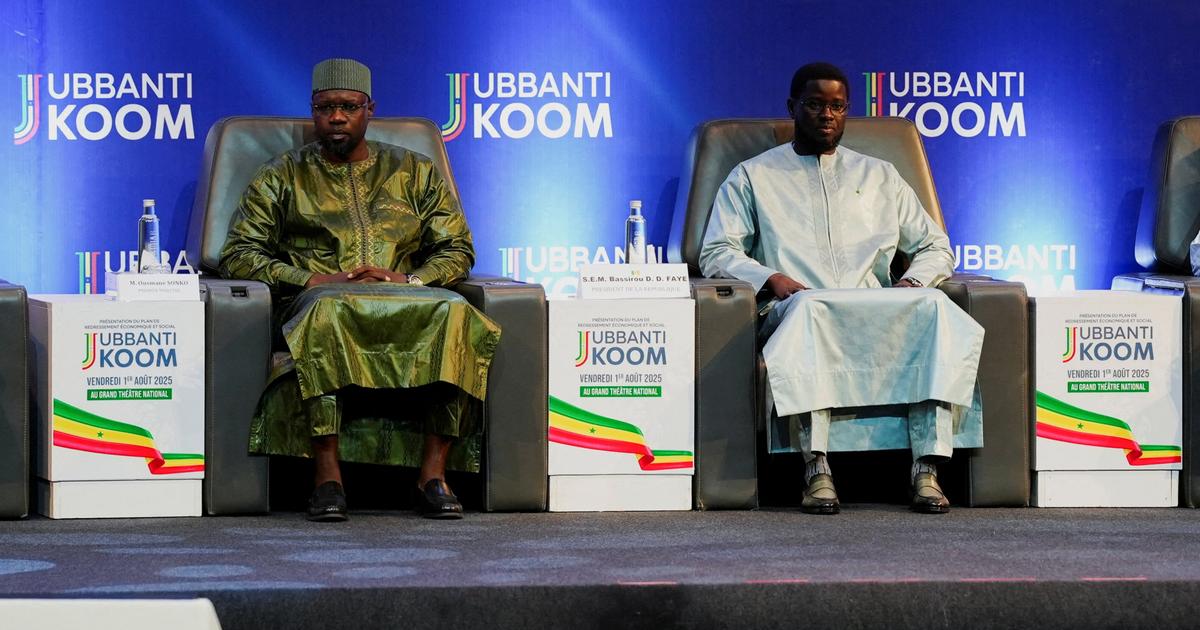
When Bassirou Diomaye Faye dismissed Ousmane Sonko as Prime Minister on May 23, 2026, the move transcended mere political jockeying. It laid bare an irreconcilable clash between two fundamentally opposed economic philosophies that had, until then, shared the same national flag. Two years after Faye’s April 2024 election victory—which saw Sonko appointed as his first Prime Minister—the partnership collapsed over three critical economic battlegrounds: national debt, hydrocarbon contracts, and the very nature of capital financing Senegal’s future.
National debt: the visible fracture line
The most glaring point of contention centered on Senegal’s ballooning debt. In September 2024, Sonko publicly exposed billions in previously undisclosed debt accumulated under the Macky Sall administration. By March 2025, an IMF assessment confirmed over €7 billion in unrecorded liabilities, pushing the country’s debt-to-GDP ratio beyond 100%. Annual debt servicing now consumes 5,500 billion CFA francs (€8.4 billion), with annual refinancing needs approaching 6,000 billion CFA francs (€9.1 billion). The country’s sovereign credit rating had been downgraded three times in just twelve months.
These figures framed two diametrically opposed strategies. Sonko doubled down on public denunciation, framing debt transparency as a moral crusade against the previous regime. His approach resonated with grassroots supporters, the diaspora, and his militant base—but it offered no path forward. Faye, conversely, pursued discreet engagement with the IMF, welcoming its delegation in November 2025 and initiating a national dialogue in May 2026. The suspended €1.55 billion IMF program, shuttered international capital markets, and the looming specter of a 2028 sovereign default rendered Sonko’s position economically untenable—even as it served as potent political ammunition for the Pastef (Patriotes africains du Sénégal pour le travail, l’éthique et la fraternité, Sonko’s party).
Oil and gas contracts: where rhetoric met reality
The second fault line emerged over petroleum and gas concessions. The Sangomar oil field, which began production in June 2024, is operated by Australia’s Woodside at 82% ownership. The Tortue gas field (GTA), straddling the Senegal-Mauritania border and estimated at 500 billion cubic meters, launched in early 2025 under BP’s operatorship. Both fields promised transformative revenue—Sonko projected potential savings of 940 billion CFA francs (€1.4 billion) and additional tax revenues of 1,090 billion CFA francs (€1.6 billion) for GTA alone between 2025 and 2040.
Yet the divide lay in execution. Sonko’s strategy relied on public confrontation, issuing ultimatums to BP and branding the contracts “unfair and lopsided.” Faye, since April 2025, framed negotiations as “exceedingly satisfactory” and insisted they were proceeding “as planned.” The multinational operators—Woodside and BP—remained unmoved. Faye negotiated; Sonko fulminated. The companies waited.
This wasn’t merely a tactical disagreement—it was a clash of economic sovereignty paradigms. Sonko embodied an absolutist vision: that rhetorical rupture with multinational corporations and Bretton Woods institutions would, in itself, generate negotiating leverage. Faye embraced pragmatism, recognizing that the projected revenues from Sangomar and GTA would only materialize if operators continued to invest and produce. For Senegal, production from these fields represented its only tangible economic lever.
Institutional stability over militant disruption
The third fracture concerned the very source of political capital. Sonko cultivated an unprecedented financing model for Senegalese politics: the Pastef thrived on micro-contributions from grassroots supporters, the diaspora, and emerging entrepreneurs—particularly in digital commerce. This funding base explained his ironclad parliamentary majority: 130 of 165 deputies owed their seats to his personal leadership, not institutional loyalty.
Faye, by contrast, engineered a gradual pivot. His coalition, “Diomaye président,” revitalized in a general assembly on March 7, 2026, drew support from technocrats, former civil servants, and business networks prioritizing institutional stability over militant rupture. The May 23 dismissal sealed this shift. When a nation’s debt exceeds 100% of GDP and refinancing needs reach €9 billion annually, the luxury of posturing exacts a monthly toll in rising bond yields. Senegalese euro- and dollar-denominated bonds plummeted the moment public tensions surfaced—revealing the cost of a dual-headed executive speaking different languages to the markets.
Contradictory yet complementary visions
Does this mean Faye’s approach was correct while Sonko’s was flawed? The question is poorly framed. Sonko’s line delivered an unprecedented act of financial transparency by exposing hidden debt—something no post-independence regime had dared. Without his intervention, Senegal would have continued borrowing against falsified figures. Faye’s line, however, accepted the necessity of negotiating within the global financial system, embracing the painful fiscal discipline required to restore credibility. One exposed the truth and shattered trust; the other rebuilt trust at the cost of social austerity. Neither approach was complete without the other.
The tragedy for Senegal lies in the failure to harmonize these dual imperatives. An institutional architecture capable of housing both radical truth-telling and patient recovery was never established. Senegal’s presidential system, designed for vertical authority, proved unequal to the task.
The primacy of economic realism
There exists a more unsettling interpretation: multinational corporations remained unperturbed during two years of public brinkmanship with Sonko because they bet on the long game. They wagered that institutional pragmatism would ultimately prevail over rhetorical rupture. They were proven right.
May 23, 2026, thus marked not only a political turning point but also a quiet victory for economic realism. It underscored a fundamental truth: real economic power always trumps political posturing. This, perhaps, is the distinction between the real State and the fictive State of proclamations.
The horizon of 2029 now unfolds with clarity. Sonko returns to the political stage as a nimble operator—free to transform the Pastef into an opposition machine, campaign across the diaspora, and rally supporters. Faye, liberated from Sonko’s constraints, can finalize an IMF agreement, refinance debt, and present a stability narrative. Each now plays their hand openly. Senegalese citizens, in 2029, will face a stark choice: between asserted sovereignty and managed sovereignty. Neither option is fully satisfactory—nor entirely honest.