The $20 million bounty that made Robert Brovdi the face of Ukraine’s drone war
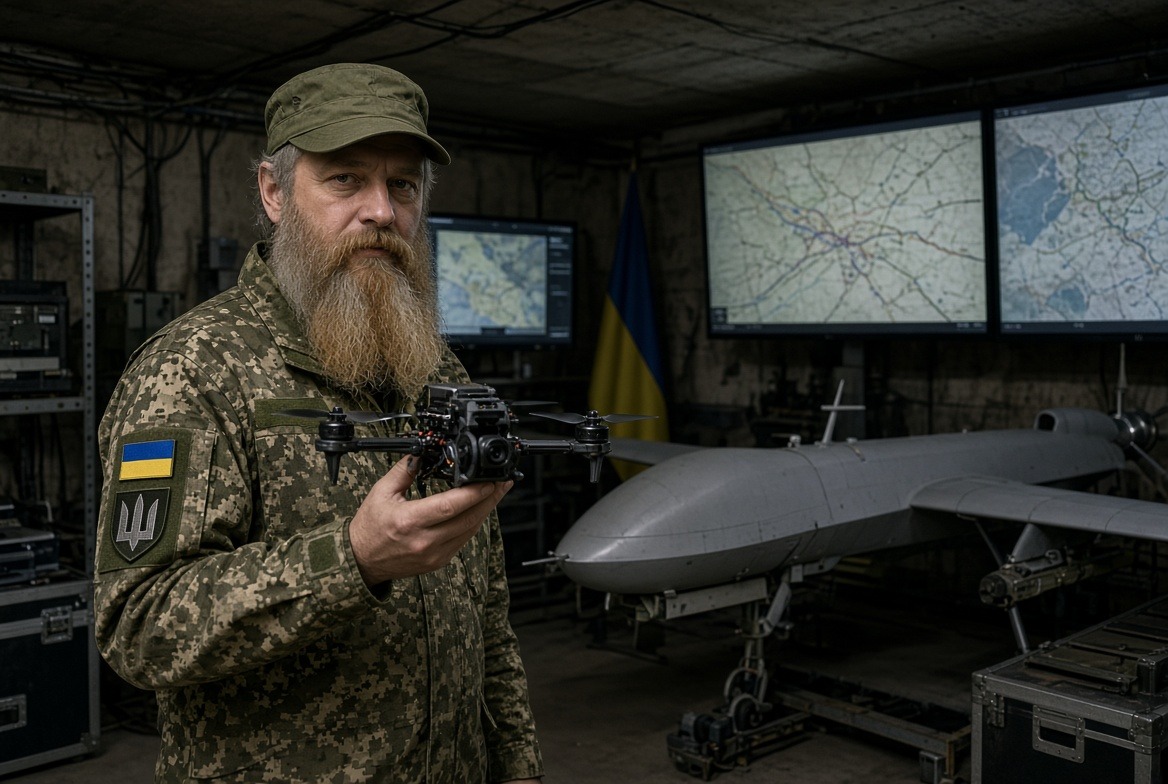
Robert Brovdi had spent his career moving grain across borders, not commanding machines of war. Yet within a few short years, the man known by his callsign “Madyar” has become the driving force behind one of the most disruptive military transformations of the conflict — and, reportedly, the target of a multi-million-dollar manhunt ordered from Moscow.
A bounty that signals a turning point
Twenty million dollars. That is the figure Russian authorities are said to have offered for information leading to the location of Robert “Madyar” Brovdi, according to reporting from late September 2026 that was picked up by multiple outlets. The reward would target the commander of Ukraine’s Unmanned Systems Forces, who has become one of the most recognisable military figures of the drone war.
If confirmed, the bounty says less about Russian desperation than about Brovdi’s own significance. His story, however, is not that of a career soldier.
From grain trader to drone commander
Born in Uzhhorod, in western Ukraine, Brovdi worked in the international grain trade before the war. When Russia launched its full-scale invasion in February 2022, he joined the Ukrainian forces as a volunteer.
Months later, in May 2022, he founded his own drone unit, calling it “Magyar’s Birds.” The group specialised in reconnaissance and strikes using unmanned systems. It grew steadily until it became the 414th Separate Brigade of Unmanned Strike Systems.
Brovdi championed an idea that has since become central to Ukraine’s strategy: deploying thousands of relatively inexpensive systems to monitor the battlefield, identify Russian positions and hit targets sometimes far behind the front line.
In May 2025 he was awarded the title Hero of Ukraine. A month later, he took charge of the Unmanned Systems Forces, a structure created to coordinate and scale up Ukraine’s drone capabilities.
Drones as a weapon of mass production
In Ukraine, the drone is no longer merely a reconnaissance tool. It has become a permanent fixture of the war.
Small FPV devices can be used against vehicles or fortified positions. Medium-range drones can reach logistics infrastructure. Other, far more sophisticated systems can strike targets hundreds of kilometres away.
According to the Ukrainian presidency, the Unmanned Systems Forces accounted for roughly 2% of the armed forces in November 2025, yet were credited with 35% of the destruction and damage inflicted on enemy personnel and targets. These figures come from the Ukrainian side and do not, on their own, constitute an independent assessment of the battlefield.
The shift is particularly visible in Crimea. Since 2026, Ukraine has waged a campaign aimed at disrupting Russian supply routes, fuel depots, railway infrastructure, air-defence systems and military bases.
An analysis by the Centre for Eastern Studies notes that medium-range drones now play a major role in this campaign. The goal is in part to create “corridors” that allow other Ukrainian weapons to reach Russian installations more easily.
From the Black Sea to Crimea
Ukraine’s use of drones is not confined to land warfare.
Since 2022, naval drones have profoundly altered the balance of power in the Black Sea. Lacking a conventional fleet comparable to Russia’s, Ukraine developed uncrewed vessels capable of approaching and attacking Russian ships.
The British research centre RUSI assesses that these systems played a decisive role in Ukraine’s ability to keep the Russian fleet at a distance and challenge its freedom of action in the Black Sea.
Among the emblematic operations are attacks on the intelligence ship Ivan Khurs, the patrol vessel Sergei Kotov and the missile corvette Ivanovets, the latter sunk in February 2024 after a Ukrainian naval drone attack.
In 2026, the campaign expanded further. In July, Reuters reported that “Madyar’s Birds” had taken part in attacks on more than 180 ships and other maritime targets around Crimea within weeks, using Ukrainian-made FP-1 and FP-2 drones. The aim was to disrupt Russian logistics and complicate the use of the peninsula as a military base.
A war where numbers matter
The doctrine Brovdi advocates rests on an industrial logic: produce enough drones, train enough operators and multiply strikes to make Russian rear areas vulnerable.
In July 2026, Ukrainian military authorities claimed to have struck bridges, air-defence systems, radars, ammunition depots, oil facilities and air infrastructure in Crimea and the occupied territories.
But these successes do not mean drones alone have changed the course of the war. An analysis published in September 2026 by the Centre for Eastern Studies stresses that, despite the damage inflicted on Russian infrastructure in Crimea, these strikes had not yet brought about a major change in the pace of Russia’s advance on the land front.
It is precisely in this new phase of the war that Robert Brovdi has become a prime target. To his supporters, he embodies the accelerated modernisation of the Ukrainian army. To Moscow, his role in drone strikes makes him a particularly wanted adversary.
At 48, the former grain trader has become the face of a broader military transformation: a war in which a few operators, software, cameras and unmanned vehicles can sometimes produce effects once reserved for far heavier units.
And as Ukrainian drones continue to roam the front lines, the Black Sea and the depths of Crimea, their commander must now live as a permanent target — with a bounty of tens of millions of dollars reportedly offered to anyone who can track him down.