Un warns of rising isil threat in Sahel and lake Chad region
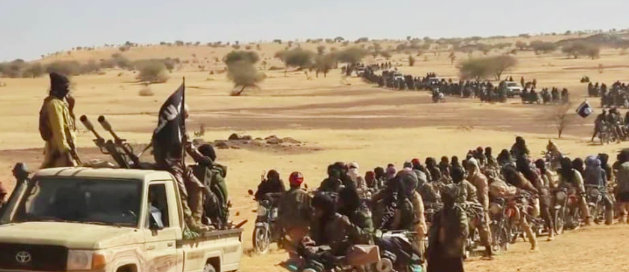
The United Nations has issued a stark warning about the growing influence of the Islamic State in Iraq and Syria (ISIS) across Africa, with the Sahel and Lake Chad Basin now identified as critical hotspots for the group’s expansion.
In a newly released report presented to the UN Security Council, Secretary-General António Guterres highlights that despite the weakened central leadership of ISIS, its regional affiliates are thriving by capitalizing on local vulnerabilities. The assessment underscores a persistent and evolving terrorist threat that continues to destabilize key regions.
Daech’s strategic shift in africa
The report, compiled by Oguljeren Niyazberdiyeva from the UN Office of Counter-Terrorism (UNOCT), specifically names the Sahel and Lake Chad Basin as the primary theaters of ISIS’s resurgence. The document reveals that the group’s West Africa Province (ISWAP) remains its most operationally active affiliate globally, expanding its military capabilities through the use of commercial drones for both surveillance and offensive strikes.
Regional affiliates adapt and survive
While military pressure has degraded ISIS’s central command, the group has adapted by decentralizing its operations into autonomous regional cells. This shift allows it to exploit weak governance, prolonged conflicts, and economic instability in affected areas. The report notes that affiliates in the Democratic Republic of the Congo (DRC) and Mozambique are sustaining their offensives despite counter-terrorism efforts, while actively recruiting new fighters and strengthening local networks.
Oguljeren Niyazberdiyeva emphasized in the findings, ‘ISIS has fundamentally reorganized its structure to endure sustained military campaigns. The group remains a grave threat to international peace and security, even as global efforts intensify.’
Technology as a double-edged sword
The UN’s assessment also highlights ISIS’s growing reliance on advanced technologies, including artificial intelligence, encrypted communications, digital platforms, and unmanned aerial vehicles (UAVs). These tools are being weaponized for propaganda, recruitment, financing, and attack planning. The report calls for stronger international cooperation and collaboration with private sector tech firms to regulate and counter these emerging threats.
However, the document also acknowledges that responsible and rights-compliant use of technology can serve as a powerful tool in counter-terrorism efforts, enhancing prevention and response capabilities.
As the threat landscape evolves, the UN stresses the need for adaptive strategies that combine military, intelligence, and technological solutions to address the persistent menace posed by ISIS and its affiliates in Africa.