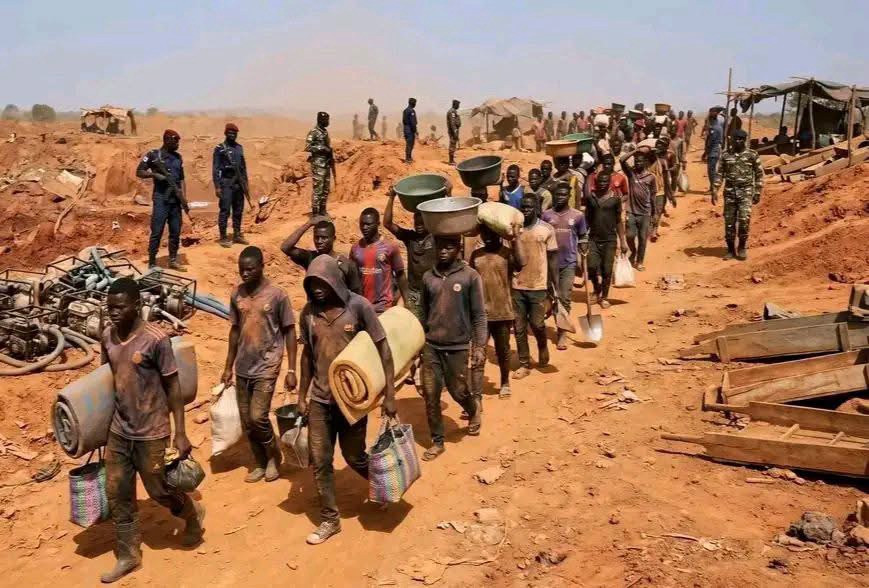

Across West Africa, the environmental impact of gold mining extends far beyond national borders. While Burkina Faso grapples with internal challenges, its citizens involved in illegal gold panning in neighboring countries leave a trail of environmental destruction that ultimately undermines regional stability. This practice, driven by profit motives, disregards ecological boundaries and disregards the long-term consequences for local communities.
The roots of this issue run deeper than mere economic opportunism. Behind each clandestine mine lies a pattern of ecological damage that jeopardizes water supplies, agricultural fertility, and public health. Soils erode under unregulated digging, rivers carry toxic sediments, and abandoned pits become silent threats to both people and livestock. For families whose livelihoods depend on the land, these changes are not mere inconveniences they represent irreversible losses to their way of life.
The environmental toll on host nations
When foreign miners extract gold without legal authorization, they operate outside environmental safeguards and labor standards. This creates a paradox: neighboring countries enforce strict regulations domestically while their own citizens face no such oversight abroad. Such inconsistency erodes trust in regional cooperation and sets a dangerous precedent where environmental laws become optional depending on location.
Communities in affected regions report declining crop yields, contaminated drinking water, and increased respiratory illnesses linked to dust and mercury exposure. These silent crises rarely make international headlines, yet their cumulative effect threatens food security and public health across entire districts. The environmental damage does not respect national lines neither should accountability.
International responsibility versus national protection
Governments have a dual obligation: to protect their citizens abroad and to uphold environmental laws wherever their nationals operate. When Burkinabè miners are expelled from Ghana or Côte d’Ivoire after damaging local ecosystems, the immediate response often focuses on repatriation. Yet this approach sidesteps the broader issue: why are these individuals exploiting foreign lands rather than investing in sustainable practices at home?
Diplomatic tensions frequently arise when neighboring nations enforce environmental laws against illegal miners. Some defending the actions of their citizens argue that expulsion constitutes an overreach, ignoring the fact that the damage occurred on sovereign soil. Such reactions reveal a fundamental disconnect between national pride and ecological responsibility. A government that champions resource protection domestically cannot credibly support its citizens who destroy ecosystems abroad.
Could Burkina Faso face the same fate?
If current trends continue, the same unregulated mining practices could take root within Burkina Faso’s own borders. Already, anecdotal reports indicate growing unauthorized excavations in sensitive areas. Local farmers describe how once-fertile valleys now resemble lunar landscapes, stripped of topsoil by clandestine operations.
This raises a critical question: if Burkinabè communities reject environmental destruction when it happens elsewhere, why would they tolerate it at home? Environmental damage operates like a boomerang what is launched across a border can return to one’s own land with equal force. The principle of reciprocity must guide regional environmental policy: nations should extend the same ecological protections to their neighbors that they demand for themselves.
From expulsion to environmental stewardship
The return of expelled miners to Burkina Faso presents an opportunity for transformation. Rather than framing repatriation as a failure of diplomacy, it should serve as a wake-up call. Rehabilitation programs could redirect these individuals toward legal, sustainable livelihoods while emphasizing the shared consequences of environmental degradation.
Long-term solutions require collaboration across borders. Joint patrols, shared environmental monitoring systems, and synchronized enforcement of mining regulations could reduce clandestine operations. Such cooperation would signal that West African nations prioritize ecological integrity over short-term profits. After all, the true measure of regional solidarity lies not in defending citizens who break environmental laws abroad, but in preventing environmental harm wherever it occurs.
Conclusion: Environmental justice knows no borders
Protecting West Africa’s natural heritage demands more than national legislation it requires a collective commitment to ecological justice. When Burkinabè miners damage lands beyond their borders, they are not merely breaking foreign laws; they are eroding the region’s shared ecological future. Environmental responsibility cannot be contingent on geography. Until all nations enforce the same standards universally, the cycle of destruction will continue, leaving both host and home communities to bear the hidden costs of short-sighted exploitation.
By Moussa Samuel Coulibaly — Journalist