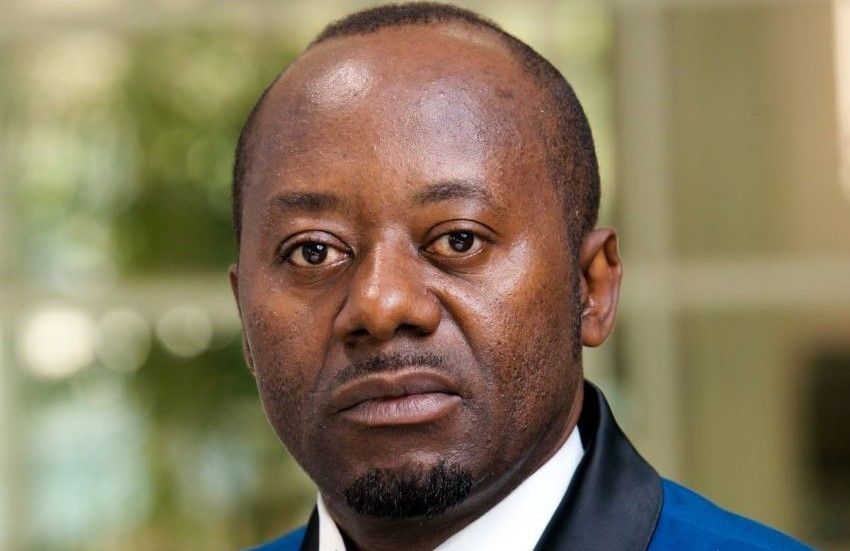
Libreville, Friday 18 September 2026 – The general prosecutor’s office in Libreville is under new leadership at a time when Gabon’s judiciary is under growing pressure to prove it can deliver efficiency, rigour and credibility. On 16 September 2026, in Port-Gentil, the Superior Council of the Judiciary appointed Alain-Georges Moukoko as general prosecutor at the Libreville Judicial Court of Appeal. The announcement has triggered immediate debate about what his tenure will mean for a legal system demanding tangible results.
A changing of the guard at a critical moment
Moukoko takes over from Eddy Narcisse Minang as part of a broader reshuffle decided at the highest levels of the magistracy. The handover thrusts into the spotlight a prosecutor whose career is defined by extensive experience in public prosecution and an unusual specialisation in environmental law and the fight against child trafficking.
From environmental justice to the highest prosecutorial office
Born in Libreville and now 52, Alain-Georges Moukoko built his career across both the prosecution bench and the judiciary. After training at the National School of the Judiciary, he served as a prosecutor from 2007 to 2016 before continuing at the Mouila Court of Appeal. He has also completed several international programmes covering humanitarian law, leadership, anti-corruption and transnational crime. His time as a Humphrey Fellow in the United States further strengthened his international profile.
His reputation rests largely on the cases that defined his career. As founder of the Association of Green Magistrates of Gabon, he devoted himself to environmental justice issues. His biography published under the Humphrey programme lists cases involving illegal logging, unlawful fishing, poaching and trafficking in protected species and ivory. That experience gave him particular visibility in a region where environmental criminal networks frequently operate across national borders.
Another defining moment came in 2015 when he received the Iqbal Masih Award for his work against child trafficking. The US Department of Labor recognised his role in dismantling forced labour and trafficking networks, as well as training public officials in victim protection.
A profile that informs but does not predict
This background shapes the profile of the new general prosecutor, but it does not determine his future actions. In Libreville, he will lead an office responsible for the most sensitive cases within the jurisdiction of the capital’s Judicial Court of Appeal. He will work alongside a team that includes three advocate generals—Hortense Komba Bango épouse Ngossanga, Olivier Nzaou and Angélique Ndouna—as well as two deputy general prosecutors, Rodrigue Ondo Mfoumou and Andy Kinette Ntsame Mamadou. The Superior Council of the Judiciary also placed Moukoko on the promotion list for the exceptional grade.
Political expectations and a clear roadmap
The appointment comes as the head of state has set precise expectations for the judiciary. During the Port-Gentil session, Brice Clotaire Oligui Nguema stressed the need for diligent handling of procedures, better oversight of certain judicial practices and respect for reasonable deadlines. These guidelines give the new prosecution team a roadmap that goes well beyond personnel changes.
The choice of Alain-Georges Moukoko also carries particular weight given the transformation of economic and environmental law in Gabon. The country is seeking to strengthen protection of its forests, fisheries and biodiversity while developing mining and industrial activities. As head of the Libreville general prosecutor’s office, he may find himself handling cases where these very issues intersect—between economic activity, legal certainty, protection of public interests and prosecution of offences.
From reputation to institutional performance
Above all, he must now apply his experience in a role very different from the one that made him known. Running a general prosecutor’s office means coordinating multiple levels of the prosecution service, ensuring consistency in criminal action and monitoring procedures. The institution’s performance will not be measured solely by the number of cases opened or prosecutions launched, but also by the quality of files, the speed of their processing and the execution of court decisions.
What the handover does—and does not—mean
The succession from Eddy Minang requires an important distinction. The Superior Council of the Judiciary made the new appointment after confirming the disciplinary situation of the former general prosecutor, whose avenues of appeal remain open under applicable law. The change of officeholder therefore does not, in itself, explain previous decisions or prove any link between the two cases.
The road ahead for Libreville’s new prosecutor
For Alain-Georges Moukoko, the challenge now is to turn an already rich career into concrete results at the heart of the country’s judicial capital. His environmental expertise, his knowledge of the prosecution service and his international exposure are profile assets. The true measure of his mandate, however, will be far more routine—in how the office pursues cases, respects procedural guarantees and meets the expectations of those seeking justice.
Libreville thus welcomes a general prosecutor with a singular background. It is now up to him to demonstrate that this experience can translate into a justice system that is more transparent, more responsive and more firmly anchored in the law.
FIN/INFOSGABON/SO/2026
Copyright Infos Gabon