
From public statements to diplomatic summon: the backdrop of the Niger-EU clash
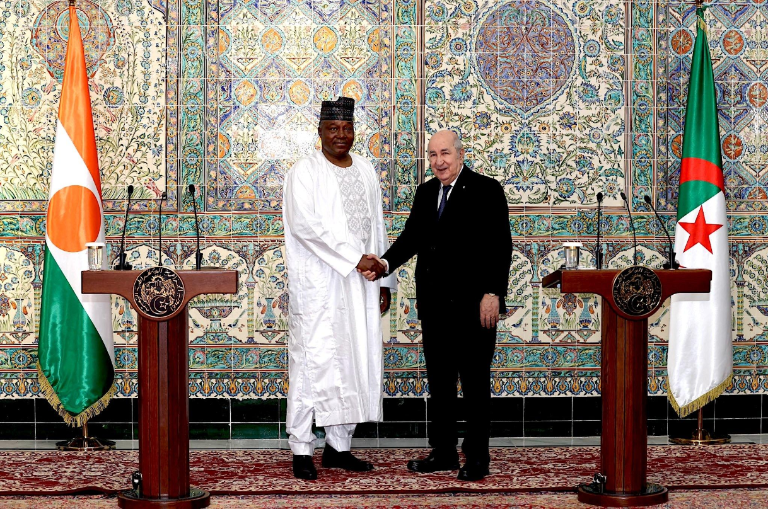
When Niger’s transitional authorities summoned the European Union’s chargé d’affaires in Niamey, the move was framed as a firm response to what officials described as ‘condescending and unacceptable’ remarks from Brussels. The catalyst? A public inquiry into the presence of Algerian military personnel on Nigerien soil—a deployment that, according to EU spokespersons, lacked clarity on objectives, duration, and legal framework. But beneath the surface of this diplomatic confrontation lies a deeper question: where exactly do the boundaries of sovereignty end, and where does the right to inquire begin?
Sovereignty versus scrutiny: what international law actually says
The Nigerien government has made one thing clear: its military cooperation with Algeria is a sovereign decision. And under international law, that position is unassailable. Both Niger and Algeria are free to negotiate defense agreements, select partners, and define their security priorities—provided they comply with international obligations. The EU, however, retains the right to voice concerns when regional stability appears at stake.
The Charter of the United Nations, in Article 2(7), explicitly protects states from external interference in matters ‘essentially within their domestic jurisdiction.’ Yet the same provision does not transform every question, comment, or diplomatic communiqué into an act of interference. For an expression of concern to cross the line into coercion or imposition, it must involve pressure, threats, or attempts to dictate sovereign decisions—none of which the EU has employed in this case.
Asking for clarification on a military deployment is not the same as demanding its reversal. Voicing concerns about potential regional repercussions does not equate to veto power. The legal threshold for interference is high, and public statements, no matter how pointed, rarely meet it.
The Sahel’s fragile security landscape: why Europe’s questions are not idle
The timing of the EU’s inquiry is no coincidence. The Sahel remains one of Africa’s most volatile regions, where armed groups cross borders with impunity, state institutions struggle to assert control, and regional cooperation mechanisms often fall short. In such an environment, any cross-border military movement—especially one involving a neighboring power like Algeria—can ripple across the subregion, influencing dynamics in Mali, Burkina Faso, and beyond.
Questions about the mission’s scope, chain of command, duration, and legal basis are not mere bureaucratic nitpicking. They are legitimate attempts to assess whether the deployment aligns with regional security objectives or risks unintended escalation. The EU, as a major diplomatic and financial actor in the Sahel, has a vested interest—and arguably a responsibility—to monitor such developments and seek transparency when gaps arise.
Diplomatic tone matters: where Brussels may have missed the mark
While the EU’s right to inquire is legally sound, the manner in which it communicated its concerns may have fueled the crisis. Diplomacy thrives on nuance, and public statements that are perceived as patronizing or dismissive can quickly escalate into confrontation. The Nigerien government’s decision to summon the EU envoy reflects not just a defense of sovereignty, but also a rejection of what officials viewed as an affront to their decision-making authority.
Yet summoning a diplomat is not the same as shutting down dialogue. It is, in fact, an invitation to clarify positions—and an opportunity for the EU to reaffirm its commitment to partnership rather than oversight. The challenge now lies in shifting from confrontation to constructive engagement, where both sides acknowledge the other’s prerogatives without sacrificing transparency.
The path forward: balancing sovereignty with regional responsibility
This episode underscores a fundamental truth in international relations: sovereignty and scrutiny are not mutually exclusive. A state’s right to act independently does not shield its choices from external observation, especially when those choices carry implications beyond its borders. Conversely, the right to comment does not grant carte blanche to impose conditions or dictate outcomes.
The way forward for Niger and the EU—and for the Sahel as a whole—lies in mutual recognition of these realities. Niger can and should defend its bilateral agreements with Algeria, while the EU can and should articulate its concerns in a manner that fosters trust rather than mistrust. The goal is not to eliminate friction, but to manage it within a framework of respect and reciprocity.
In the end, the diplomatic tension between Niamey and Brussels may prove less about who holds the upper hand and more about how both sides can turn a moment of friction into an opportunity for clearer communication and stronger cooperation in one of Africa’s most fragile regions.