
Understanding the surge of Burkinabè miners in Guinea’s illegal gold fields
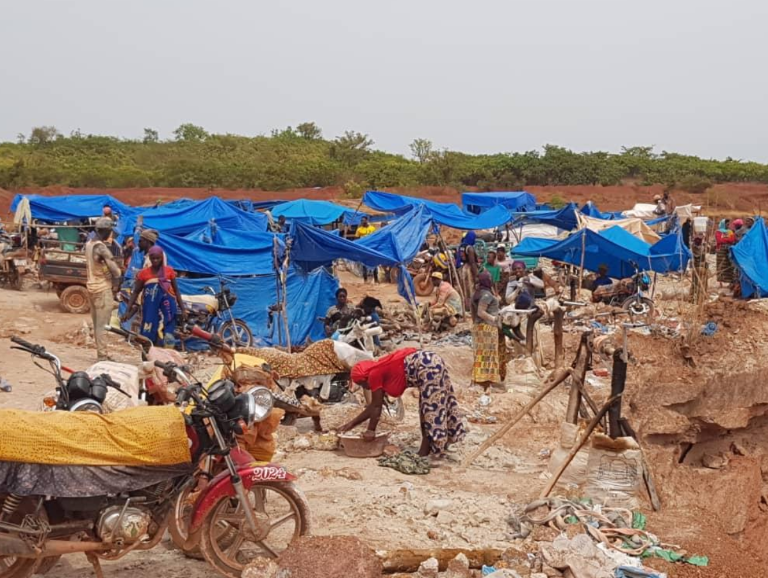
The recent crackdown on illegal gold mining in Guinea has exposed a deeper socioeconomic story—one that stretches across borders and reveals the harsh realities behind West Africa’s migration patterns. Among those detained in the sweeping operations are hundreds of Burkinabè nationals, highlighting a desperate search for survival in a region where economic opportunities are scarce and livelihoods are under threat.
Last November’s mass arrests—totaling 1,412 individuals—shine a spotlight on a migration trend driven not by choice, but by necessity. For many Burkinabè workers, Guinea’s artisanal gold mines represent a last resort in a country grappling with instability, declining economic activity, and a lack of stable income sources. This exodus of labor underscores systemic failures in economic policy and the widening gap between policy ambition and lived reality.
Why Guinea’s gold fields are drawing Burkinabè workers
Guinea’s vast natural resources, particularly gold, have long attracted miners from across the region. Despite the dangers—hazardous working conditions, environmental degradation, and legal consequences—thousands continue to migrate in search of income. The allure of quick earnings in unregulated mines outweighs the risks for many, especially when local alternatives are nonexistent.
The surge in Burkinabè presence in these mines is not an isolated incident. It reflects a broader pattern of regional labor mobility, where workers from neighboring countries—Burkina Faso included—are increasingly crossing borders in pursuit of economic survival. For these individuals, migration is not merely a livelihood strategy; it is a necessity born out of desperation.
Poverty, insecurity, and the collapse of rural economies
The pull factors driving this migration are rooted in deep-rooted challenges facing Burkina Faso. Years of insecurity, climate shocks, and economic stagnation have eroded livelihoods, particularly in rural areas. With limited access to education, healthcare, and stable employment, many Burkinabè families are left with few options beyond hazardous work or displacement.
This crisis has only intensified under recent political transitions, where promises of economic sovereignty and resource control have yet to translate into tangible improvements for ordinary citizens. The contrast is stark: a nation rich in mineral wealth yet unable to provide its people with basic economic security.
The limits of repression and the need for structural solutions
Guinea’s aggressive enforcement measures—detaining over 1,400 individuals in a matter of weeks—send a clear message: illegal mining will not be tolerated. Yet, while judicial action may temporarily curb unregulated activity, it does little to address the underlying drivers of migration. Without addressing the economic despair in Burkina Faso, new waves of miners will likely emerge, finding alternative routes into the shadows of the gold trade.
A sustainable solution demands more than arrests. It requires coordinated efforts between governments to understand migration flows, dismantle recruitment networks, and create viable economic alternatives for affected communities. Only then can the cycle of exploitation and displacement be broken.
Beyond the numbers: human stories behind the migration crisis
The 1,412 arrests are more than a statistical milestone—they represent lives uprooted by economic hardship. Each detainee carries a story of family responsibilities, unmet needs, and the painful choice between staying in poverty or risking everything for a chance at survival.
For Guinea, the challenge is to balance enforcement with compassion, ensuring that crackdowns do not further marginalize migrant workers. For Burkina Faso, the imperative is clear: economic policies must deliver real opportunities, not just rhetoric. True sovereignty is measured not by resource extraction alone, but by the ability of citizens to thrive without being forced to leave their homeland.
What’s next for Burkina Faso’s economic policy?
The migration of Burkinabè miners to Guinea is a wake-up call for policymakers. If economic independence is the goal, then tangible results—jobs, income stability, and reduced poverty—must follow. Otherwise, the exodus of workers will continue, and the promise of sovereignty will remain unfulfilled.
The coming months will reveal whether the current trajectory can be reversed. One thing is certain: repression alone cannot solve a crisis fueled by economic despair.