
The ninth edition of the Paris Peace Forum, held on November 10-11, 2026, has become a global stage where nations converge to address the world’s most pressing challenges. Among the African leaders stepping into the spotlight are Senegal’s President Bassirou Diomaye Faye and Benin’s Minister of Digital Transformation and Innovation, Mahuna Akplogan. Their participation is not merely symbolic—it reflects a deeper strategic shift in how African nations engage with international diplomacy, particularly in shaping the narratives around peace, sovereignty, and technological progress.
Paris, the city of lights, temporarily transforms into a hub for global dialogue, where heads of state, policymakers, and civil society leaders convene to tackle the fractures in global stability. The backdrop of this year’s forum is one of escalating conflicts, geopolitical tensions, and rapid technological disruption, all of which demand fresh perspectives and collaborative solutions. For African nations like Senegal and Benin, the stakes are especially high—their presence is a deliberate move to assert their roles not as passive observers but as architects of the solutions that will define the continent’s future.
Senegal’s strategic maneuvering: diplomacy as a tool for sovereignty
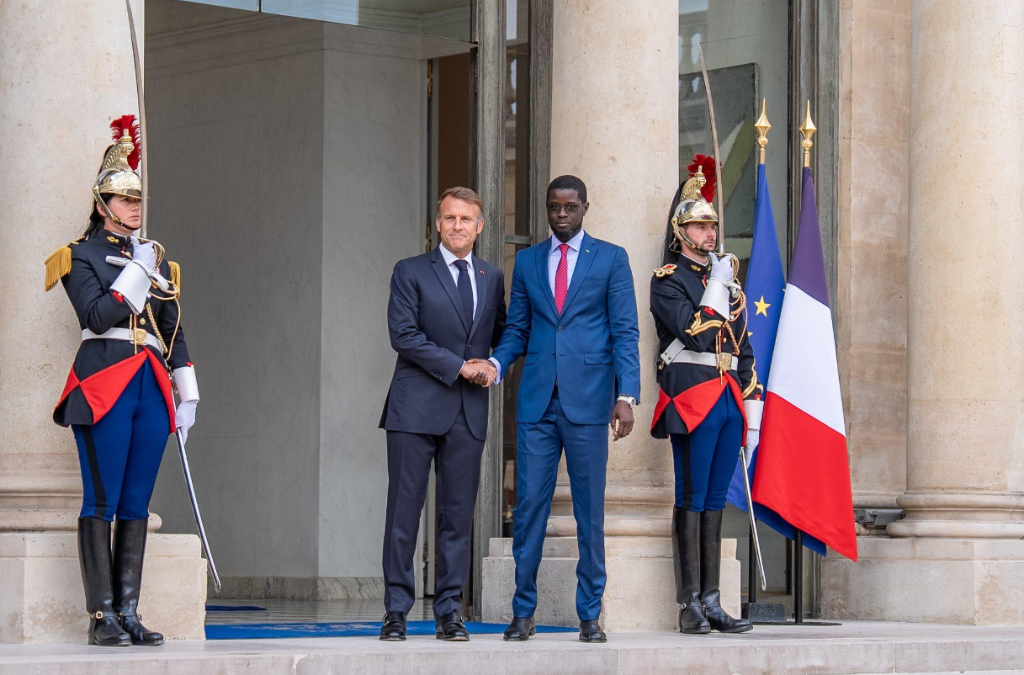
President Bassirou Diomaye Faye’s attendance at the forum follows a high-profile meeting with French President Emmanuel Macron at the Élysée Palace the day prior. This bilateral encounter underscores a critical moment in Senegal’s diplomatic evolution—one where Dakar is recalibrating its international relations to prioritize national sovereignty and African interests.
Senegal’s diplomatic agenda at the forum is far-reaching. It encompasses pressing regional concerns such as Sahel security, counterterrorism efforts, and equitable development financing, but also extends to broader global governance reform. The underlying message is clear: Senegal is no longer content with participating in discussions; it seeks to lead them.
The reforms in Franco-Senegalese relations, discussed during the Élysée meeting, further highlight this shift. Issues like economic cooperation and mutual respect have taken center stage, signaling a departure from traditional post-colonial dynamics toward a partnership built on equality and shared goals. For Dakar, this is about more than diplomacy—it’s a statement of intent.
Benin’s digital sovereignty: redefining Africa’s place in the tech revolution
While Senegal’s focus leans toward political and security diplomacy, Benin is carving out a distinct path by championing technological sovereignty. Mahuna Akplogan, representing Benin at the forum, brings a perspective that is reshaping how Africa engages with the global stage: one where digital innovation is not just a tool for development but a cornerstone of national independence.
The minister’s presence at the forum is a deliberate statement on the importance of owning Africa’s digital future. In a world where technological infrastructure and data sovereignty are increasingly tied to global power, Benin’s approach is a proactive response to the risks of external dependence. By investing in national artificial intelligence strategies and digital transformation, Benin is positioning itself as a leader in the continent’s tech-driven growth.
The questions Benin’s delegation raises are fundamental: How can Africa leverage technology to drive economic competitiveness? How can it ensure that its innovations serve local needs rather than foreign agendas? These are not just technical debates—they are questions of who controls the future.
The forum’s diverse stage: why African voices matter globally
The Paris Peace Forum is not exclusive to European or Western powers. This year’s lineup includes leaders from Timor-Leste, Lithuania, Slovakia, Armenia, the Seychelles, the United Arab Emirates, Haiti, and Spain, among others. The diversity of participants reflects the forum’s core mission: to amplify voices from all regions in shaping global solutions.
For Africa, this is an opportunity to move beyond being the subject of international discussions to becoming a driver of them. The continent’s challenges are well-documented—from security threats to climate vulnerability—but so too are its assets: a burgeoning young population, abundant natural resources, and untapped economic potential. The key lies in transforming these assets into influence, and forums like this provide the platform to do so.
From dialogue to action: the real test for Africa’s ambitions
The Paris Peace Forum, like many high-level summits, offers a platform for ideas and commitments. But the true measure of its success lies in the tangible outcomes that emerge. For Senegal and Benin, the challenge is to translate their diplomatic and technological ambitions into concrete partnerships, investments, and reforms.
President Faye and Minister Akplogan’s participation is a critical step, but the real work begins now. Will the forum’s discussions translate into lasting collaborations on security, trade, or digital infrastructure? Can Africa carve out a more prominent seat at the decision-making tables of international institutions? These are the questions that will define whether Africa’s growing voice at the Paris Peace Forum is merely symbolic or the beginning of a new era.
What’s next for Senegal and Benin?
- Senegal: Strengthening ties with global partners while ensuring its priorities—security, development, and governance reform—are reflected in international policies.
- Benin: Advancing its digital transformation agenda to reduce dependence on foreign technology and position itself as a tech hub in West Africa.
One thing is certain: Africa is no longer waiting for an invitation to contribute to global discourse. It is actively reshaping the terms of engagement, and the Paris Peace Forum is just one battleground in this larger struggle for influence.