
When 25 heavy-duty trucks rolled out of Adrar, southern Algeria, on November 7, 2026, they carried more than just goods—they carried the weight of a growing economic question: Can Niger’s local industries survive the rise of Algerian imports? The 1,050-ton shipment, comprising dates, detergents, packaging, and salt, marks another step in Algeria’s calculated push into African markets, especially in landlocked Niger.
Organized under the banner of the national export day, this initiative is part of a broader strategy to expand Algeria’s non-oil exports and secure new customers beyond its borders. With the Sahel region serving as a strategic frontier, Algeria is leveraging geography to become a key supplier. Yet this commercial momentum in Niger raises a critical concern: Will local producers be able to compete, or will they be sidelined in their own market?
Why Algeria’s exports are gaining ground in Niger
Algeria’s offensive is not accidental—it’s rooted in a deliberate policy to strengthen trade ties south of the Sahara. By capitalizing on its proximity to the Sahel, Algeria aims to:
- Expand market access for its non-hydrocarbon products, including processed foods, chemicals, and industrial supplies;
- Create new revenue streams for domestic businesses in a region where many countries rely on imports;
- Reduce logistical costs by exporting directly to neighboring markets like Niger.
For Niamey, this surge in Algerian goods presents both an opportunity and a threat. While consumers may benefit from greater product availability and potentially lower prices, local producers face mounting pressure to keep pace in quality, pricing, and distribution.
The date industry: a case study in local vulnerability
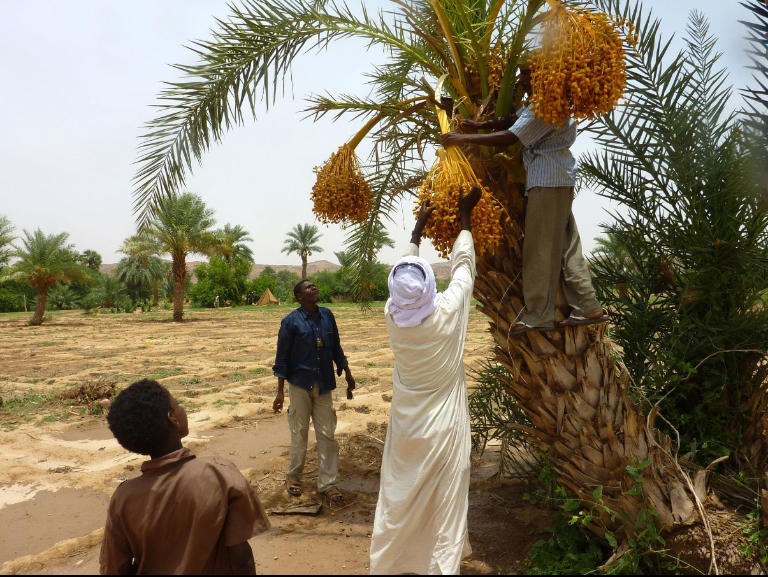
The date sector in Niger is a microcosm of the broader challenge. In the Kawar region—home to Bilma, Fachi, Dirkou, and Djado—local date producers have cultivated varieties and know-how passed down for generations. Yet despite this heritage, the industry struggles with chronically low yields, water scarcity, high transport costs, and inadequate storage infrastructure.
Competition from Algerian and Libyan dates has already eroded market share for Niamey’s producers. The arrival of an additional 1,050 tons from Algeria could tip the balance further. While imported dates may offer consistent supply and competitive pricing, local producers risk being pushed out unless they gain access to better production tools, market access, and financing.
As one industry observer noted, the issue isn’t just about the presence of foreign dates—it’s about whether local growers can operate on a fair playing field.
Industrial products at risk: detergents and packaging face the squeeze
Beyond agriculture, small and medium-sized industries in Niger are also feeling the heat. Detergents and packaging—key components of the 2026 shipment—are sectors where local manufacturers are already struggling with rising input costs, unreliable supply chains, and fierce competition from imported goods.
According to industry reports, several local processing plants have scaled back or closed due to unsustainable production costs. When Algerian-made alternatives enter the market at lower prices, the consequences are immediate: reduced demand, declining revenues, and job losses. The risk isn’t theoretical—it’s already unfolding in sectors where imported goods dominate shelf space.
While consumers benefit from affordable options, the broader question remains: Can Niger afford to import finished goods while its own industries struggle to scale?
Can quality control level the playing field?
In a move to protect domestic industries, Niger’s Ministry of Commerce and Industry announced a new compliance inspection program starting August 1, 2026. The initiative aims to:
- Block low-quality or unsafe imported products from entering the market;
- Ensure fair competition by enforcing standards across all suppliers;
- Safeguard consumer health and trust in local brands.
While these measures may curb unfair competition, they don’t address the core issue: local producers still lack the tools to compete. Without targeted support in financing, infrastructure, technology, and skills development, inspections alone won’t restore balance.
Is Niger becoming a consumer market for Algeria?
The commercial relationship between Algeria and Niger is evolving rapidly. On one side, Algeria sees Niger as a vital outlet for its goods. On the other, Niger risks being confined to the role of a consumer market—buying finished products rather than building its own industries.
A sustainable partnership would go beyond one-way trade. Potential avenues include:
- Joint ventures to process raw materials locally;
- Technology and skills transfer to boost local manufacturing;
- Regional industrial corridors that integrate production and distribution.
Without such measures, Niger may find itself dependent on imports, with little incentive to develop its own production chains. The 25 trucks that left Adrar symbolize more than commerce—they highlight a pivotal moment in Niger’s economic future.
The true challenge: balancing openness with resilience
The question is no longer whether Algerian products should enter Niger, but how to manage this trade in a way that supports both markets without crushing local industries. Without strategic investment in local capacity, the current surge in imports could lead to a long-term decline in domestic production.
For Niger, the path forward requires more than trade barriers or inspections. It demands a coordinated effort to empower local entrepreneurs, upgrade infrastructure, and foster innovation. Only then can the country navigate its commercial opening without sacrificing its economic sovereignty.