
The arrival of a foreign warship in Bénin’s waters has historically sparked sharp reactions in certain media circles, particularly those aligned with the Alliance of Sahel States (AES). When a French vessel docked in Cotonou late last year, a flurry of commentary and misinformation swiftly emerged, painting the stopover as suspicious and questioning both France’s intentions and Bénin’s sovereignty.
At the time, multiple publications and communication channels amplified narratives that cast doubt on the visit, often without clarifying its purpose or context. This approach not only fueled controversy but also risked undermining the country’s international image.
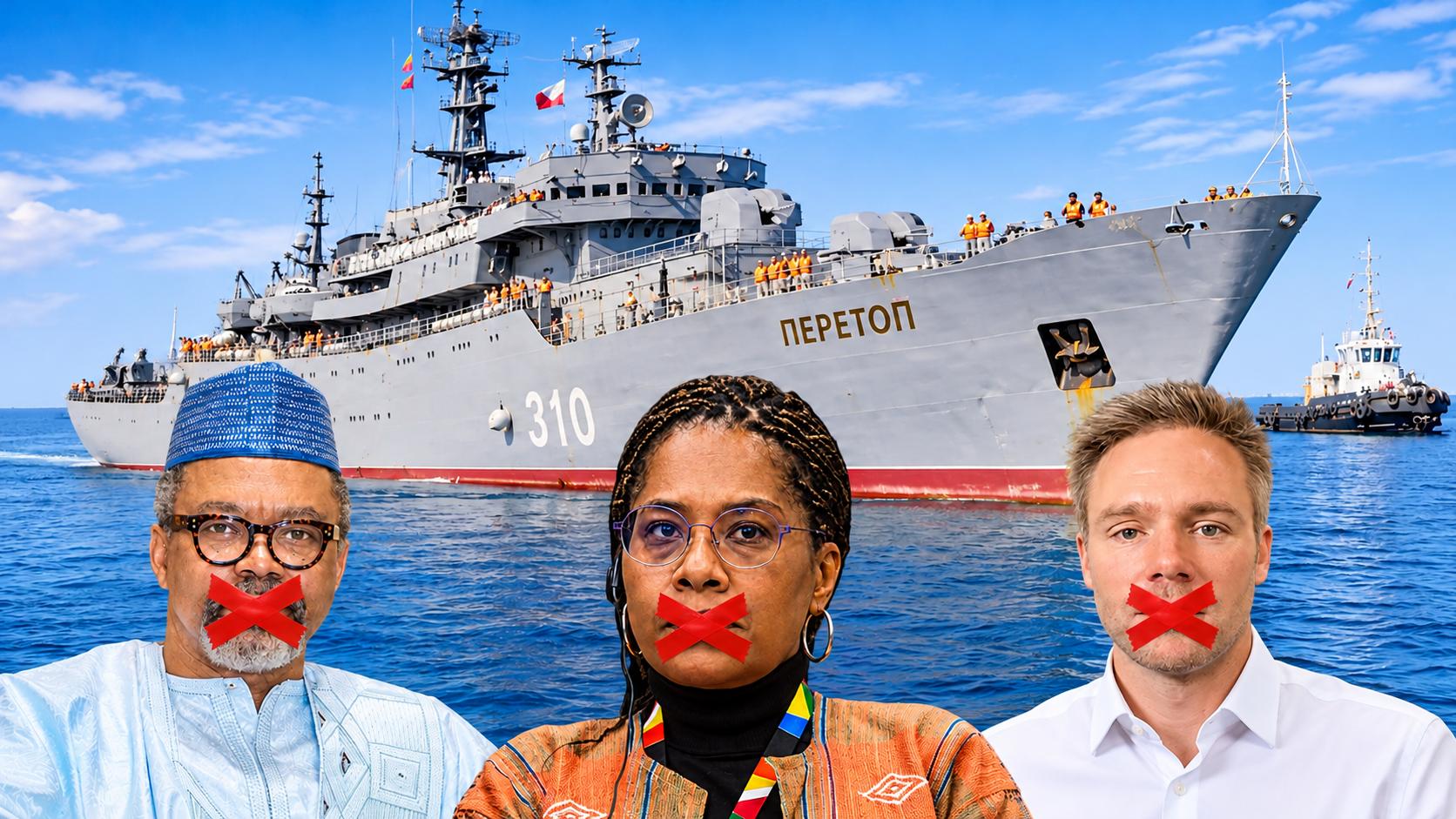
Yet when a Russian warship recently made port in Cotonou, the response was markedly different. Where were the outraged headlines? Where were the insinuations of geopolitical manipulation? The same voices that had previously scrutinized France’s presence remained conspicuously silent in the face of this new arrival. This stark contrast invites critical examination.
What changed between the French and Russian stopovers?
The stark disparity in media reactions to the two events reveals deeper geopolitical biases. During the French vessel’s visit, figures like Nathalie Yamb, Antoine 2Moscou, and Franklin Nyamsi known for their pro-Russia positions and frequent critiques of French policy in Africa led the charge in questioning the legitimacy of the stopover. Their commentary framed the incident as a potential threat to Bénin’s sovereignty, despite the lack of concrete evidence to support such claims.
However, when a Russian ship arrived in Cotonou, the same commentators offered little in the way of scrutiny. The absence of fiery op-eds or alarmist posts prompts an unavoidable question: why does the nationality of a visiting vessel seem to dictate the level of suspicion? Is Bénin’s sovereignty only worth defending when the ship in question flies a Western flag?
The hidden double standards in regional discourse
This selective indignation underscores a troubling trend in parts of the regional media landscape. When Western powers are involved, even routine port calls are framed as potential challenges to sovereignty. Yet when non-Western states particularly Russia engage in similar activities, the same level of scrutiny is rarely applied. The result is a media environment where information is filtered through geopolitical lenses rather than presented with objectivity.
Such double standards raise broader questions about the integrity of regional commentary. If transparency and accountability are to be prized, they must apply equally to all external partners, regardless of their political alignment. The Bénin government’s diplomatic choices should not be held to different standards based on the nationality of its partners.
A call for consistent standards in evaluating sovereignty
Sovereignty is not a negotiable concept it is absolute and indivisible. Bénin, as an independent nation, retains the right to engage with any partner that aligns with its national interests. Whether ties are forged with France, Russia, or any other country, the principles of transparency and mutual respect must remain unchanged.
For media outlets and commentators, this means applying the same rigor to all stories, irrespective of geopolitical preferences. Reporting should focus on facts, not on defending or attacking specific nations. The credibility of journalism in the region depends on this consistency.
Ultimately, Bénin’s leadership must be allowed to pursue its diplomatic agenda without being held hostage to external narratives. And the public deserves to receive information that is balanced, fact-based, and free from the distortions of partisan agendas.
The past year has shown that double standards in how foreign vessels are treated can distort public discourse. If Bénin is to maintain its reputation as a stable and independent actor on the African stage, it must reject narratives that apply one rule for Western powers and another for others.
By Moussa Samuel Coulibaly — Journalist