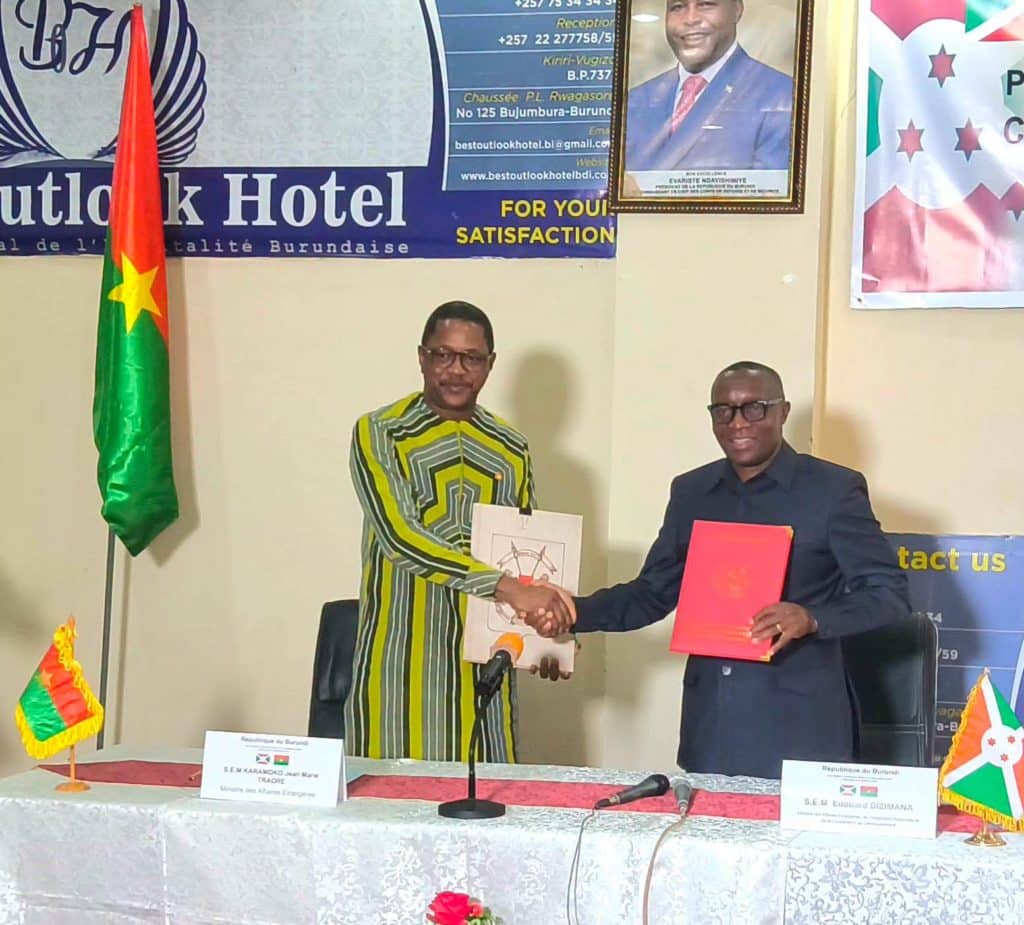

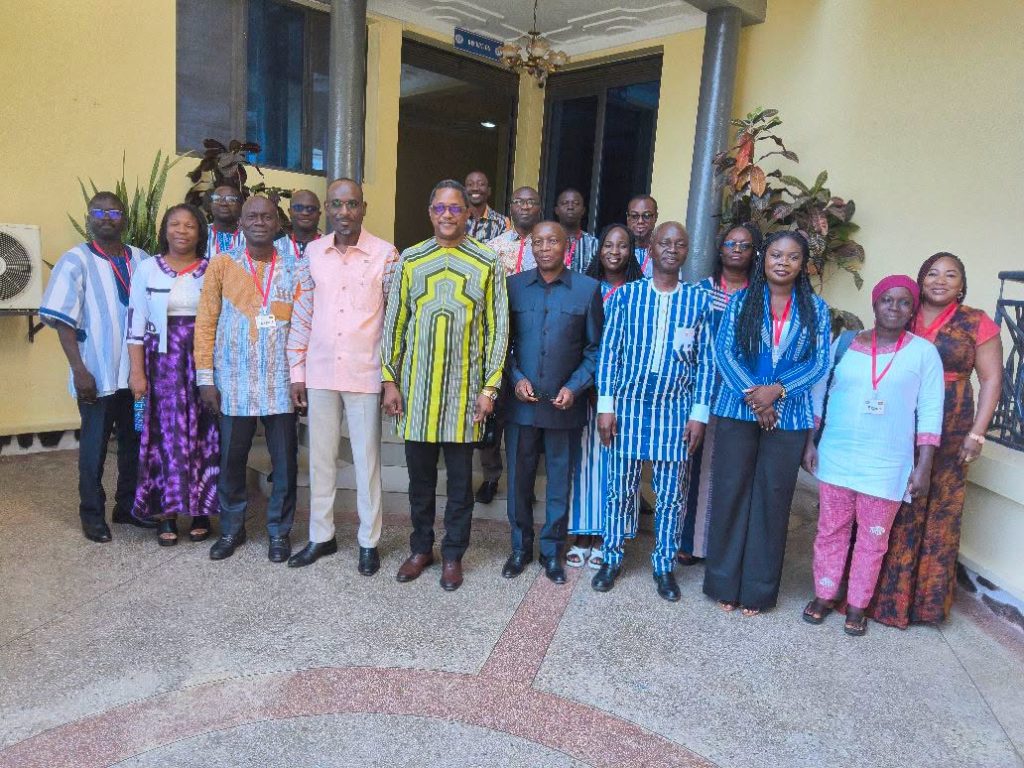
Bujumbura hosted the closing ceremony of the inaugural Burkina Faso-Burundi Joint Cooperation Commission, where high-level delegations from both nations finalized 14 binding agreements aimed at deepening bilateral relations. The landmark event concluded after intensive negotiations across multiple strategic sectors.
Burkinabè and Burundian technical experts had spent days drafting legal instruments covering vital areas for national development. The agreements were officially signed by the foreign affairs ministers of both countries during a formal ceremony, marking a significant milestone in their long-standing partnership.
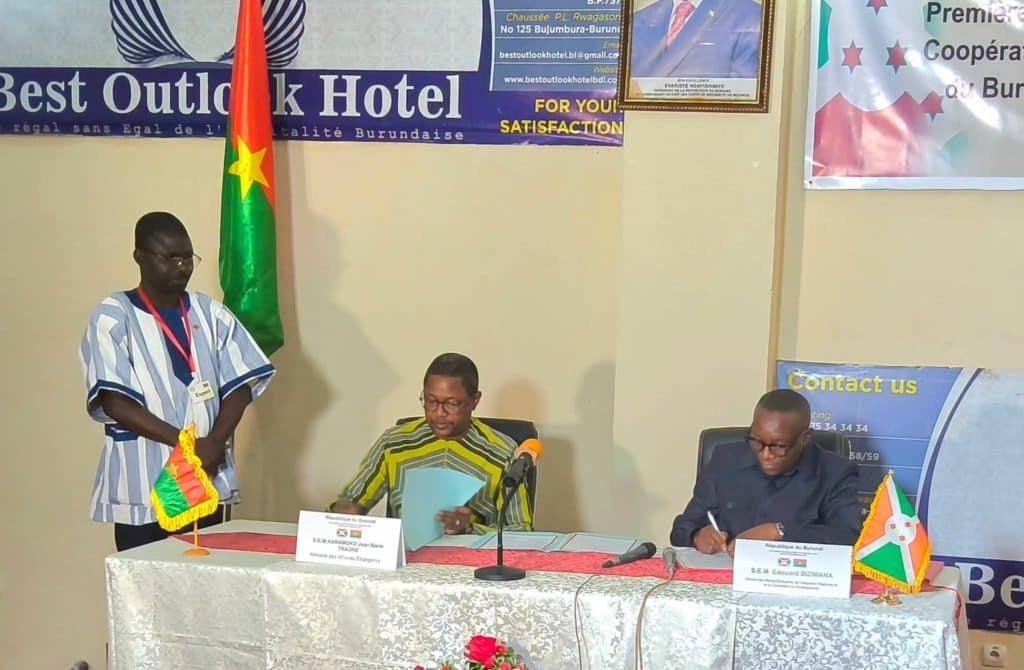
The cooperation framework spans critical domains including agriculture and livestock, security, civil protection, air services, healthcare, employment, labor, and social protection. Additional areas covered include youth development, sports, and recreational activities.
Among the breakthroughs was the mutual agreement to waive visa requirements for holders of diplomatic, service, and ordinary passports between the two nations.
The package of accords also encompasses disaster risk reduction and management, technical and vocational education, higher education and research, as well as reciprocal recognition of national driver’s licenses.
From Commitment to Action: A New Chapter in Burkina Faso-Burundi Relations
For Burkina Faso and Burundi, the signing of these 14 agreements represents more than just diplomatic progress—it signals a renewed commitment to transforming their nearly three-decade-old partnership into tangible benefits for citizens. Both governments have pledged to expedite the implementation process to ensure these frameworks yield measurable results.
The Burkinabè Minister of Foreign Affairs, Karamoko Jean Marie Traoré, emphasized that the ceremony was not an endpoint but a launching pad for sustained collaboration. He urged both sides to maintain relentless dialogue to ensure smooth execution of the newly signed legal instruments.
« This signature marks the beginning of a journey, not its conclusion. We must relentlessly pursue consultations to transform these political directives into concrete programs, projects, and measurable outcomes for our people. »
Echoing this sentiment, the Burundian counterpart, Édouard Bizimana, stressed the need to prioritize economic exchanges and investment under the South-South cooperation model. He highlighted the importance of fostering stronger ties between private sector operators, encouraging reciprocal investments, and enhancing trade flows between Burkina Faso and Burundi. The facilitation of goods and services circulation and the promotion of bilateral economic opportunities were underscored as key priorities.
Driven by Regional Visionaries
The inaugural session of the Joint Cooperation Commission aligns with the strategic vision championed by Burkina Faso’s President Ibrahim Traoré and Burundi’s President Évariste Ndayishimiye. Both leaders have consistently advocated for stronger regional integration, mutual trust, and peace as pillars of South-South partnership.
To guarantee accountability and progress tracking, the two nations agreed to promptly establish sector-specific committees tasked with overseeing the implementation of these agreements. This structured approach aims to ensure transparency, timely execution, and alignment with the shared developmental goals of both countries.