
The judicial pressure against Burkinabè exiles: beyond mere law enforcement
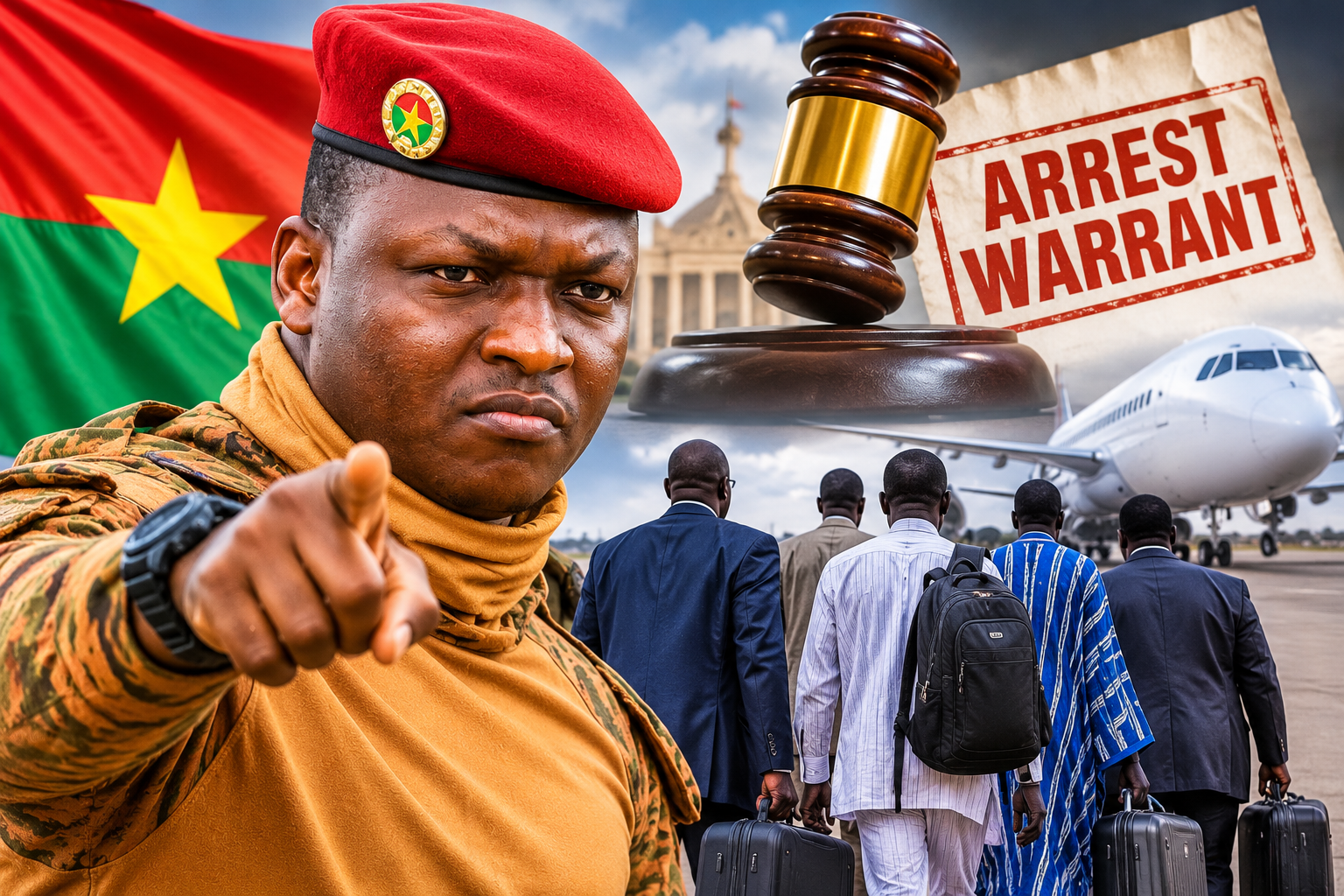
The Burkina Faso transitional authorities have intensified their legal pursuit of former political leaders, military officials, and journalists now living abroad. While these individuals sought refuge overseas to escape the country’s escalating political tensions, they find themselves facing arrest warrants, legal proceedings, and extradition requests from Ouagadougou. This strategy raises a critical question: why is the administration of Captain Ibrahim Traoré emphasizing legal action against those no longer within national borders?
The relentless pursuit of exiles suggests more than a routine application of justice. As former collaborators, military figures, and political voices become successive targets, a pattern emerges—one that transcends legal technicalities and hints at deeper systemic motivations. Is this systemic legal action designed to deliver justice, or does it reflect a calculated effort to silence dissent beyond Burkina Faso’s borders?
Extradition or political retribution: the limits of transnational justice
Legal accountability for public officials is essential, but the circumstances surrounding these cases demand scrutiny. Justice must be based on verifiable evidence, transparent procedures, and judicial independence. When legal action extends across continents, concerns intensify regarding the motives behind it.
Extradition requests, while legally permissible, must adhere to strict international standards. The safety of individuals, the fairness of judicial processes, and the respect for fundamental rights cannot be overshadowed by political considerations. The international community watches closely to ensure that these mechanisms are not exploited to suppress criticism or eliminate perceived rivals.
Consequences beyond the courtroom: the erosion of pluralism
The determination to prosecute critics, even in foreign countries, sends a chilling message about the government’s tolerance for dissent. A leadership that claims legitimacy should address opposition through constructive debate, tangible results, and institutional transparency not through the relentless pursuit of former adversaries. The perception of targeting critics at all costs undermines public trust in the integrity of Burkina Faso’s transitional institutions.
More broadly, the country’s pressing challenges security threats, economic instability, and humanitarian crises require urgent attention. Prioritizing legal battles against former officials diverts focus from the immediate needs of the population. When justice becomes a tool for political consolidation rather than a mechanism for accountability, the foundations of democratic governance weaken.
Can Burkina Faso break the cycle of political reprisals?
The risk of justice being weaponized is real. If every change in leadership results in the judicial persecution of the predecessor’s associates, Burkina Faso risks entrenching itself in an endless cycle of retaliation. This approach not only undermines the rule of law but also signals a departure from the principles of reconciliation and national cohesion.
Captain Ibrahim Traoré faces a pivotal choice: will his administration uphold the rule of law through fair and impartial proceedings, or will it continue to use legal mechanisms to neutralize opposition beyond national boundaries? The strength of a government lies not in the number of former rivals it can prosecute, but in its ability to foster institutions that deliver justice equitably and foster long-term stability.
A state governed by law must uphold justice for all not just for those who wield power. The true measure of leadership is not the suppression of dissent but the creation of an environment where rights, accountability, and pluralism prevail.
By Idriss MAMADOU — Journalist