
Behind the crisis: what’s really driving Niamey’s education summit
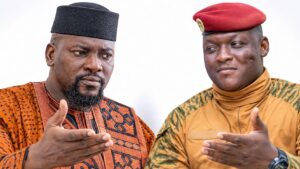
The first-ever ministers’ conference on education and training under the Alliance of Sahel States (AES) opened in Niamey this week, under the watchful eye of Niger’s Prime Minister Ali Mahamane Lamine Zeine. The summit brings together delegations from Burkina Faso and Mali alongside senior officials from Niger’s ruling council, government, and diplomatic corps. Its stated goal is bold but daunting: to lay the groundwork for an integrated, sovereign, and resilient education system across all three countries.
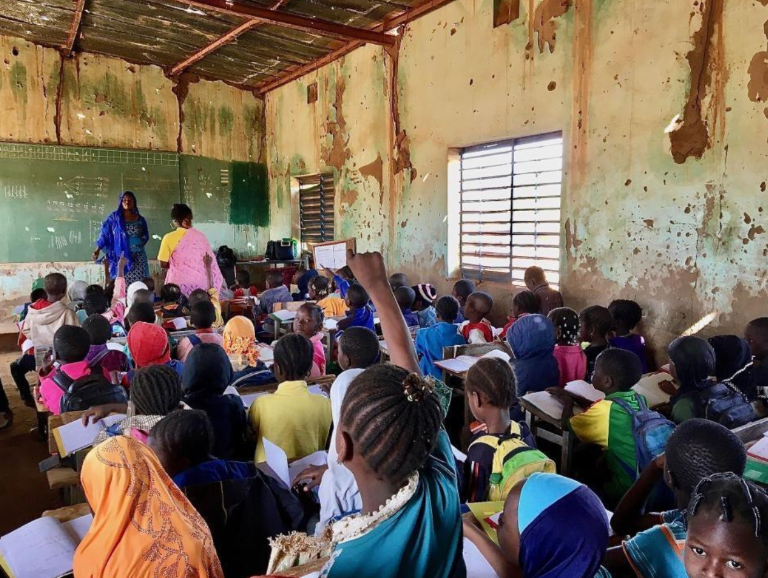
The timing could hardly be more urgent. While the conference seeks to harmonize curricula and recognize joint diplomas, the schools under discussion remain under strain—ravaged by violence that has shuttered thousands of classrooms and driven legions of teachers away.
Teachers in short supply—with consequences for every classroom
Primary schools across the Sahel now operate with skeletal staffs. In Niger, the 2023-2024 school year counted 69,636 primary teachers for more than 3 million pupils, averaging about 43 students per educator. Nationally, the shortage extends to all levels: 105,869 teachers were available for 3.95 million children, according to the government’s own figures. The gap is only widening as older, experienced instructors retire or flee troubled areas.
Compounding the numbers is the crisis in teacher quality. In 2017, UNESCO found that 78.5 % of Niger’s 70,491 public-school teachers held only temporary contracts—and some taught without any prior pedagogical training at all. “We need stronger teacher-training colleges and robust professional-development programs,” admitted Niger’s education minister Élisabeth Shérif in mid-2026. Burkina Faso and Mali face similar hurdles, where insecurity blocks the deployment of qualified staff to remote districts and pushes many educators toward safer towns.
The invisible toll of school closures on Sahelian children
Violence has closed more than 5,300 schools in Burkina Faso alone, depriving 820,000 pupils and 24,000 teachers of their classrooms. Across Mali, government data show 2,444 non-functional facilities as of June 2026, locking out roughly 733,200 children and 14,004 teachers—over one in five schools in the system. In Niger, 1,097 schools were shuttered by security concerns by late 2025, leaving 93,676 children without lessons, including nearly half of them girls. The Tillabéri region shoulders the heaviest burden, accounting for 1,032 of those closed sites.
Each closure represents a human cost. Families uproot themselves to escape armed groups, abandoning homes and livelihoods—and often the schools their children attended. The International Organization for Migration recorded over 2 million internally displaced persons in Burkina Faso in early 2026, alongside 414,524 in Mali and 548,386 in Niger. These displaced children frequently miss months or even years of learning, and many never return to formal education.
What sovereignty looks like on the ground: concrete fixes or empty promises?
Summit delegates are looking beyond lofty declarations. Proposed solutions include:
- Unified curricula and shared digital libraries so pupils in all three countries study the same core content
- Joint teacher-certification programs to standardize quality across borders
- Rapid-recruitment drives focused on conflict-affected zones
- Emergency “temporary learning spaces” in displacement camps
- Portable certification for pupils whose schools have been closed for more than a year
Yet translating strategy into action remains the biggest hurdle. Niger’s education minister estimates nearly 5 million children remain excluded from any form of schooling in the country alone. The task ahead is not merely to build a sovereign education system in principle, but to ensure every child—whether in a secure city or a frontline village—actually sits in a classroom capable of delivering that sovereignty.
The real test of the AES summit: turning policy into classroom reality
The Niamey gathering can set ambitious policies, but lasting change will be measured in chalk dust and lesson plans. Will the three governments release earmarked funds for teacher housing in remote towns? Will they fast-track emergency teaching certificates for displaced educators? Will they open accelerated vocational tracks so teenagers who missed years of school can re-enter the system?
The answer will reveal whether “sovereign education” is more than a political slogan. In the Sahel’s embattled classrooms, the proof will be in the presence of a teacher—and the absence of another empty desk.